Water fluoride not linked to cognition in older Irish adults
Estimated lifetime exposure was not associated with errors on either thinking test, with an error-rate ratio of 1.00—indicating no association—for each.
Our read
Populations- Studied:
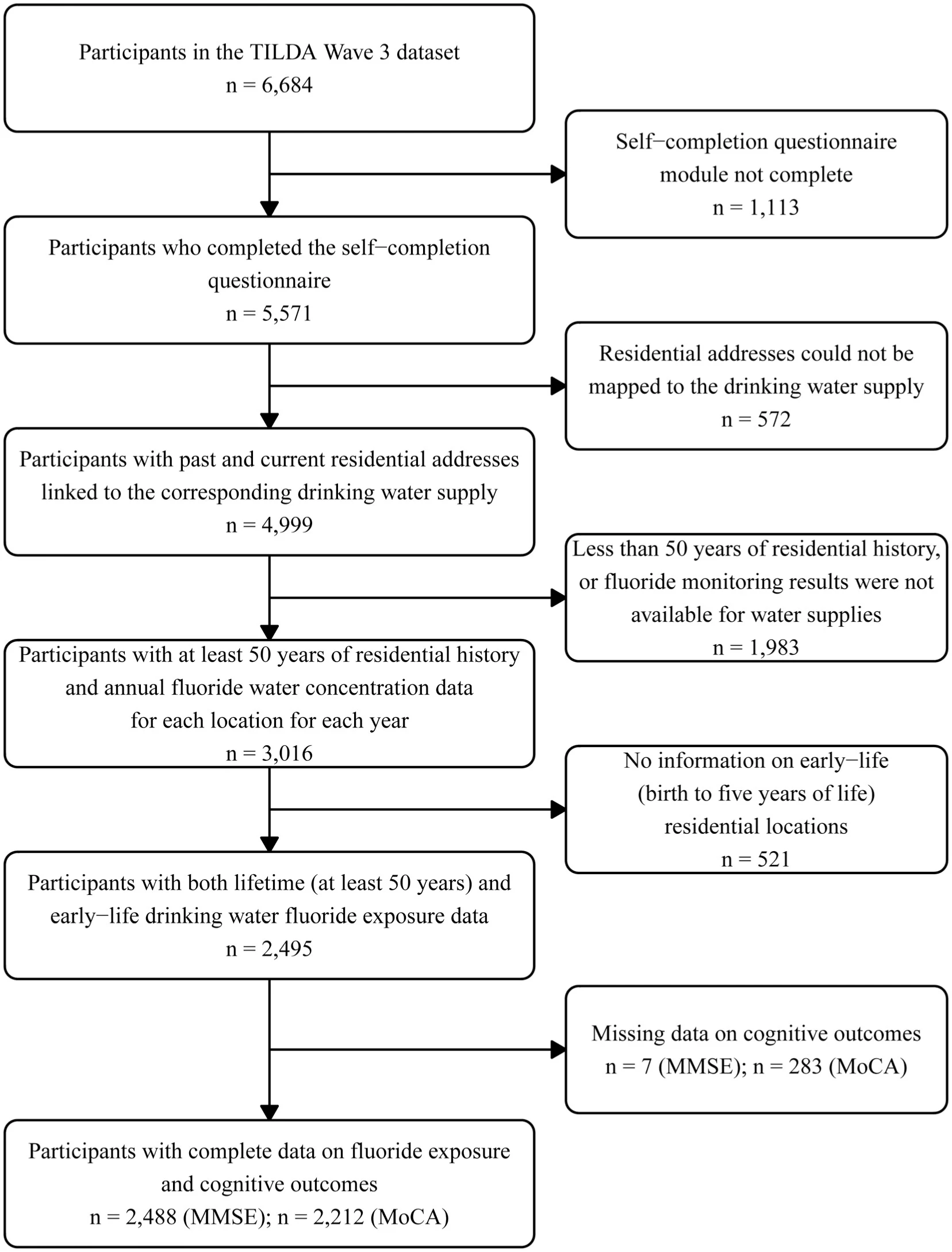
- Cross-sectional study of 2,495 older Irish adults
- What changed:
- Lifetime fluoride exposure was not linked to thinking-test errors (error-rate ratio 1.00)
- The catch:
- Health, lifestyle, and social differences could obscure an association despite adjustment
- Why it’s aging research:
- It measures an outcome that worsens with age.
Editor of record: Boris Djordjevic · AgingResearch.News
Older Irish adults—2,495 people averaging 65.32 years old—were studied in an observational analysis of the Irish Longitudinal Study on Ageing. The researchers used 2014–2015 data and linked residential histories with national water monitoring records to estimate lifetime exposure to fluoridated water. Two tests assessed cognition, with more errors indicating poorer performance.
Cumulative lifetime exposure was not associated with errors on either test. People exposed for more than 75% of their lives initially appeared to make fewer errors than those exposed for less than 25%. That association was no longer statistically significant after adjustment for social, lifestyle, health and other factors. There was no statistical evidence that exposure from birth to age five modified the associations.
Why it matters
Cognitive function is an important part of healthy aging. The findings bear on whether lifelong exposure to fluoridated community water is associated with poorer thinking skills in older age.
Caveats
Cognitive scores came from one survey wave, so the analysis did not track changes over time. Differences in health, lifestyle or social circumstances could still have obscured an association despite statistical adjustment.
- Community water fluoridation
- Mini-Mental State Examination error score
- Montreal Cognitive Assessment error score
- Humans
The paper
Lifetime Fluoride Exposure and Cognition in Older Irish Adults
Trinity College Dublin; Dublin Dental University Hospital
Journal of Dental Research, Nov 4, 2026

Comments
Be the first to comment.