Multiple chronic conditions linked to low back pain after 60
The relative rate of developing mild low back pain was 1.66 for adults with multiple chronic conditions compared with those without chronic disease.
Limit: Physical activity, occupational load, analgesic use, and rehabilitation could confound the association
Edited by Boris Djordjevic · AgingResearch.News
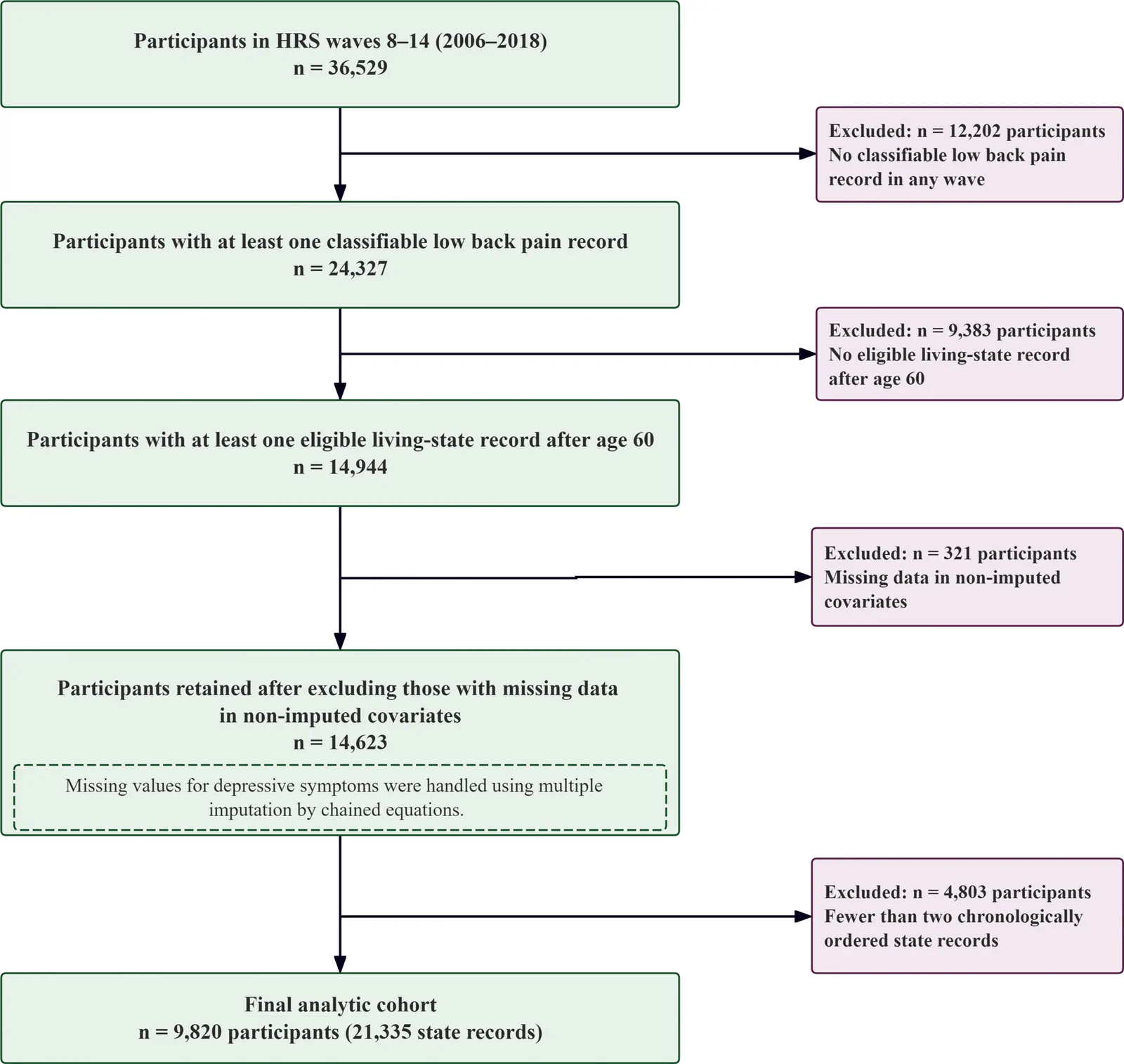
An observational study of 9,820 US adults older than 60 analyzed Health and Retirement Study data collected between 2006 and 2018. Researchers used a statistical model to estimate transitions between no low back pain, mild pain, moderate-to-severe pain and death.
Compared with adults without chronic disease, those with multiple chronic conditions had a lower relative rate of moving from moderate-to-severe to mild low back pain, with a hazard ratio—a comparison of event rates—of 0.27. Multiple conditions were also associated with higher death rates from both the pain-free and moderate-to-severe pain states. For people with the same modeled characteristics, the estimated average time without low back pain was 6.94 years with multiple conditions versus 14.68 years without chronic disease.
Why it matters
Low back pain contributes to disability and reduced healthy life expectancy in older adults. The authors recommended prioritizing people with multiple chronic conditions in coordinated prevention and management strategies.
Caveats
The observational design cannot establish that multiple chronic conditions caused the differences in pain transitions. The findings concern US adults older than 60.
From the paper
- Participants
The final analytic sample included 9,820 participants and 21,335 state records.
- Result
Compared with disease-free participants, those with multimorbidity had a higher hazard of transition from no low back pain to mild low back pain (HR, 1.66; 95% CI, 1.27–2.17) and a lower hazard of transition from moderate-to-severe low back pain to mild low back pain (HR, 0.27; 95% CI, 0.09–0.83).
- Limitation
First, low back pain status and chronic diseases were self-reported, which may have introduced recall bias, misclassification, or underreporting.
Quoted word for word from the full text on link.springer.com.
The paper
Union Hospital
BMC Geriatrics, Aug 20, 2026, Open access


Comments
Be the first to comment.