Blood pressure decline and brain vessel disease links differ by sex
An observational study followed 2,033 older adults for 9.1 years on average, linking falling blood pressure more strongly to small-artery disease in women.
Limit: Small-vessel disease could drive blood pressure decline rather than result from it
Edited by Boris Djordjevic · AgingResearch.News
Researchers studied 2,033 community-dwelling older adults in an observational analysis of four long-term studies. Participants averaged 79.7 years old at the start, and 69% were women. Researchers used annual blood pressure measurements collected over an average of 9.1 years and examined brain blood vessels after death.
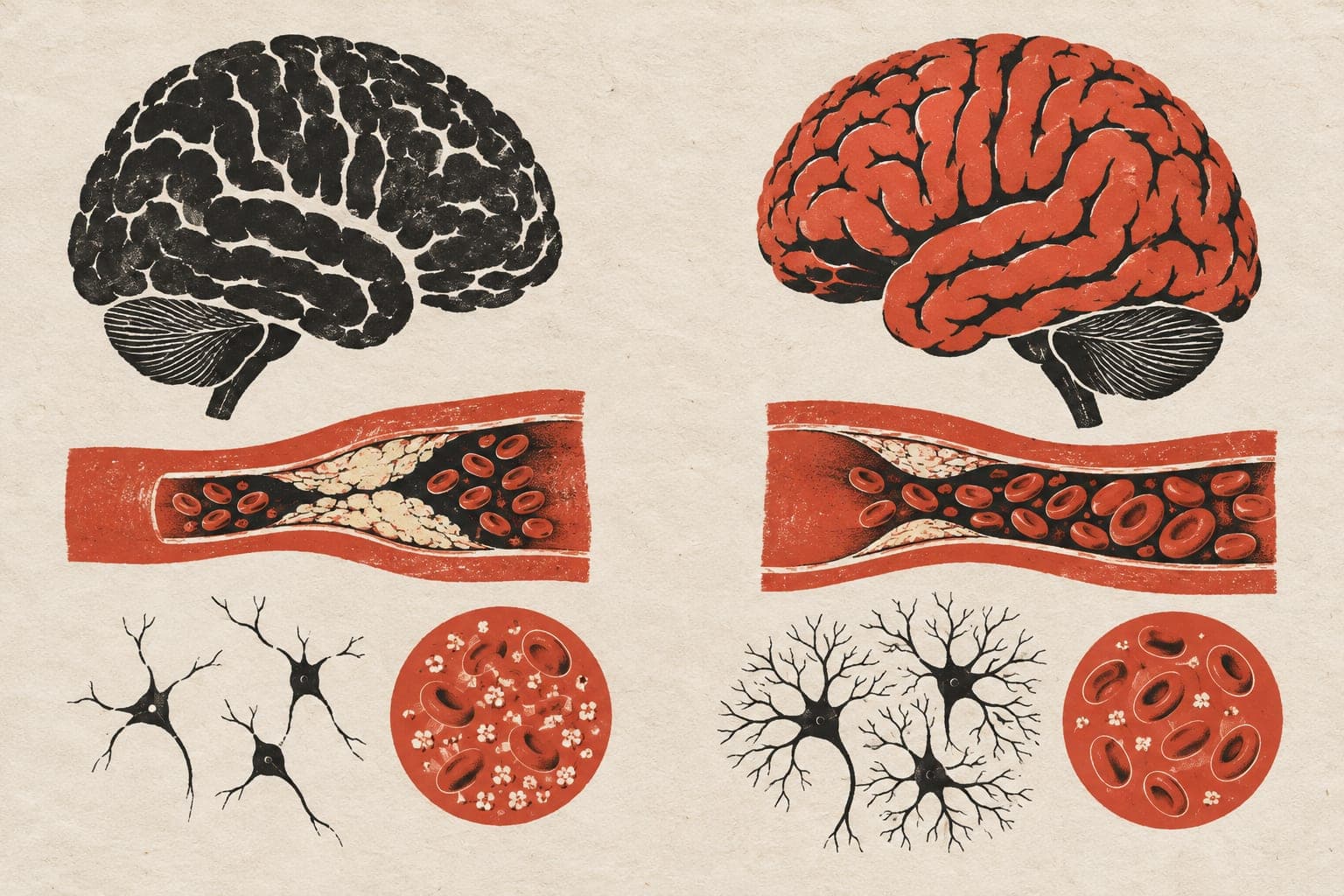
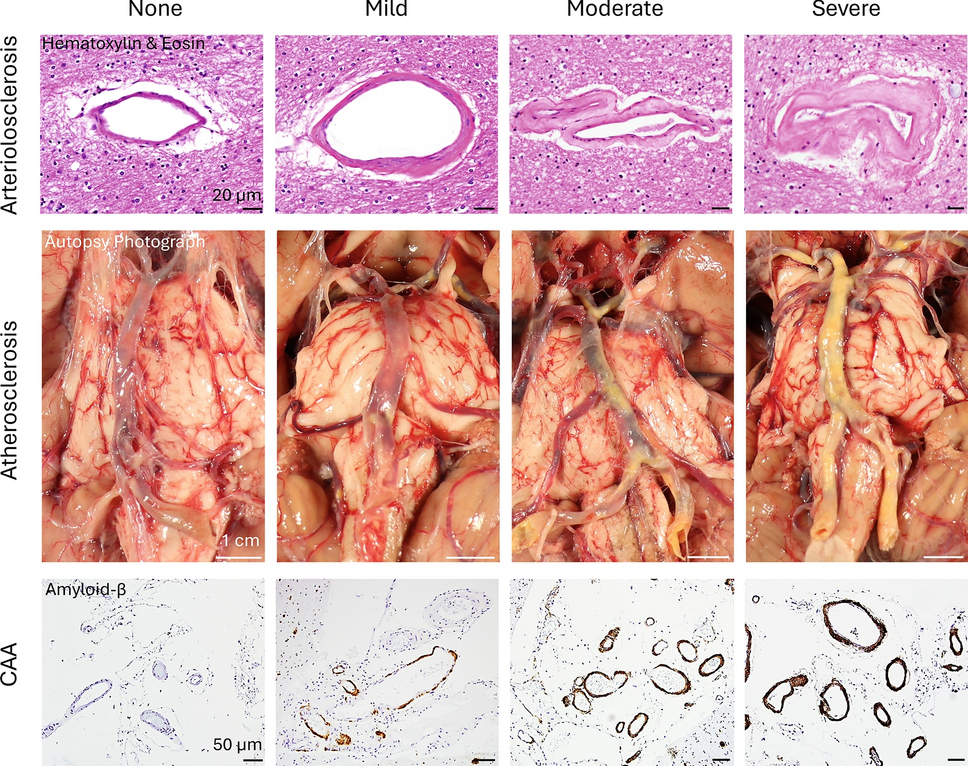
Faster declines in systolic pressure—the top number in a blood pressure reading—were associated with more severe arteriolosclerosis, thickening and hardening of small artery walls. This association was stronger in women than men. Across the full group, faster declines were also associated with more severe atherosclerosis, the buildup of plaque in arteries. The analyses accounted for age at death, sex and use of blood pressure medication.
Why it matters
The findings suggest that tracking blood pressure over time may help tailor assessments of brain blood vessel disease risk in older adults.
Caveats
The observational design cannot establish whether falling blood pressure contributed to vessel disease or reflected it. The findings concern older adults who died and underwent brain autopsy.
From the paper
- Participants
The final analytic sample comprised 2033 participants with at least two BP observations (final visit before death and at least one other) and complete covariates data (age-at-death, sex, and antihypertensive medication use).
- Result
… such that each 1 mmHg faster decline corresponded to 24% higher odds of greater arteriolosclerosis severity (OR = 1.24, 95%CI 1.08–1.42); however, there was no association in men (Fig. 3).
- Limitation
Like many observational aging cohorts, the sample was predominantly highly educated White women, limiting generalizability.
Quoted word for word from the full text on link.springer.com.
The paper
Rush University Medical Center
Acta Neuropathologica, Oct 24, 2026