Genetic analysis links a blood enzyme to Alzheimer’s risk
Genetic analysis linked inhibition of a blood-pressure enzyme to higher Alzheimer’s odds, with an odds ratio of 1.10.
Limit: Reasons for prescribing blood-pressure drugs could confound the supporting drug-use comparison
Edited by Boris Djordjevic · AgingResearch.News
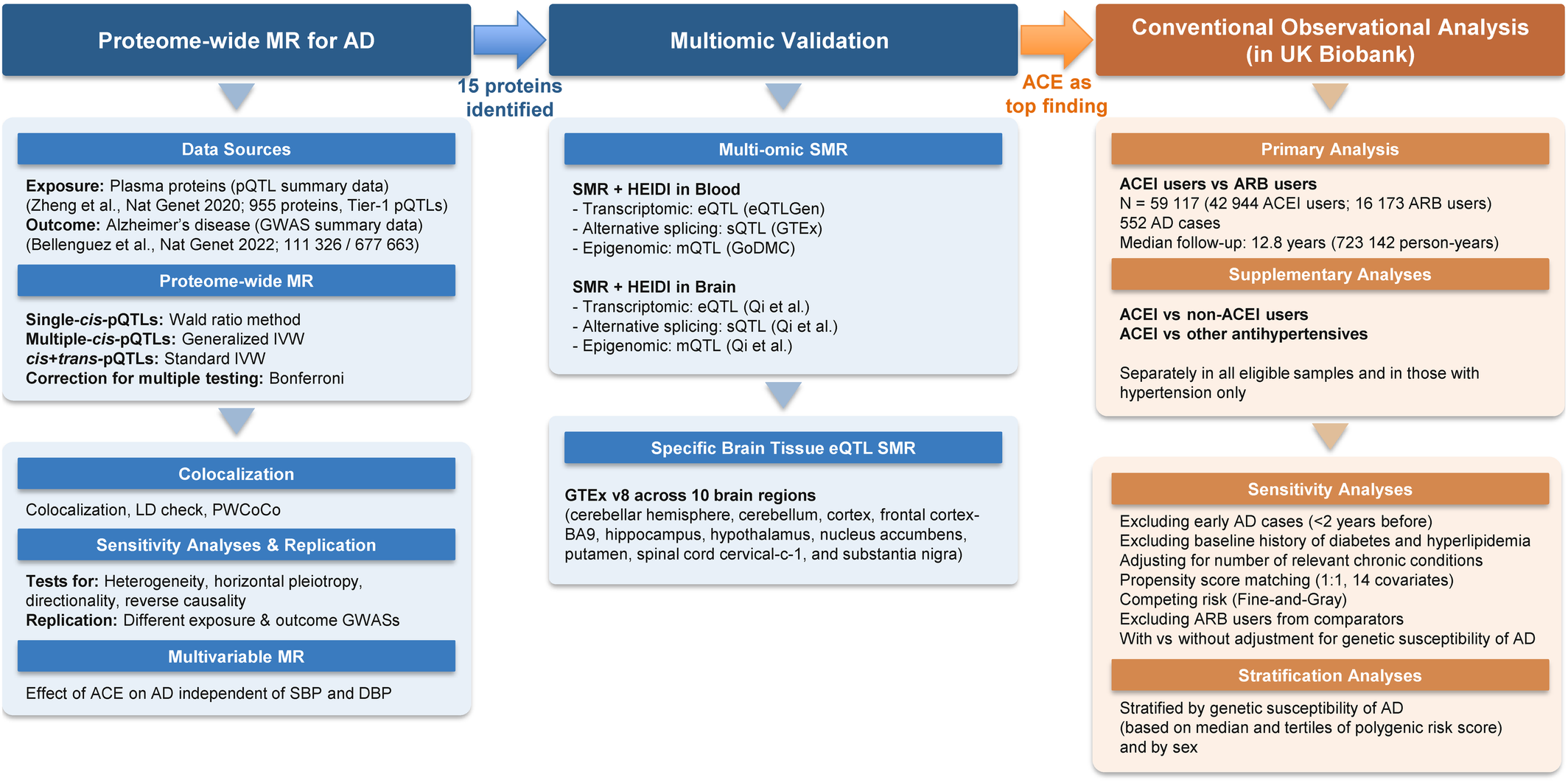
In an analysis of human genetic data and a prospective observational study of UK Biobank participants, researchers examined potential drug targets for Alzheimer’s disease. They used Mendelian randomization, which uses genetic differences to investigate links between biological factors and disease.
The genetic analysis identified 15 blood proteins linked to Alzheimer’s risk. It prioritized angiotensin-converting enzyme, a protein that helps regulate blood pressure. Its inhibition was associated with higher Alzheimer’s odds, likely independent of blood pressure. In UK Biobank, regular users of drugs that inhibit this enzyme had a higher incidence of Alzheimer’s than users of angiotensin receptor blockers, another class of blood-pressure drugs. The hazard ratio—a relative comparison over follow-up—was 1.23, but the range of likely values included no difference.
Why it matters
Alzheimer’s is a disease associated with aging. This work addresses which biological targets deserve closer study in efforts to develop drugs for it.
Caveats
Genetic and observational associations do not establish that these drugs cause Alzheimer’s disease. The authors called for stronger real-world evidence and clinical trials before changing practice.
The paper
Shanghai Jiao Tong University; King's College London
Journal of the American Heart Association, Oct 23, 2026, Open access