Weight loss during fasting linked to lower inflammation
In a 16-week randomized trial of 53 adults, an inflammation marker fell after fasting began but did not change during eight weeks of diet alone.
Our read
Interventions- Studied:
- Randomized trial in 53 adults with metabolic risk factors, against habitual Western-diet controls (Registered NCT02148458)
- What changed:
- An inflammation marker fell in the Mediterranean-diet group versus controls after fasting began, alongside greater weight loss
- The catch:
- Fasting coincided with weight loss, so lower inflammation cannot be attributed to weight loss alone
- In the record:
- The 190th paper on intermittent fasting with results in people; 806 on record in all. Its result on body weight agrees with 87 of 97 other findings on record; 1 points the other way and 9 found no change.
- Why it’s aging research:
- An intervention with evidence on lifespan or healthspan.
Editor of record: Boris Djordjevic · AgingResearch.News
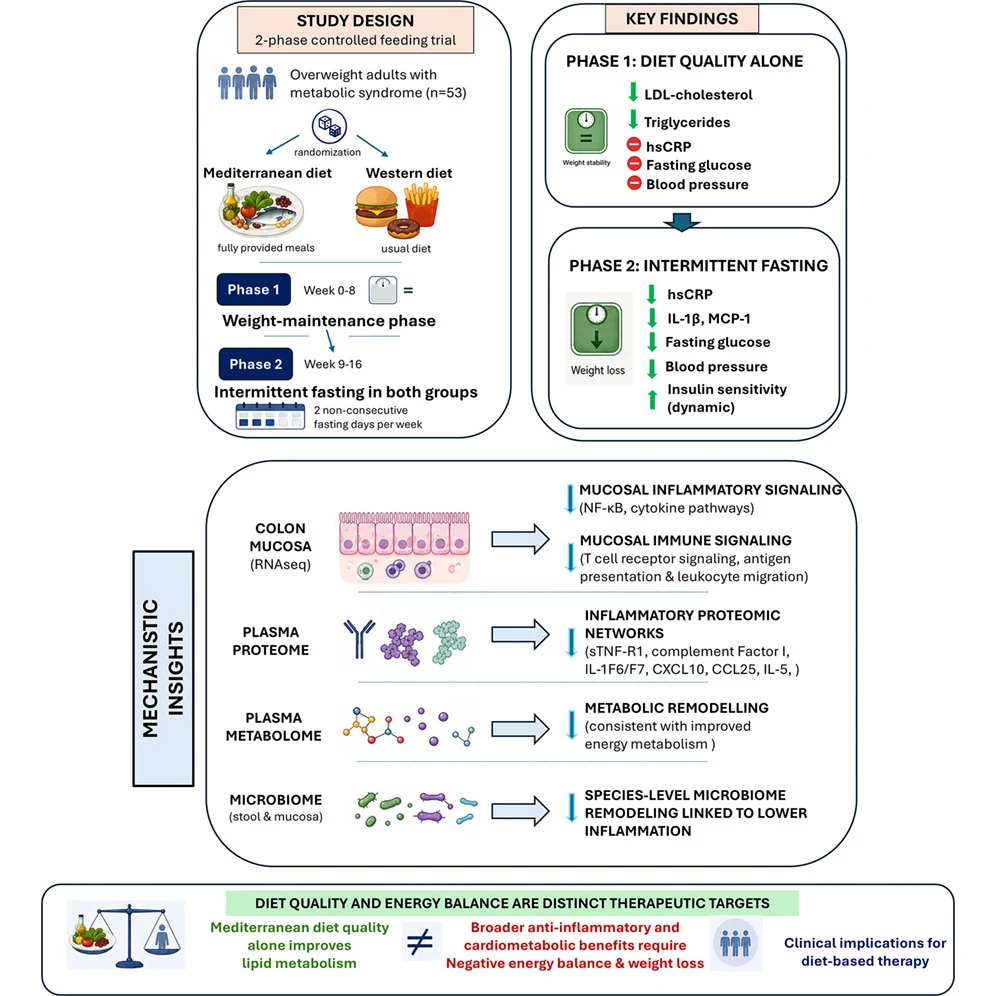
In a 16-week randomized controlled-feeding trial, 53 adults with metabolic risk factors received either a fully provided Mediterranean diet or their habitual Western diet. Participants were 77% female, with a mean age of 54.7 years. After eight weeks, they added twice-weekly fasting days for another eight weeks.
The primary outcome was high-sensitivity C-reactive protein, a blood marker of inflammation. It did not change during the diet-only phase, despite clear differences between diets. After fasting began, this marker fell in the Mediterranean-diet group relative to controls, alongside greater weight loss and lower blood pressure. The findings suggested that taking in fewer calories than the body uses and losing weight were stronger drivers of lower inflammation than diet quality alone.
Why it matters
Inflammation is relevant to age-related disease. Separating the effects of diet quality from accompanying weight loss may help clarify which aspects of dietary changes matter for inflammation.
Caveats
The trial linked weight loss to inflammation changes but did not isolate weight loss as their cause. Its findings concern adults with metabolic risk factors, mostly women, followed for 16 weeks—not longer-term effects or people without those risk factors.
The paper
The University of Sydney
Cell Metabolism, Oct 21, 2026, Open access

Comments
Be the first to comment.