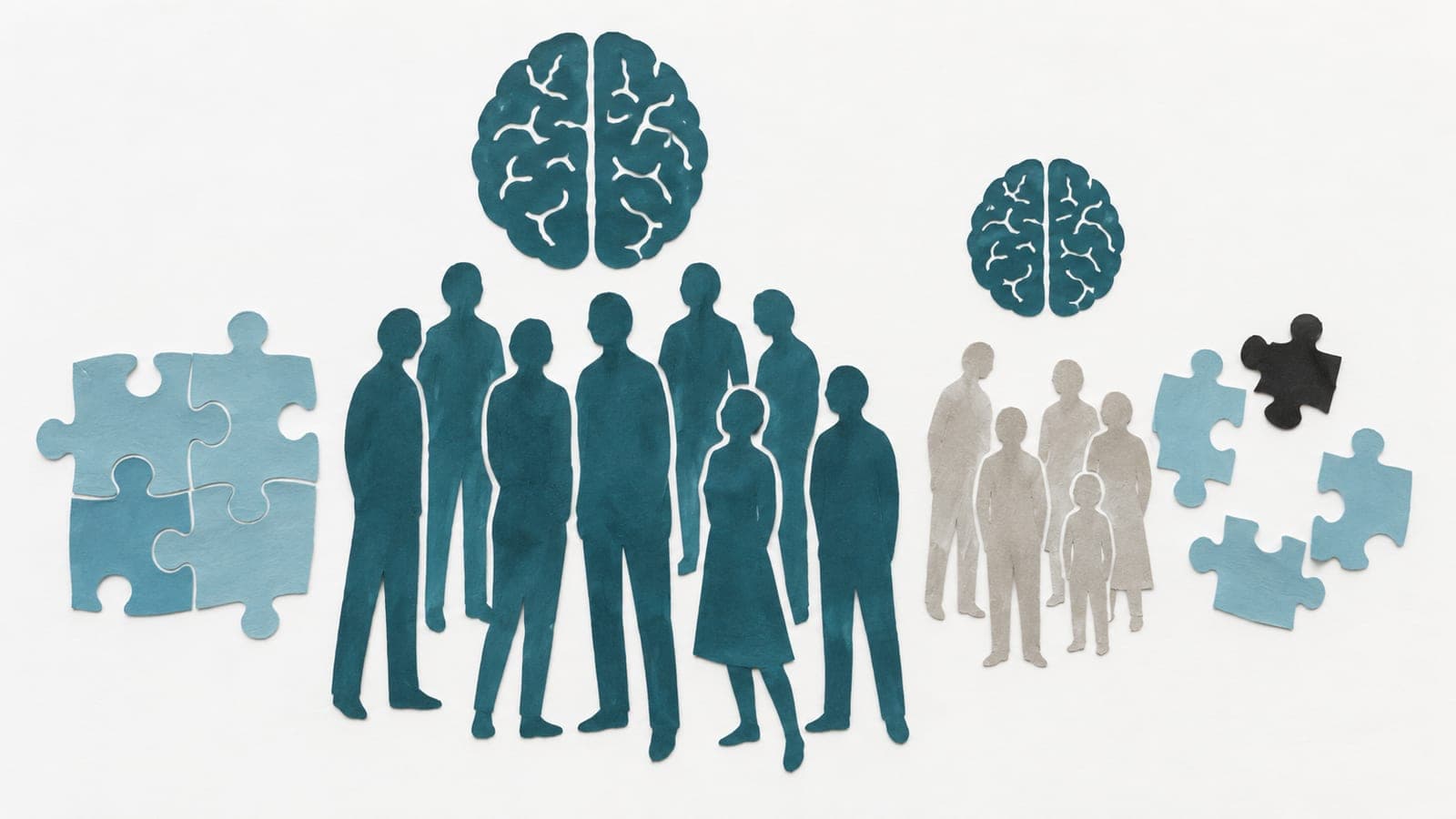
Cognitive gaps mostly linked to gender, race/ethnicity and education
Identity-group differences accounted for 6% or less of cognitive variation; separate demographic associations explained 79% to 98% of that between-group variation.

An observational study analyzed 20,814 Brain Health Registry participants aged 45 and older. Researchers compared 24 groups combining gender, race or ethnicity, and education. These included men and women; Latino, Asian, Black and White participants; and people with three levels of educational attainment. Participants rated their everyday thinking abilities using a 39-item questionnaire and took a learning test.
After accounting for age, differences between groups accounted for 6% or less of the total variation in self-reported cognition and test performance. Separate associations with gender, race or ethnicity, and education statistically explained 79% to 98% of that between-group variation. Combining these characteristics accounted for little additional variation beyond their separate associations.
Why it matters
Perceived cognitive decline and subtle cognitive impairment are important early clinical stages of dementia. The study addressed how differences in these measures relate to overlapping social identities.
Caveats
This observational analysis cannot establish cause and effect, and it measured self-reported cognition and test performance rather than dementia diagnoses. It covered registry participants aged 45 and older, not younger adults.
- Objective cognitive impairment
- Subjective cognitive decline
- Cambridge Cognition Paired Associates Learning test
- Everyday Cognition scale
- Humans
The paper
University of California
American Journal of Epidemiology, Oct 19, 2026