Heart risk markers did not clearly differ after ovary removal
Compared with women retaining their ovaries, the surgery group had no clear difference in blood pressure rises at 24 months (adjusted odds ratio 1.03).
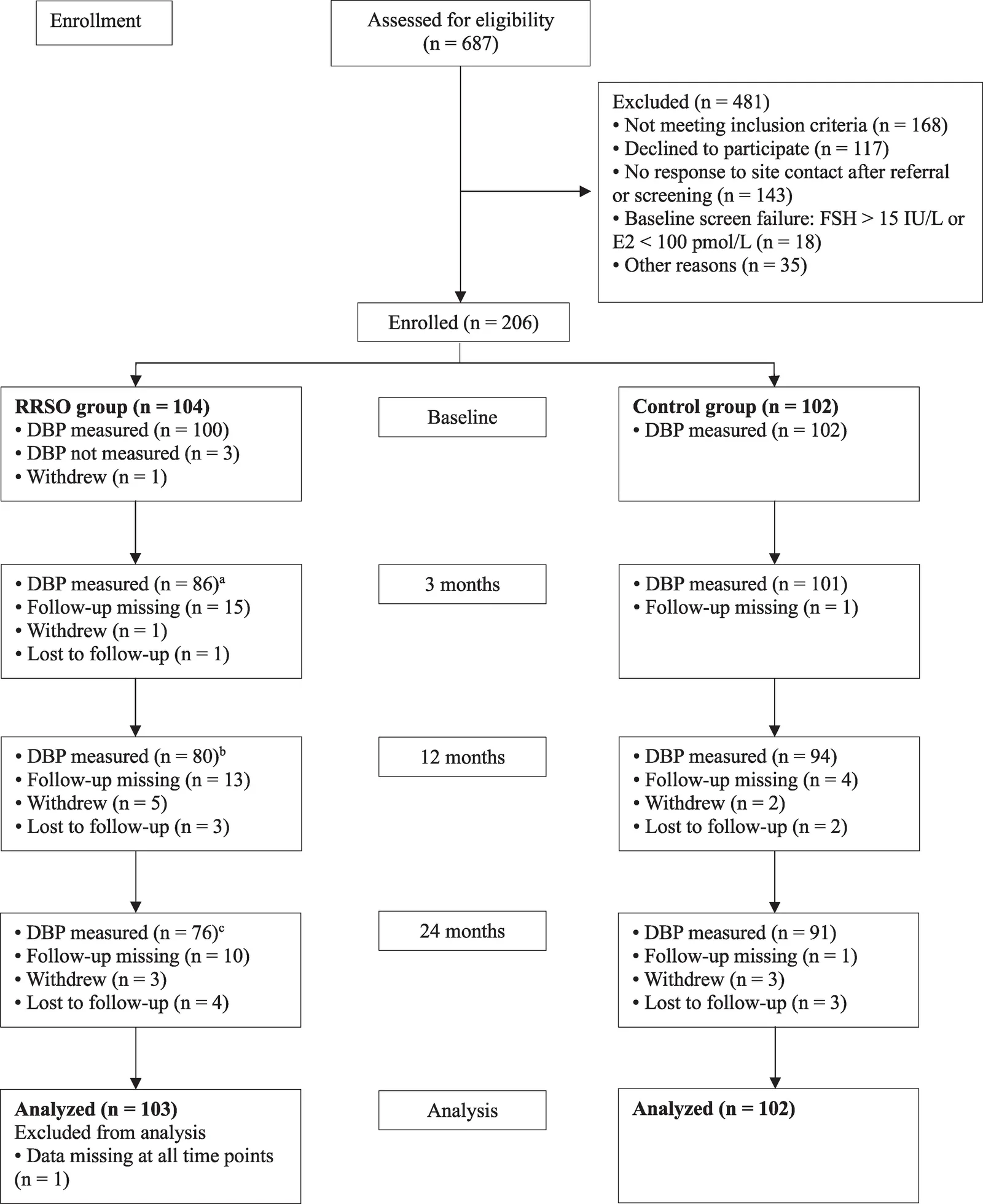
104 participants
Limit: Diet and physical activity were not measured and could confound the comparison
In a prospective observational study, researchers followed 104 women who had both ovaries and fallopian tubes removed before natural menopause and 102 age-matched women who kept their ovaries. The surgery aimed to reduce ovarian cancer risk. Researchers measured cardiovascular and metabolic risk markers at baseline and 24 months.
The groups showed no clear difference in the odds of a rise of at least 5 millimeters of mercury in diastolic pressure—the pressure between heartbeats. The adjusted odds ratio was 1.03; its uncertainty range included no difference. Changes in body size, blood fats, an inflammation marker and blood sugar regulation also showed no clear differences. After surgery, 62% used hormone therapy for menopause. Measured risk markers did not appreciably differ between users and nonusers.
Why it matters
Earlier research has suggested that surgical menopause may increase cardiovascular disease risk. Tracking risk factors helps examine this concern when surgery brings menopause forward.
Caveats
This observational study assessed risk markers, not cardiovascular disease outcomes, and could not establish cause and effect. Its findings covered only 24 months after surgery before natural menopause.
From the paper
- Result
At 24 months, there was no difference between groups in the rise in diastolic blood pressure of ≥5 mm Hg (adjusted odds ratio, 1.03; 95% confidence interval, 0.48 to 2.18).
- Harms
Overall, the use of hypertensives (5%), lipid-lowering drugs (1%), and oral hypoglycemic drugs (1%) was low (Table 1).
Quoted word for word from the full text on academic.oup.com.
- Hormone replacement therapy
- Risk-reducing salpingo-oophorectomy
- Blood pressure
- Surgical menopause
- Insulin resistance
- Humans
The paper
University of Melbourne; Royal Women's Hospital
Journal of the Endocrine Society, Sep 26, 2026