Dapagliflozin may help frail patients more after valve replacement
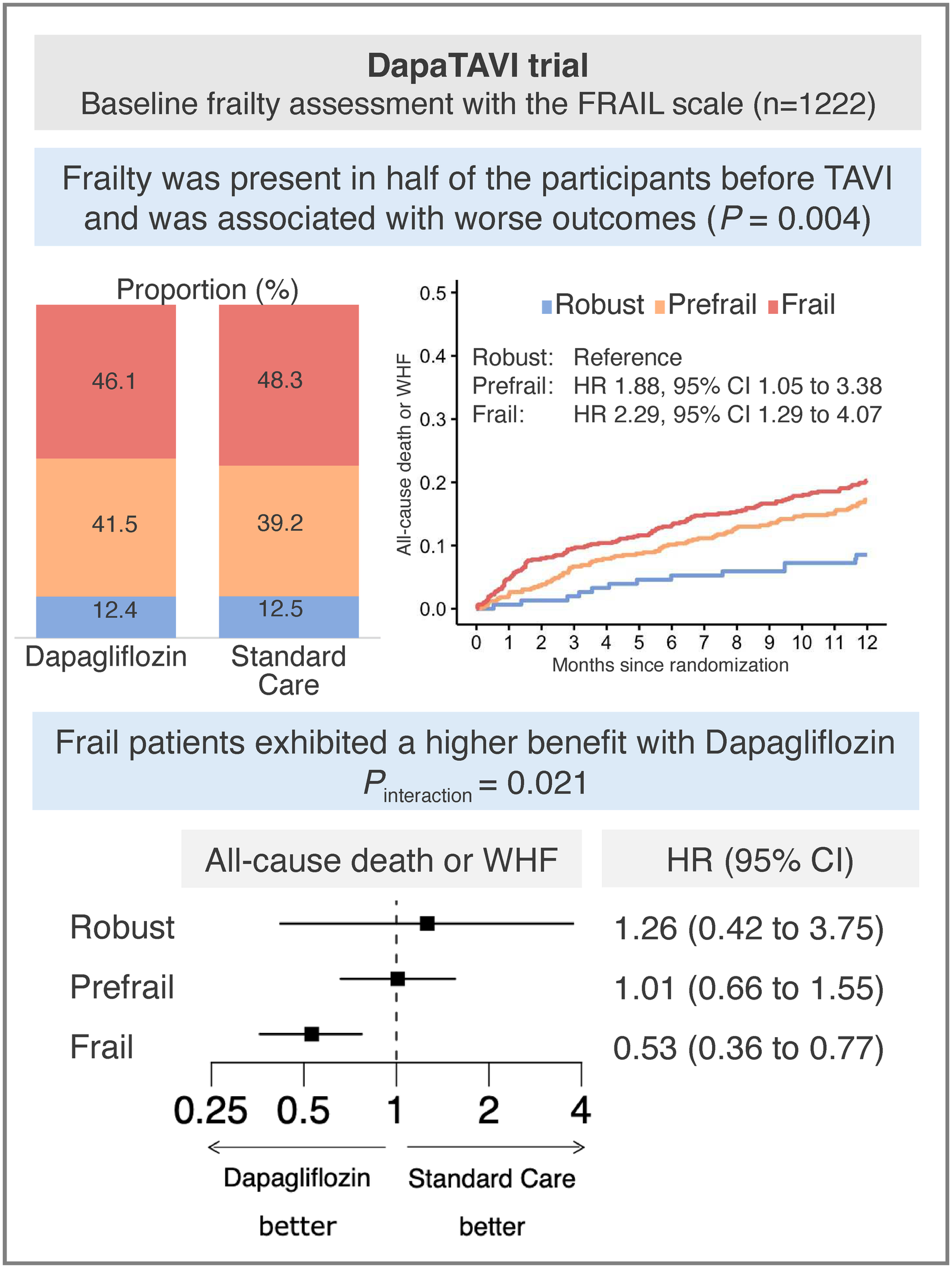
In frail patients, dapagliflozin was linked to lower relative risk of death or worsening heart failure versus controls at one year (hazard ratio 0.53).
12 months
Limit: Frailty subgroups were analysed after the fact, so the apparent extra benefit needs confirmation
The analysis included 1,222 patients with baseline frailty assessments who underwent transcatheter aortic valve implantation, a procedure to replace a narrowed heart valve through a thin tube. Researchers examined data from the DapaTAVI trial after the fact to assess whether the benefit of dapagliflozin differed by frailty. A frailty scale classified 47.2% of patients as frail.
Over 12 months, 215 patients (17.6%) died or experienced worsening heart failure. Patients with frailty had worse outcomes than those without it. Dapagliflozin was associated with a lower risk of death or worsening heart failure in frail patients, but not in those with milder or no frailty. The researchers found no evidence that frailty modified the drug’s safety profile.
Why it matters
Frailty is relevant to care in later life. This analysis addressed whether it could help guide medicine choices after heart valve replacement.
Caveats
This was an after-the-fact subgroup analysis, so the apparent difference in benefit needs confirmation. The results do not establish benefit for people with frailty who have not undergone this valve procedure.
- Dapagliflozin
- Heart failure
- Severe aortic stenosis
- Fatigue, Resistance, Ambulation, Illnesses, and Loss of Weight scale
- Humans
The paper
Dapagliflozin After Transcatheter Aortic Valve Implantation According to Frailty in DapaTAVI Trial
Department of Cardiology Reina Sofia University Hospital Córdoba Spain; Centro Nacional de Investigaciones Cardiovasculares Madrid Spain
Journal of the American Heart Association, 16 Oct 2026