Eating Behaviors, Dietary Intakes, and Other Lifestyle Behaviors as Mediators of Genetic Susceptibility to Obesity: A Systematic Review
Abstract
Mediation analysis identifies variables that explain the causal pathways linking an exposure (here genetic susceptibility to obesity) to an outcome (here obesity-related traits), offering potential targets for weight management interventions. This review followed the PRISMA guidelines and systematically searched the literature up to August 2024 in four databases (Web of Science, Embase, Medline, CINAHL) to identify studies using mediation analysis with genetic or polygenic risk scores of obesity as exposure and body mass index (BMI) as outcome. Twenty-nine studies focusing on eating behaviors, diet quality, physical activity, and other lifestyle factors were included. Eating behaviors traits emerged as the most influential mediators of genetic susceptibility to obesity. Mediation explained 23%-56% of the genetic effect on BMI for disinhibition, 6%-23% for uncontrolled eating, 4%-19% for susceptibility to hunger, 4%-15% for emotional eating and 8%-10% for satiety responsiveness. For diet quality, fat intake mediated 4%-5% of the effect, while whole grain intake explained 1%-2%. Physical activity accounted for 0.3%-23% of mediation, whereas sedentary time explained 5%-43%. These findings highlight that behavioral and lifestyle factors substantially mediate genetic risk for obesity. Interventions targeting disinhibition, uncontrolled eating, susceptibility to hunger, fat intake, whole grain consumption, physical activity and sedentary behavior could improve obesity prevention and management, particularly for individuals with higher genetic susceptibility.
From the paper
- Studies
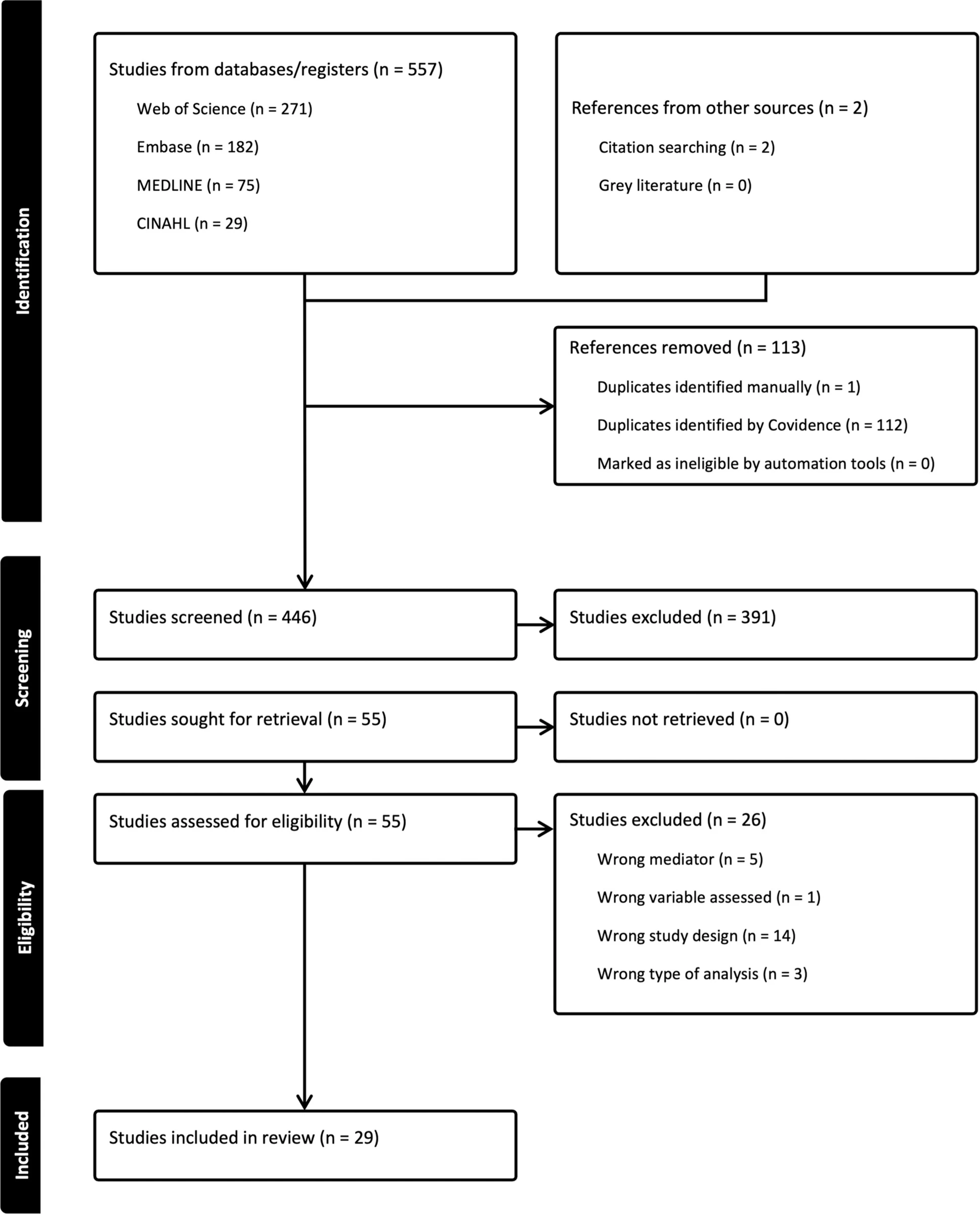
A total of 557 articles were initially retrieved through the database search (Figure 1), of which 29 studies were ultimately included in this systematic review (Table 1).
- Limitation
In most studies, sex was not considered, despite being an important covariate that influences eating behaviors and diet quality.
Quoted word for word from the full text on onlinelibrary.wiley.com.
The paper
Lung Institute; Université Laval
Obesity Reviews, Oct 15, 2026, Open access

