Higher ultraprocessed food intake linked to brain injury
Body fat was 1.7 percentage points higher in the quarter eating the most ultraprocessed food than in the quarter eating the least.
Our read
Populations- Studied:
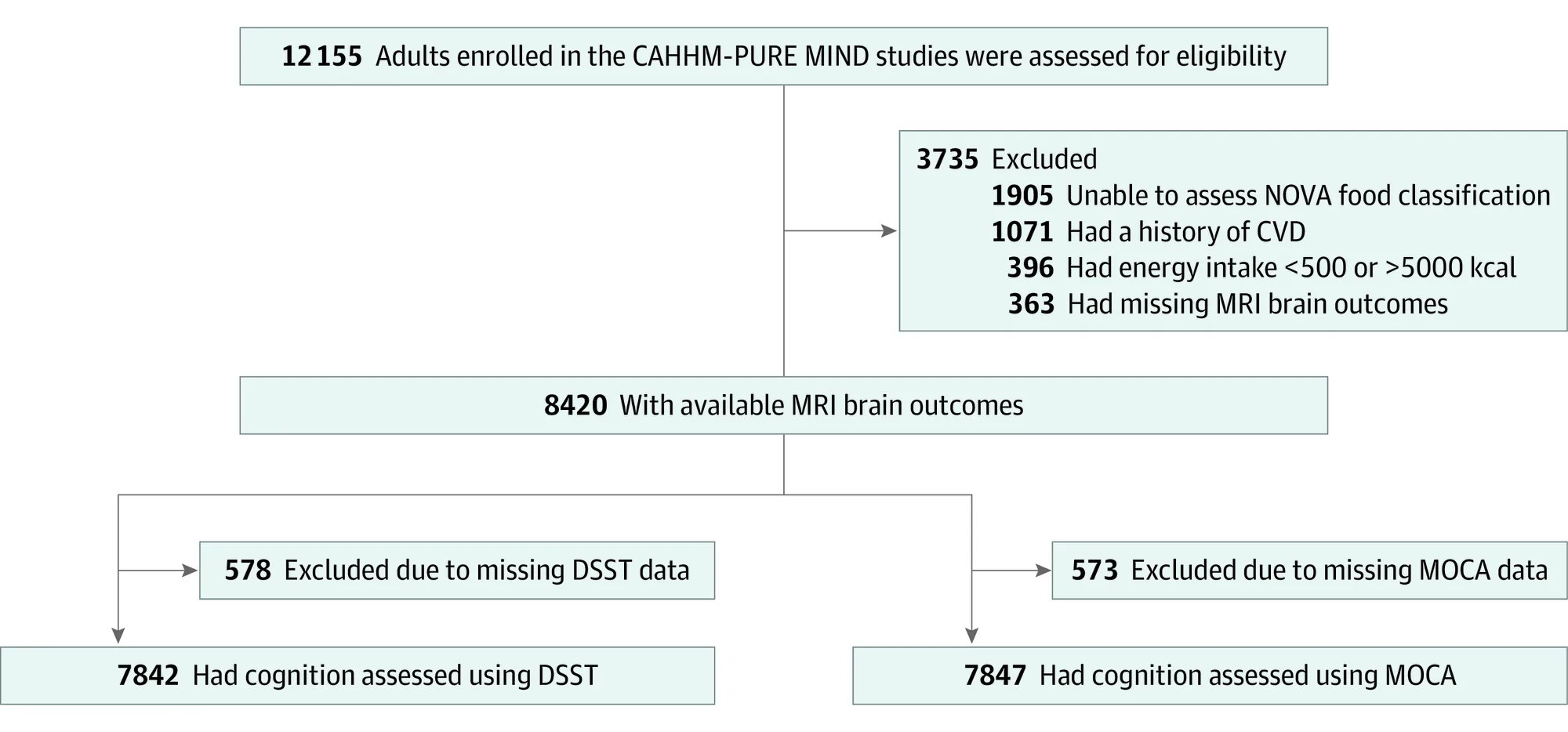
- Cross-sectional study of 8,783 middle-aged adults without cardiovascular disease (Dose-response)
- What changed:
- Brain injury was more common in the highest versus lowest ultraprocessed food intake quartile (adjusted odds ratio 1.40)
- The catch:
- Food questionnaires can misclassify ultraprocessed foods, and the brain-injury association depended on exposure definition
- In the record:
- The 137th paper on ultra-processed foods with results in people; 223 on record in all.
Editor of record: Boris Djordjevic · AgingResearch.News
Researchers conducted a cross-sectional study of 8,783 adults aged 35 to 69 in Canada, including 4,917 women, without cardiovascular disease. They used food questionnaires to estimate ultraprocessed food intake. They also measured body fat, assessed brain scans and tested thinking skills.
Compared with the lowest-intake quarter, the highest-intake quarter had body fat levels 1.7 percentage points higher and 5.7 milliliters more fat around internal organs. They also had higher odds of blood vessel-related brain injury on magnetic resonance imaging scans. The groups did not differ significantly in liver fat. Ultraprocessed food intake was not significantly linked to performance on either of two thinking-skills tests.
Why it matters
The study addresses how midlife dietary habits may relate to brain health as people age.
Caveats
This cross-sectional study could not establish whether higher intake preceded the differences or caused them. The brain-injury association was sensitive to how intake was defined; the study did not cover people with cardiovascular disease or those outside ages 35 to 69.
From the paper
- Participants
Among the 8783 individuals included, 4917 (56.6%) were females, 3866 (43.4%) were males, and the mean (SD) age was 57.7 (8.7) years.
- Result
HFF did not significantly differ between the 2 quartiles (difference, 0.3 [95% CI, −0.2 to 0.8] percentage points) (; eTable 1 in ).
- Limitation
Several covariates included in adjusted models, including diabetes, hypertension, dyslipidemia, and adiposity, may reflect cumulative effects of prior dietary exposures rather than baseline confounders, leaving residual confounding and incomplete exchangeability between exposure groups possible.
Quoted word for word from the full text on PubMed Central.
- Ultra-processed foods
- Covert brain infarcts
- Vascular brain injury
- Body fat percentage
- Digital Symbol Substitution Test
- Humans
The paper
Ultraprocessed Food Intake and Adiposity, Vascular Brain Injury, and Cognition in Middle-Aged Adults
Population Health Research Institute
JAMA Network Open, Oct 1, 2026, Open access


Comments
Be the first to comment.