Overall ultraprocessed food intake showed no clear link to death risk
Over a median 30 years, the highest- versus lowest-intake quarter had a hazard ratio—a comparison of death rates over time—of 0.99.
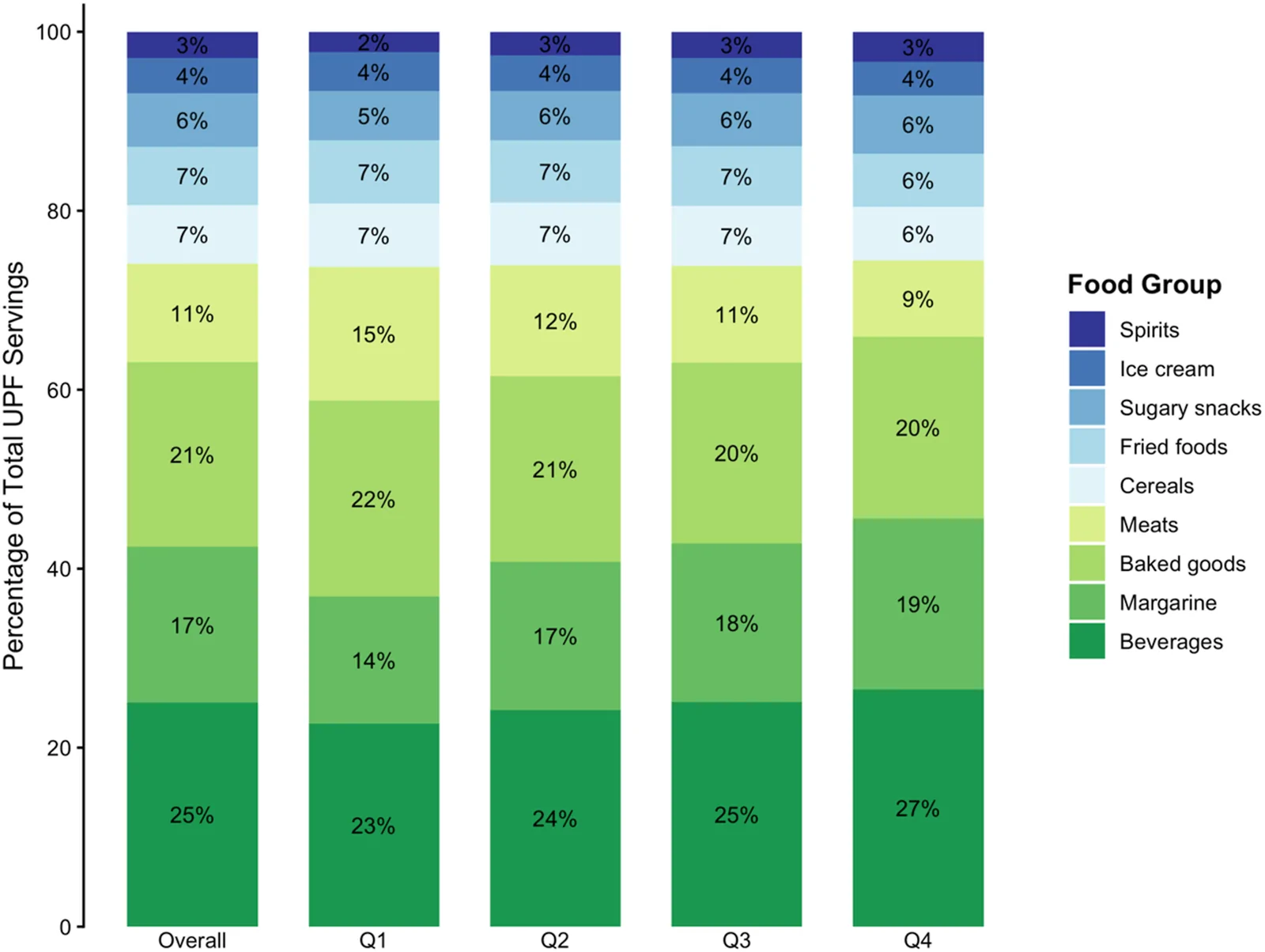
Our read
Populations- Studied:
- Cohort study of 11,185 United States adults, against participants in lowest UPF intake quartile (Dose-response)
- What changed:
- Death risk showed no clear difference between highest and lowest ultraprocessed food intake groups (hazard ratio 0.99)
- The catch:
- Stress, occupational exposures, and income instability were incompletely measured, leaving possible confounding
- In the record:
- The 4th paper on cereals with results in people; 35 on record in all.
Editor of record: Boris Djordjevic · AgingResearch.News
The 11,185 US adults in this community-based prospective cohort study averaged 54 years old; 55% were women and 24% were Black. Participants completed diet questionnaires in 1987–1989 and 1993–1995. Industrial products made mainly from food-derived ingredients and additives were classified as ultraprocessed. Over a median 30 years, 6,656 participants died.
Total ultraprocessed food intake was not significantly associated with death from any cause. The range of likely values for the highest- versus lowest-intake comparison included no difference. In exploratory analyses, the highest quarter of ultraprocessed meat intake was associated with an 11% higher relative death risk than the lowest quarter. For spirits, the corresponding association was 12% higher relative risk; for ultraprocessed cereals, it was 13% lower. The researchers accounted for factors including smoking, physical activity and alcohol use.
Why it matters
For understanding diet and longevity, the authors argue that ultraprocessed foods warrant separate investigation by category rather than being treated as a uniform exposure.
Caveats
Questionnaires captured reported eating habits at two visits, which may not reflect diet throughout the median 30-year follow-up. Participants with diabetes, cancer, chronic kidney disease, heart disease or stroke at enrollment were excluded.
From the paper
- Participants
After these exclusions, a total of 11,185 participants were deemed eligible for subsequent analysis.
- Follow-up
During follow-up (301,093 person-years, median follow-up time 30 y, 25th–75th percentile: 22–33 y), 6656 deaths occurred.
Results, Association between UPF intake and all-cause mortality
- Result
Replacing UPF with unprocessed or minimally processed food was not significantly associated with mortality risk (HR: 1.00; 95% CI: 0.99, 1.01).
Results, Association between UPF intake and all-cause mortality
Quoted word for word from the full text on PubMed Central.
The paper
Johns Hopkins University
Current Developments in Nutrition, Oct 12, 2026, Open access

Comments
Be the first to comment.