Emerging therapies for knee osteoarthritis
Abstract
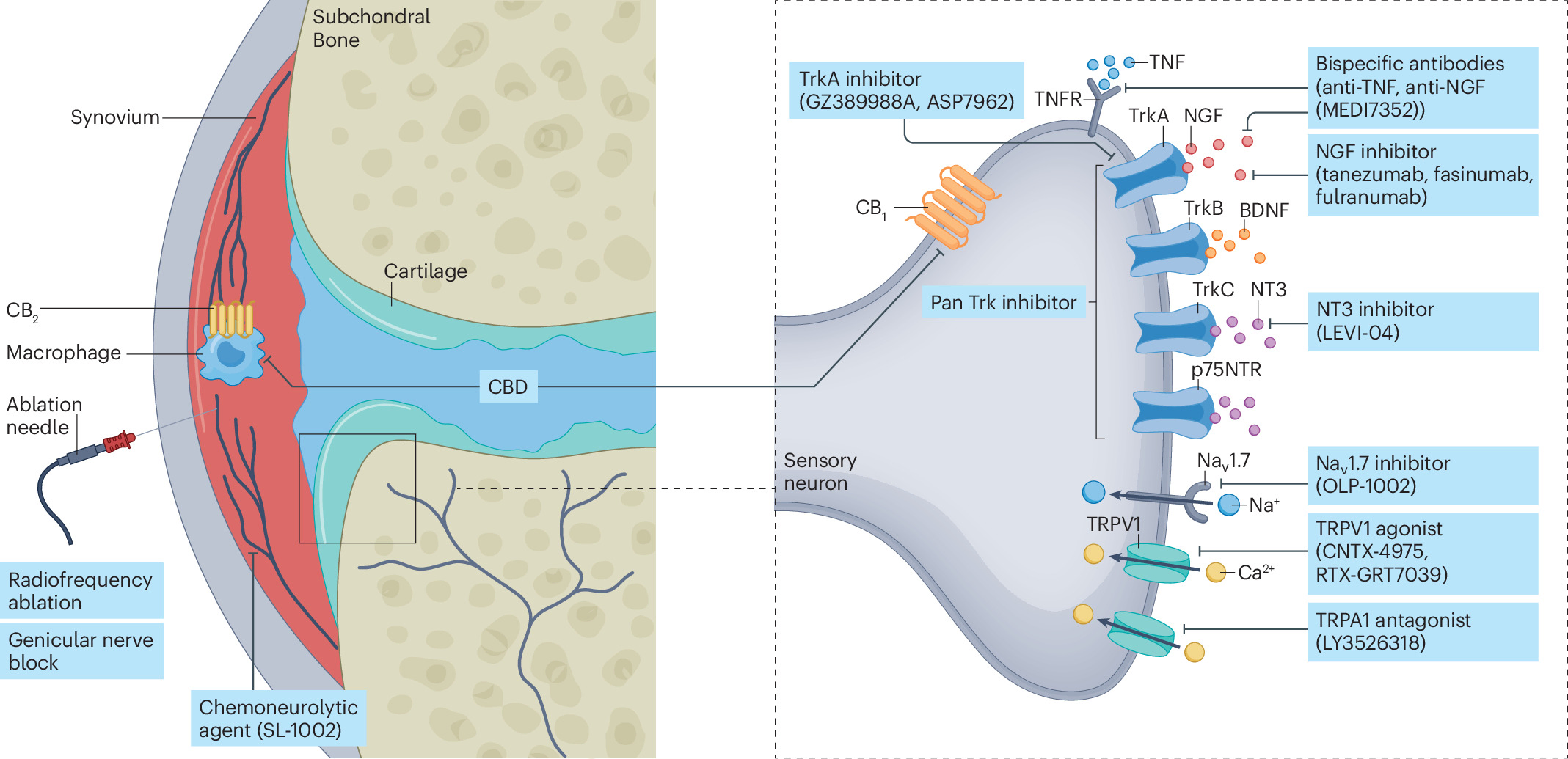
Knee osteoarthritis (OA) is the most prevalent form of OA and a leading cause of chronic pain and disability worldwide. Its growing burden, driven mainly by ageing and obesity, is associated with major societal costs and increased cardiovascular mortality. Knee OA is now recognized as a heterogeneous whole-joint disease involving biomechanical, metabolic, inflammatory, osteochondral and neurovascular mechanisms. This complexity helps to explain why existing analgesics have modest efficacy and why disease-modifying OA drug development has repeatedly faltered. The therapeutic landscape is nevertheless evolving rapidly. Emerging symptomatic strategies include incretin-based therapies (semaglutide is the first to show substantial benefits for pain and function), neurotrophin modulation, extended-release intra-articular glucocorticoids, lubricating injectables and image-guided neurovascular interventions. In parallel, candidate disease-modifying OA drugs target cartilage anabolism, Wnt signalling, matrix-degrading enzymes, subchondral bone remodelling, immunometabolic pathways and local gene therapy. Several treatments, including locally administered GLP1 receptor agonists, the anabolic agent TPX-100 and intra-articular IL-1 receptor antagonist gene therapy, have shown encouraging signals, whereas mesenchymal stromal cell therapies have thus far demonstrated inconsistent efficacy across phase III clinical trials, highlighting the need for further standardization of mesenchymal stromal cell products and optimization of patient selection. Recent advances signal a shift towards a more diverse therapeutic landscape for knee OA, with emerging opportunities to target both symptoms and the underlying mechanisms of disease.
The paper
Sorbonne Université
Nature Reviews Rheumatology, 14 Oct 2026