Low diet quality increases the genetic risk of high blood cholesterol levels in Asian Indian adults [CURES - 165]
Abstract
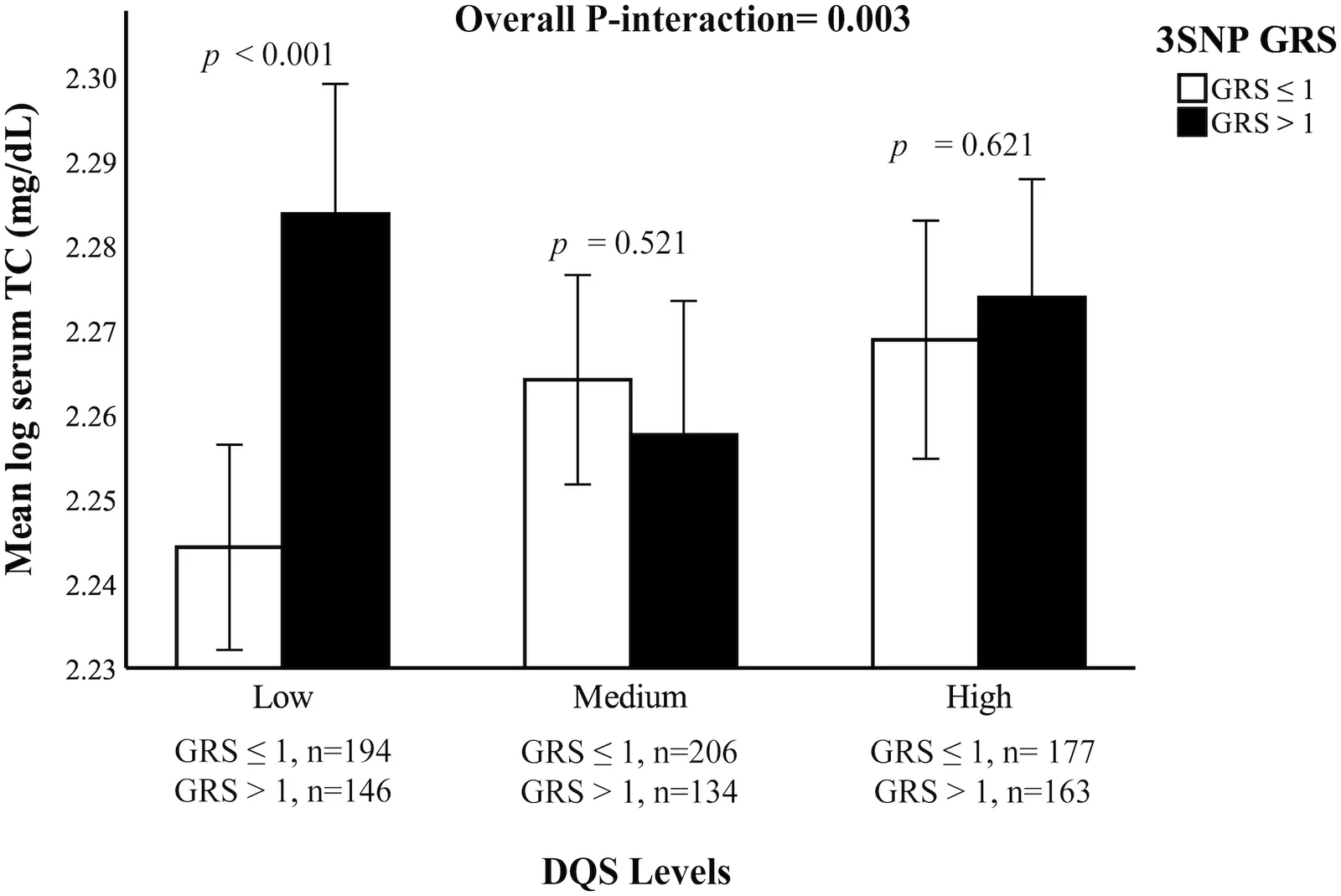
BACKGROUND: Asian Indians face an increased burden of cardiometabolic diseases, yet the interplay between genetic predisposition and diet quality in this population remains underexplored. This study aimed to examine their interaction on cardiometabolic traits in this population. METHODS: We conducted a cross-sectional analysis of 1,020 adults (452 men, 568 women; aged 25-80 years) from the Chennai Urban Rural Epidemiology Study (CURES). A genetic risk score (GRS) of three variants: TCF7L2 rs7903146, FTO rs8050136, and FTO rs1588413 was constructed. Diet quality was evaluated using the Indian Diet Quality Score, based on the intake of eight food groups. Associations between the GRS and cardiometabolic traits, as well as the interactions between the GRS and diet quality score, were assessed. RESULTS: A high GRS was significantly associated with higher fasting plasma glucose (p = 0.005) and glycated haemoglobin (p = 0.006). Significant interactions between the GRS and the diet quality score were observed on total cholesterol (Pinteraction = 0.003) and low-density lipoprotein cholesterol (Pinteraction = 0.005) concentrations, after correction for multiple testing. At the low diet quality score level, individuals with a high GRS had significantly higher total cholesterol and low-density lipoprotein cholesterol concentrations than those with a low GRS (p < 0.001, for all comparisons). CONCLUSION: This study provides novel evidence for the effect of gene-diet quality interactions on lipid outcomes in Asian Indians. Individuals with higher genetic risk may be more vulnerable to lipid abnormalities when adhering to a low-quality diet, emphasising the value of integrating genetic and dietary data into personalised nutrition strategies for lipid-related cardiometabolic risk prevention.
From the paper
- Participants
A total of 1,020 individuals (452 men and 568 women) aged between 25 and 80 years old were recruited randomly from the Chennai Urban Rural Epidemiology Study (CURES) [30].
Quoted word for word from the full text on journals.plos.org.
The paper
Institut des Maladies Métaboliques et Cardiovasculaires
PLOS One, Oct 14, 2026, Open access


