Dementia developed more often in low- and middle-income countries
After standardising for age and sex, rates were 13.6 new cases per 1,000 person-years in low- and middle-income countries, versus 8.3 in high-income countries.
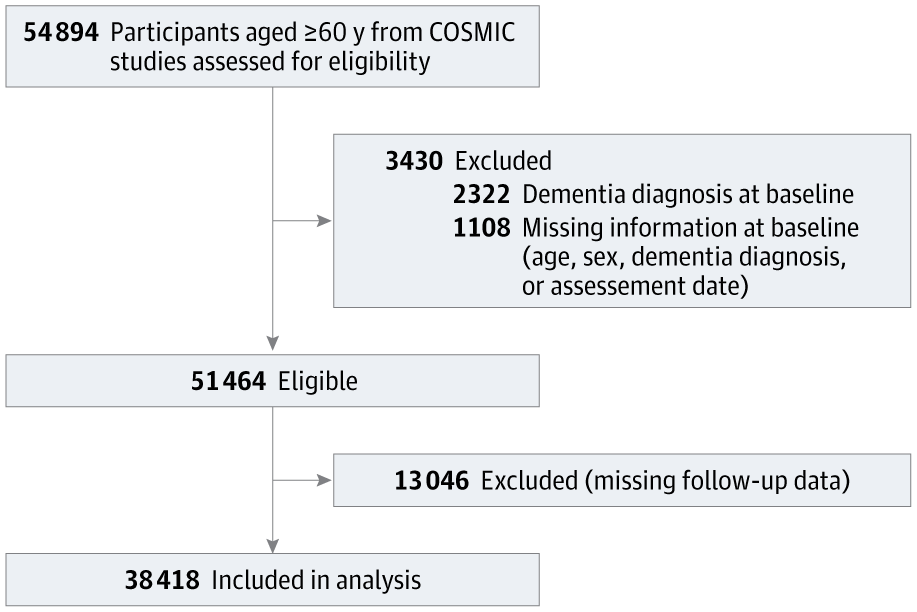
In 38,418 participants from 22 population-based cohorts across 18 countries or territories, researchers analysed how often dementia developed. The meta-analysis combined individual records from observational studies on six continents. The studies used clinically based dementia diagnoses, with follow-up data collected through 2021.
Researchers adjusted rates to reflect the global population’s age and sex distribution in 2023, making comparisons more consistent. The overall rate was 9.7 new cases per 1,000 person-years at risk. This unit combines the time participants remained at risk of developing dementia. Age-standardised rates were 10.6 in women and 8.6 in men, in the same units. Rates were higher in low- and middle-income countries than in high-income countries. Applying age- and sex-specific rates to the projected 2050 population gave 24.7 million new cases, assuming incidence stayed constant.
Why it matters
Age-specific dementia estimates can inform planning for prevention, diagnosis and memory-care services for aging populations, particularly in underrepresented countries.
Caveats
The analysis used observational cohorts, so it could not establish why rates differed between groups. Its global estimates drew on only 18 countries or territories.
The paper
Global Incidence of All-Cause Dementia: A Meta-Analysis
University of New South Wales
JAMA Neurology, 12 Oct 2026