Leukaemia drug linked to lower neurodegenerative disease risk
People starting nilotinib, a leukaemia drug, had a hazard ratio of 0.37 for neurodegenerative disease diagnosis or death versus matched people without chronic myeloid leukaemia.
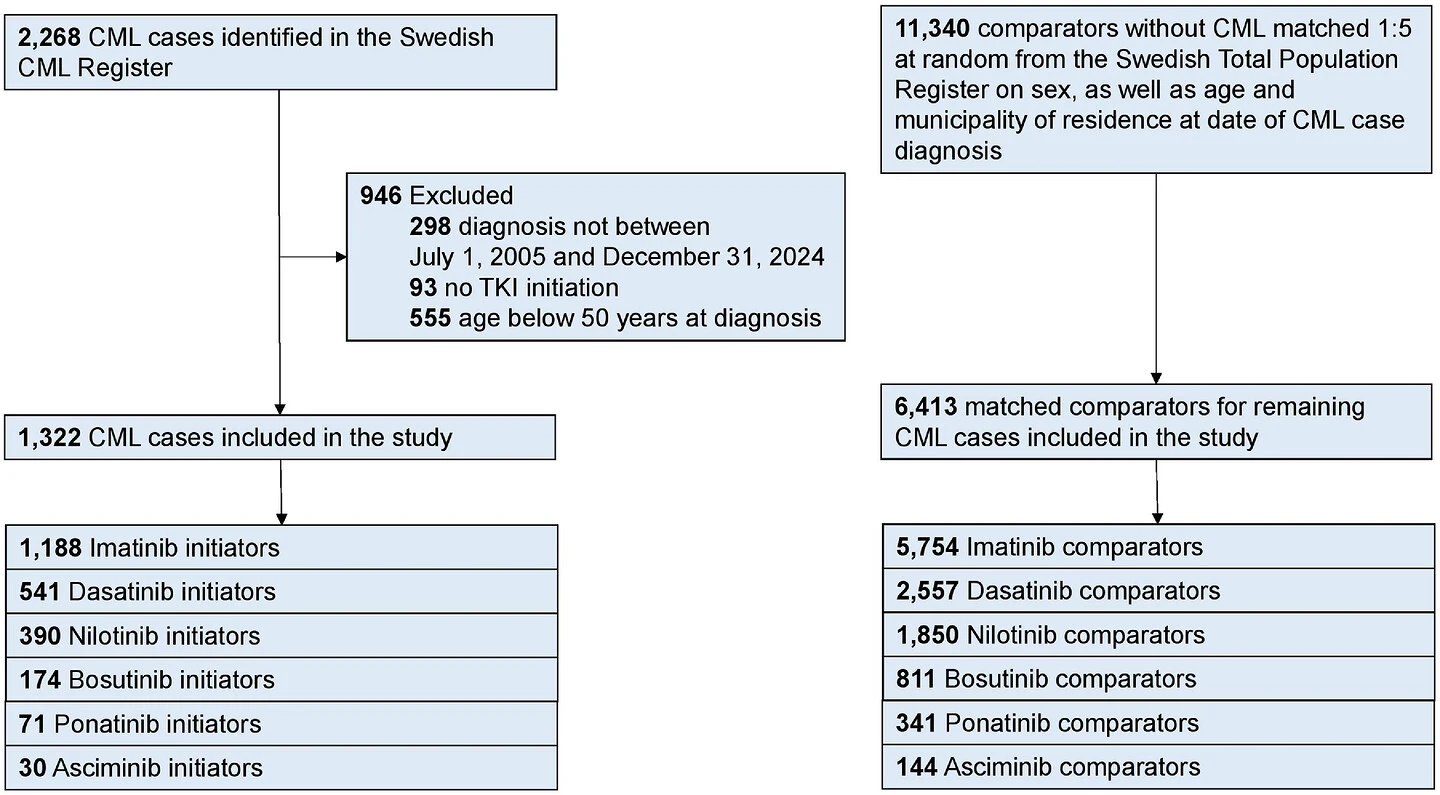
The observational cohort study included 1,322 Swedish patients diagnosed with chronic myeloid leukaemia, a blood cancer, at age 50 or older who started cancer drugs. Researchers used nationwide registries covering 2005–2024. They matched each patient with five people without this cancer by age, sex and residence.
The outcome was diagnosis of, or death from, neurodegenerative disease—conditions in which nerve cells progressively deteriorate. Among 390 patients who started nilotinib, five had this outcome. Nilotinib was associated with a lower rate than in matched comparators. The hazard ratio, a measure comparing event rates over time, was 0.37 after adjustment for calendar year and relevant existing illnesses. Imatinib and dasatinib showed no clear difference from comparators. Too few people used the other three drugs for comparisons. Patients could contribute follow-up to more than one drug group.
Why it matters
Neurodegenerative diseases are an important concern for nervous-system health as people age. The study explored whether existing cancer drugs might be candidates for research into these diseases.
Caveats
This observational study cannot show that nilotinib caused the lower disease rate. Only five events occurred among nilotinib users, and the comparison group did not have chronic myeloid leukaemia.
From the paper
- Participants
A total of 1322 CML cases were included in the study.
- Result
The adjusted HRs comparing each TKI group to their matched comparator populations were 0.98 (95% CI, 0.71 to 1.36) for imatinib users, 1.18 (95% CI, 0.68 to 2.03) for dasatinib users, and 0.37 (95% CI, 0.15 to 0.90) for nilotinib users (Table 2).
- Limitation
However, NDD is difficult to capture accurately using register data: there may be a long lag time between symptom onset and registration of the diagnostic code, with misclassification between the diagnostic codes further contributing to lower validity.23 …
Quoted word for word from the full text on alz-journals.onlinelibrary.wiley.com.
The paper
Centre For Pharmacoepidemiology; Karolinska Institutet
Alzheimer's & Dementia, 1 Oct 2026