Time course and persistence of changes in toe pressure strength during and after toe pressure strength training in older adults receiving day care rehabilitation
Abstract
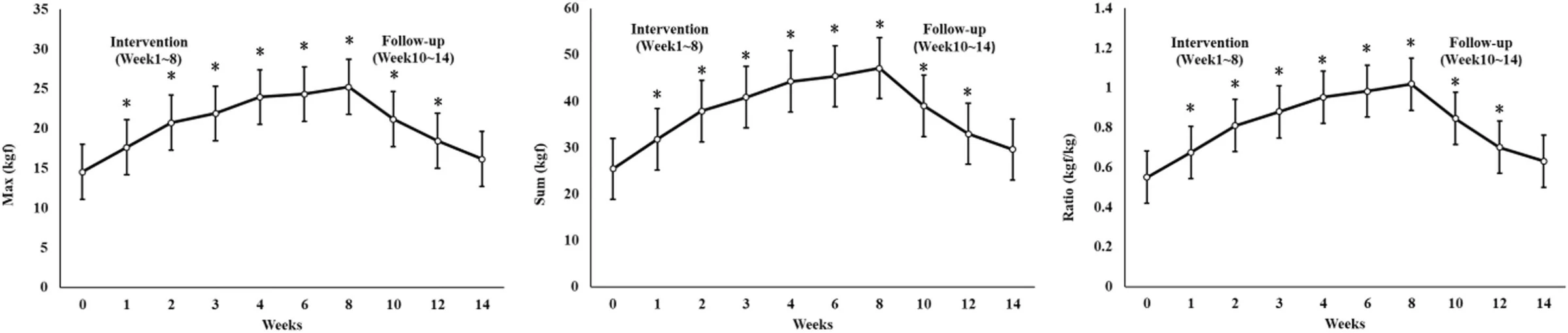
BACKGROUND: Toe pressure strength training has been shown to improve toe pressure strength in the standing position in older adults requiring long-term care. However, the timing of these changes and their persistence after the end of the intervention remain unclear. RESEARCH QUESTION: How does toe pressure strength change during and after toe pressure strength training, and for how long do these changes persist after training cessation? METHODS: This single-group longitudinal intervention study included older adults receiving day care rehabilitation under Japan's long-term care insurance system. Toe pressure strength training was conducted for 8 weeks (5 s × 10 repetitions for 3 sets), and participants were followed up until week 14. Linear mixed models were used to examine temporal changes in toe pressure strength in the standing position and postintervention changes. Estimated marginal means were calculated, and pairwise comparisons with baseline at each time point were performed. RESULTS: A total of 27 participants (mean age, 85 years; 81% female) were included in this study. Toe pressure strength in the standing position showed a significant positive slope during the intervention period (p < .001), whereas a negative slope was observed during the follow-up period (p < .001); however, values remained significantly above baseline through week 12 and were no longer significantly different from baseline at week 14. Toe pressure strength in the standing position was significantly higher than baseline from week 1 (p < .001), and improvements in Timed Up and Go (TUG) and maximum gait speed were also observed during the intervention period. SIGNIFICANCE: Toe pressure strength increased during the training period, accompanied by improvements in TUG performance and maximum gait speed, but these changes diminished after training cessation.
- Toe pressure strength training
- Maximum gait speed
- Timed Up-and-Go
- Toe pressure strength in the standing position
- Humans
The paper
Kagoshima University
Gait & Posture, 29 Sep 2026