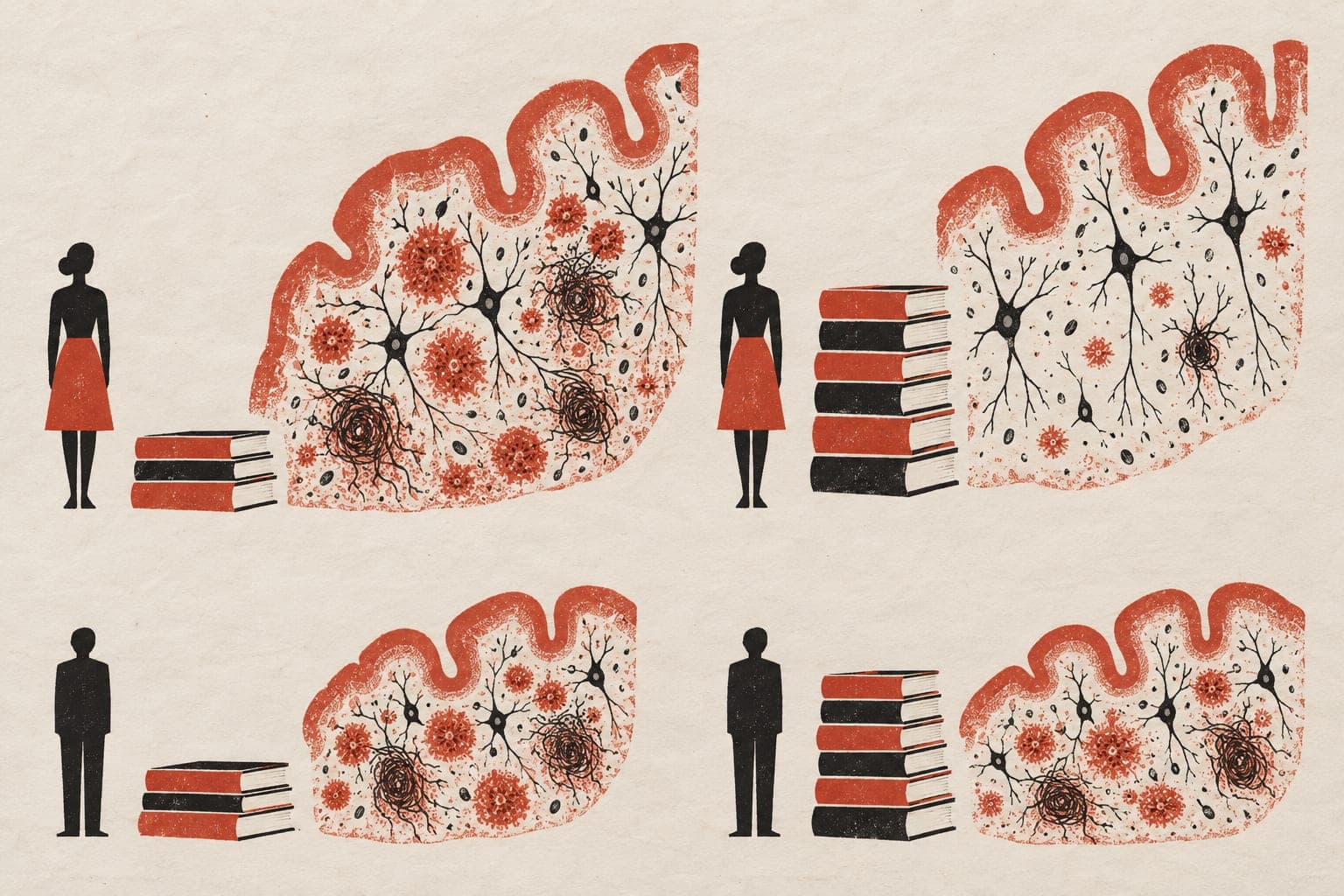
Early-life farming linked to signs of Alzheimer's in the brain
Brain donors with early-life farming exposure had 60% higher odds of Alzheimer's disease neuropathology than those without such exposure.
Alzheimer's & Dementia
In an observational study, researchers examined records from 1,035 brain donors from two Alzheimer's Disease Research Centers between 1986 and 2018. The team used US Census records to identify donors with early-life farming exposure from birth to 17 years of age. Approximately 17% of the donors had early-life farming exposure. When examining assessments of Alzheimer's disease neuropathology, the researchers found that early farming exposure was associated with 60% higher odds of neuropathological burden. This association remained after adjusting for age, sex, and year of death.
Why it matters
Alzheimer's disease is an age-related brain disorder with poorly understood environmental risk factors. The findings suggest that exposures during sensitive early life stages may be linked to increased levels of Alzheimer's neuropathology in late life.
Caveats
The observational design cannot show that farming exposure causes brain pathology. In addition, census records provide an indirect measure that does not identify specific hazards such as chemical toxicants, hearing loss, or psychosocial stress.
The paper
Association between early-life farming exposure and Alzheimer's disease neuropathological burden
Show 11 more authors
Sarah Lim, Lauren Etter, Aly Pfaff, Amanda DeWitt, Adrienne R S Lee, Fred B Ketchum, M Shahriar Salamat, Christopher A Bradfield, Stephen A Goutman, Megan L Zuelsdorff, Kelly M Bakulski,University of Wisconsin School of Medicine and Public Health · Keck School of Medicine of the University of Southern California
Alzheimer's & Dementia · 1 Oct 2026