Highly irregular sleep may link to higher death risk in males
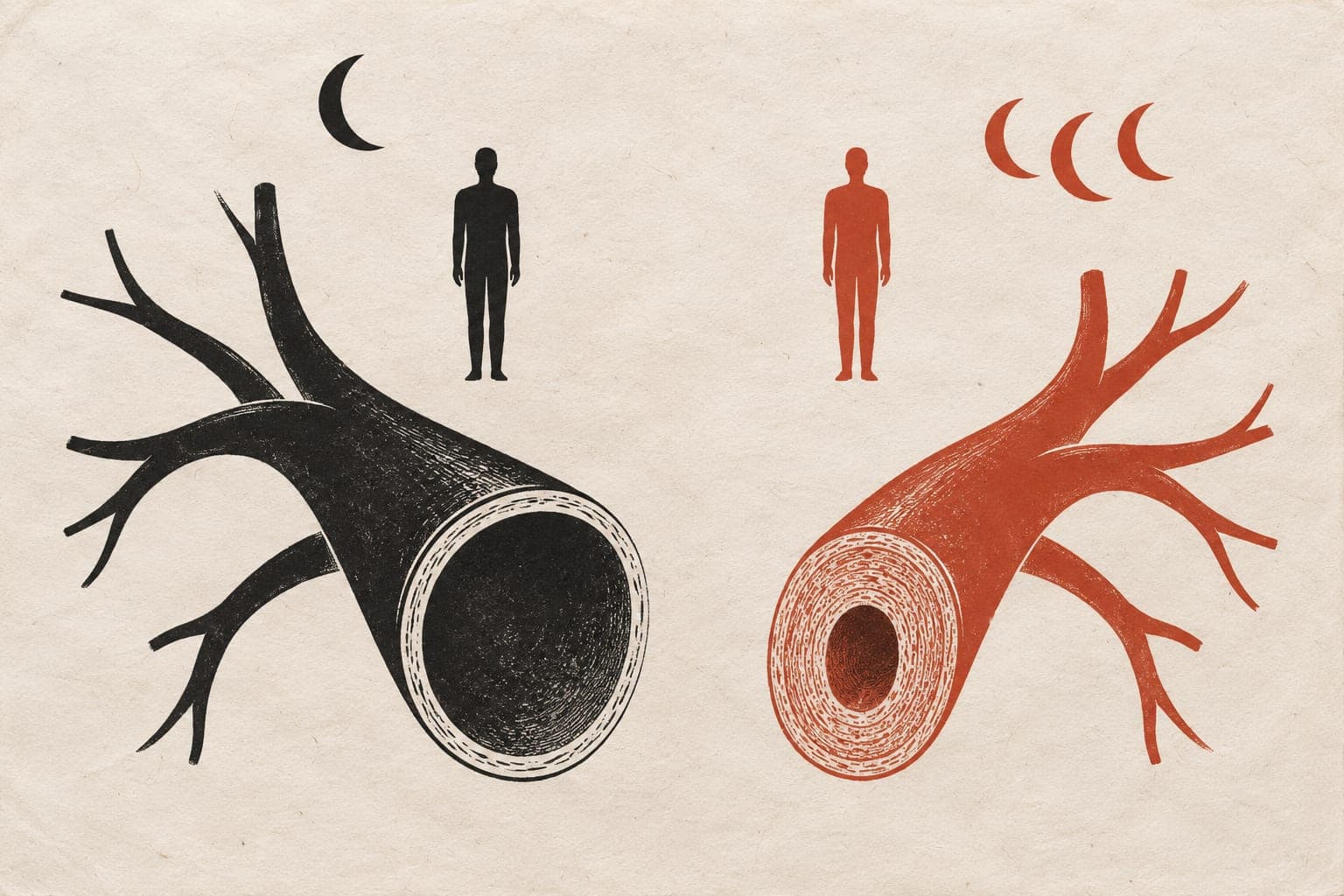
An observational study of 73,647 middle-aged adults suggested that highly irregular sleep schedules had a stronger link to death in males than females.
medRxiv
In 73,647 middle-aged adults in the UK Biobank, an observational study compared sleep regularity between males and females and examined its links to subsequent deaths. Researchers used movement-sensor recordings to score how consistently people slept and woke from day to day. Males were more likely than females to have very irregular sleep, even after researchers accounted for demographic, health and behavioural factors.
Lower sleep regularity had a stronger association with mortality in males than females. The association also strengthened more consistently as regularity decreased in males. A comparison between the very low and very high sleep-regularity groups suggested a possible sex difference in mortality rates.
Why it matters
Sleep regularity is part of sleep and daily biological rhythm health. The study bears on whether sex differences matter when assessing links between sleep patterns and survival as people age.
Caveats
This observational study could not show that irregular sleep caused deaths. Overall tests of whether the association differed by sex were not statistically significant, and this preprint has not been peer-reviewed.
The paper
Sex differences in sleep regularity and its associations with mortality
Show 5 more authors
Prashant Rao, Andreas G Kontopidis, Nicholas S Peters, Matthew P Pase, Shantha M W Rajaratnam,medRxiv · 10 Aug 2026 · Preprint, not peer-reviewed