Somatic mutations track age in reef-building corals
Whole-genome sequencing of eight coral colonies showed somatic mutations followed power-law distributions, faced purifying selection, and helped age a colony to nearly a century.
Molecular Ecology
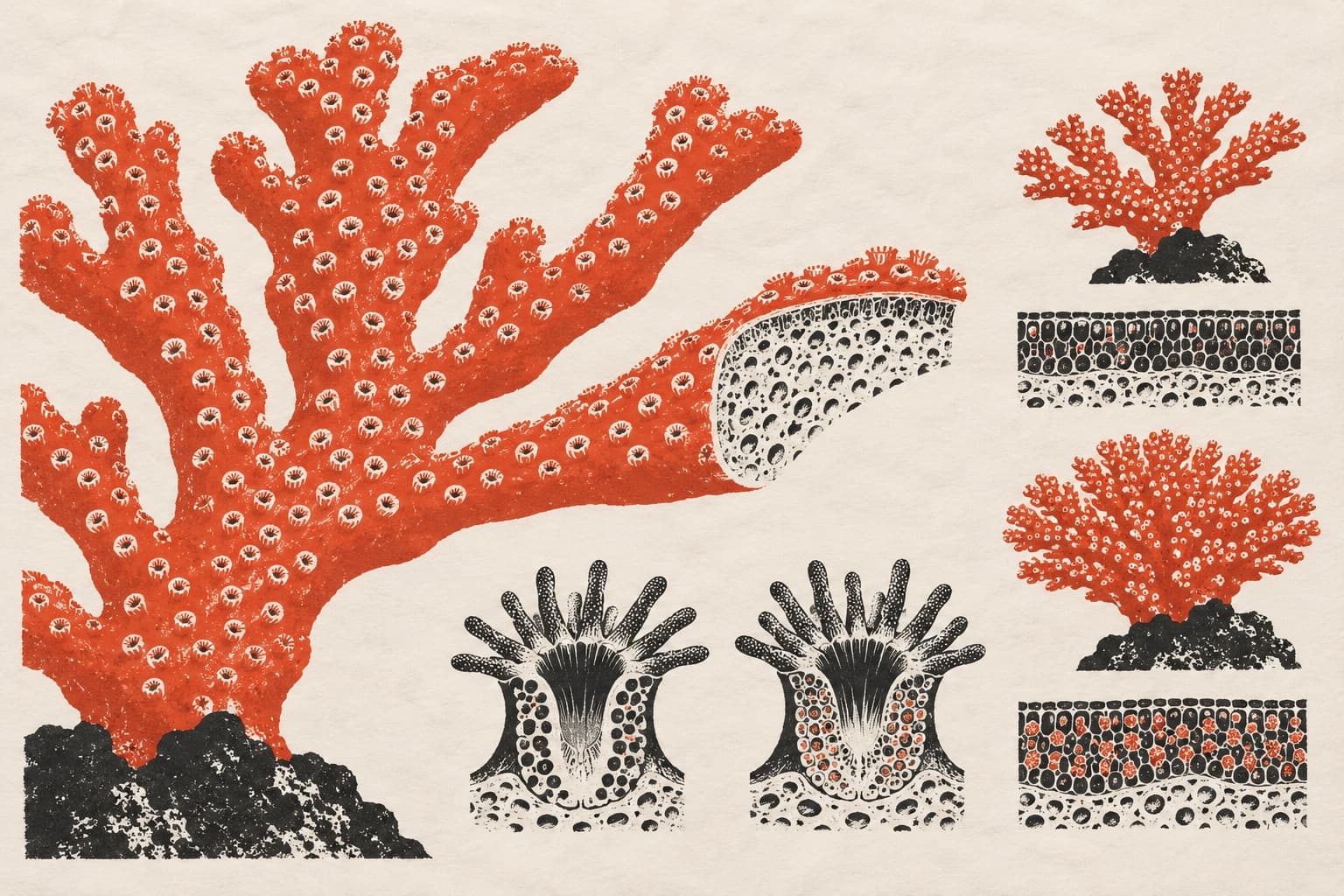
In eight colonies of the reef-building coral Acropora palmata from Curaçao, researchers catalogued somatic genetic variation using whole-genome sequencing at 70 to 100 times depth. Large numbers of somatic variants appeared in six- to ten-year-old colonies, and inferred mutation rates were used to age a genet of uncertain age to almost a century old. Somatic variant allele frequencies followed a power-law distribution, similar to patterns in aging human tissues. The mutations were not fixed at polyp or branch levels and showed no signs of positive selection; instead, they were under purifying selection. In one colony where 28 samples along a single branch were analyzed with a SNP microarray, genetic distance did not correlate with physical distance. The authors note this lack of fixation and spatial pattern may reflect large stem cell populations, stem cell dormancy, de-differentiation, purifying selection, or a combination of these factors.
Why it matters
The findings suggest that somatic genetic clocks can help estimate chronological age in long-lived colonial organisms. They also show that somatic mutation frequency dynamics in modular invertebrates share features with those in aging human tissues.
Caveats
The study included only eight colonies of a single invertebrate species, and spatial branch sampling was restricted to 28 samples from one colony. The inferred mutation rates and age estimates rely on neutral models that require further validation.
The paper
Pennsylvania State University · Alfred-Wegener-Institut Helmholtz-Zentrum für Polar- und Meeresforschung
Molecular Ecology · 1 Oct 2026