Ramadan fasting is linked to respiratory sarcopenia in older men
In 53 older men and 48 older women, 28 days of fasting lowered maximal expiratory pressure in men while shifting plasma neuromuscular markers in both sexes.
European Journal of Applied Physiology
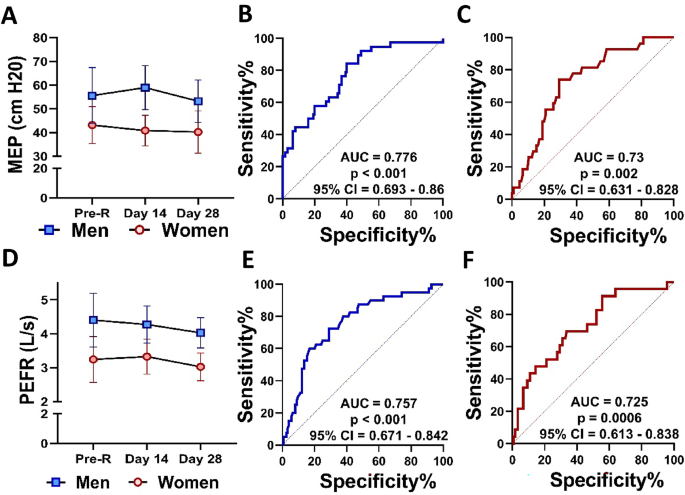
In a study of 53 older men and 48 older women observing Ramadan, researchers tracked markers of respiratory sarcopenia alongside indicators of neuromuscular junction and neuronal health. Participants were evaluated one week before Ramadan and on days 14 and 28 during the fast.
At day 28, men exhibited significantly lower maximal expiratory pressure compared to baseline levels, whereas women did not. Both men and women showed lower plasma concentrations of c-terminal agrin fragment-22 (CAF22) and neurofilament light chain (NfL), along with higher brain-derived neurotrophic factor (BDNF). Across multiple time points, respiratory sarcopenia was linked to higher CAF22 and NfL and lower BDNF in both sexes. Maximal expiratory pressure and peak expiratory flow rate were also significantly associated with all three plasma markers. Fasting reduced systemic oxidative stress without altering physical performance.
Why it matters
Respiratory muscle decline contributes to functional vulnerability and frailty as people age. These findings suggest that extended intermittent fasting patterns may exert sex-specific effects on respiratory strength and circulating markers of neuromuscular integrity.
Caveats
The observational design lacked a non-fasting control group and followed participants for only 28 days. The sample was limited to 101 older adults, and the cellular mechanisms responsible for the divergent outcomes between men and women remain unexamined.
The paper
University of Sharjah
European Journal of Applied Physiology · 28 Sep 2026