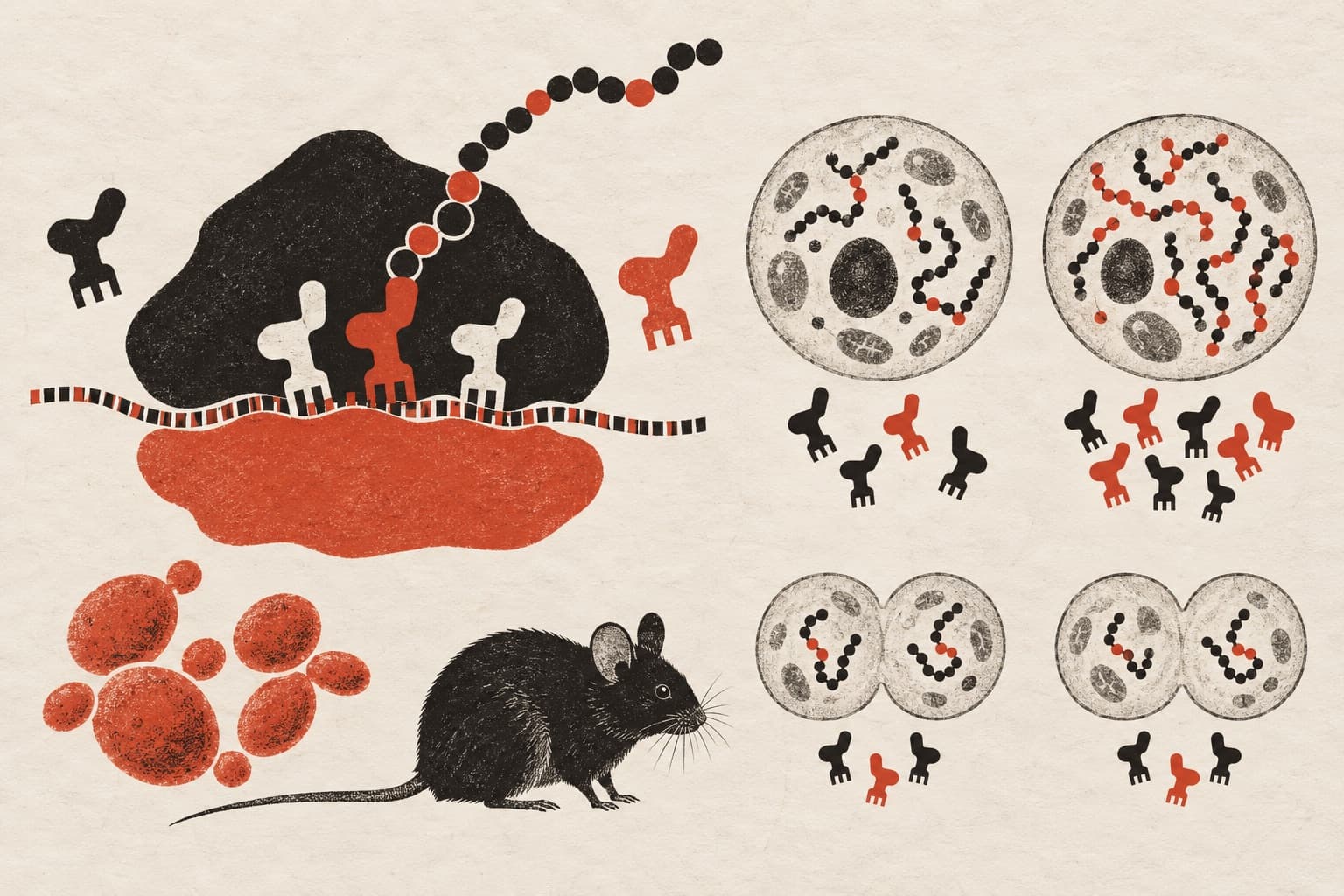
Halting translation by the letter with sequence-selective small molecules
Abstract
Protein synthesis forms the very basis of life. Cells rely on a sophisticated machinery of factors for the translation of an RNA template into a correct amino acid sequence. We owe a lot of our understanding of this process to specific small-molecule modulators. Since the discovery of antibiotics inhibiting bacterial protein synthesis, small molecules have served as probes to dissect the translation apparatus and as medications to fight disease. Advances in sequencing-based techniques and structural methods now provide for a highly detailed mechanistic understanding. Recent evidence shows that many translation modulators act in an RNA- or a peptide-sequence-selective manner. These molecules present exciting opportunities to better understand the translation machinery and provide new venues to modulate the expression of certain protein subpopulations. In this Review, we summarize recent findings on sequence-selective translation modulators, with emphasis on eukaryotes, the techniques that enabled their discovery, and offer an outlook into their potential applications.
The paper
RIKEN Center for Sustainable Resource Science; Riken
Nature Chemical Biology, 25 Sep 2026