UK Biobank analysis leaves cause and effect unclear for most links
An observational genetic analysis of 458,747 UK Biobank participants recovered nearly all previously reported links, but most remained indistinguishable from effects of unmeasured factors.
Our read
AI & data- Studied:
- Mendelian randomization in 458,747 UK Biobank individuals (Multicenter)
- What changed:
- Most reported risk factor-outcome paths were indistinguishable from unmeasured confounding
- The catch:
- Healthy older people were preferentially ascertained into the UK Biobank
- Stake:
- Boehringer Ingelheim funded the study.
- Why it’s aging research:
- It bears on staying healthy in midlife and later life.
Editor of record: Boris Djordjevic · AgingResearch.News
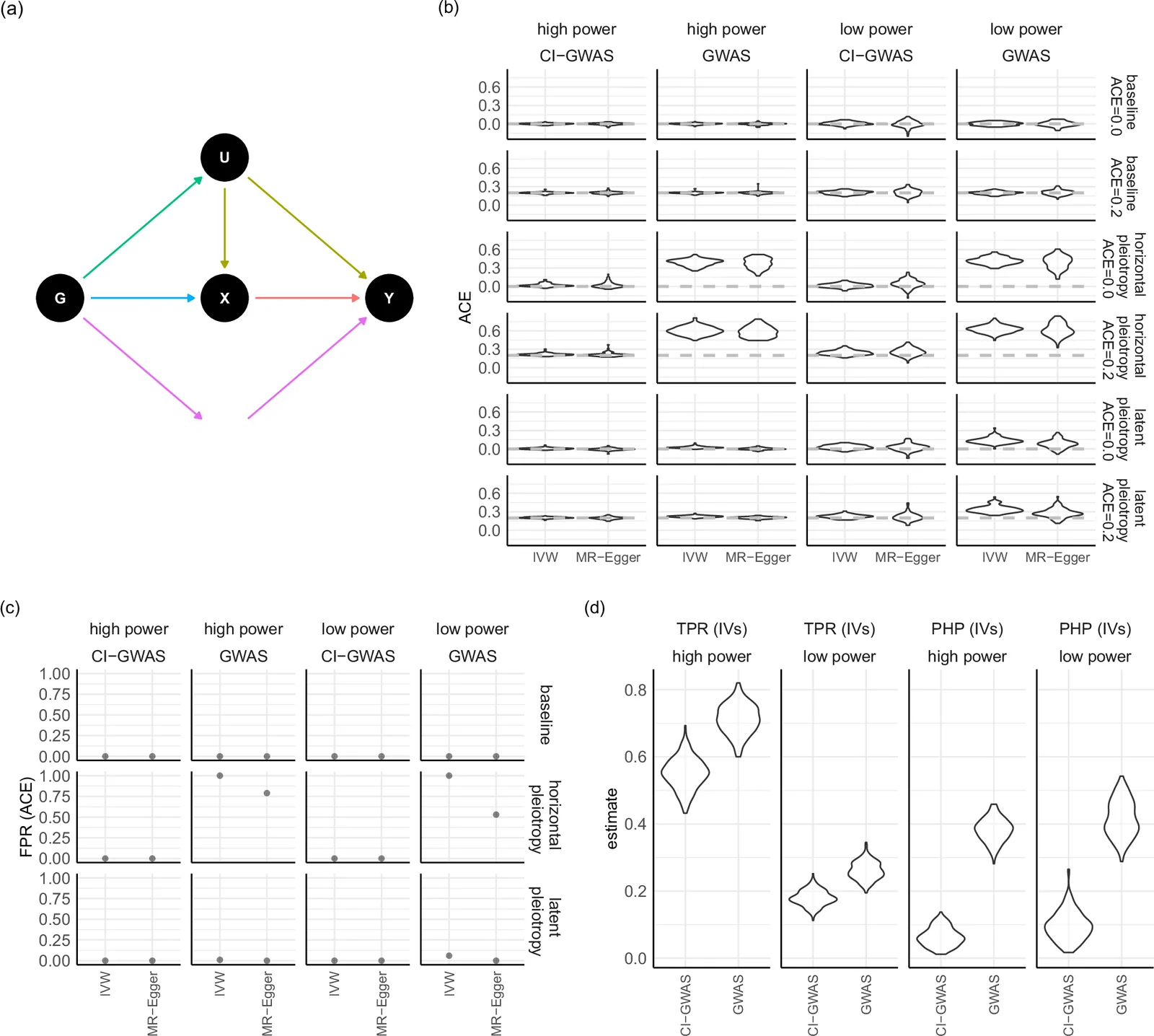
In an observational genetic analysis of 458,747 UK Biobank participants, researchers examined nine risk factors, four disease outcomes and 8.4 million genetic variants. They introduced a method that maps relationships between genetic variants and measured traits while checking for unmeasured factors that could link them. The method selected genetic variants for Mendelian randomization, an analysis that uses inherited differences to assess possible cause-and-effect links.
It identified 696 variants as suitable tools when risk factors were analyzed together. The analysis recovered nearly all previously reported risk factor–disease links. But most could not be distinguished from associations arising from unmeasured shared influences. The authors suggested that reliable conclusions about cause and effect from biobanks would require measurements over time and family data to distinguish whether risk factors preceded disease or disease altered the risk factors.
Why it matters
Research on age-related diseases such as stroke and type 2 diabetes needs to distinguish potential causes from accompanying traits when identifying prevention targets.
Caveats
This was an observational genetic analysis, not an experiment testing changes to risk factors. The method's selection of suitable genetic variants depended on assumptions about how faithfully its relationship map represented the underlying data.
From the paper
- Participants
Using the observed imputed SNP data from 458,747 UK Biobank individuals on chromosome 1, we first simulate a graph standard to MR as follows: where U is a latent unobserved random confounding variable with drawn from a Gaussian distribution with mean zero and variance of one.
- Limitation
Our approach requires either individual-level data or summary information on the minor allele frequency, the LD correlations, and the phenotypic correlations, alongside standard GWAS regression coefficient estimates.
Quoted word for word from the full text on PubMed Central.
The paper
Causal inference for multiple risk factors and diseases from genomics data
Institute of Science and Technology Austria
Nature Communications, Aug 25, 2026, Open access

Comments
Be the first to comment.