Genetic study links protein inhibition to lower kidney disease risk
Genetic proxies for inhibiting two proteins were linked to lower kidney disease odds, with odds ratios of 0.76 and 0.78 per standard-deviation decrease in triglycerides.
Our read
Mechanisms- Studied:
- Mendelian randomization in 2,369,738 people of European, East Asian and African ancestry
- What changed:
- Chronic kidney disease odds were lower with genetically proxied ANGPTL3 and ANGPTL4 inhibition (odds ratios 0.76 and 0.78)
- The catch:
- Chronic kidney disease could have been misclassified
- In the record:
- The 5th paper on ANGPTL3 with results in people; 53 on record in all.
Editor of record: Boris Djordjevic · AgingResearch.News
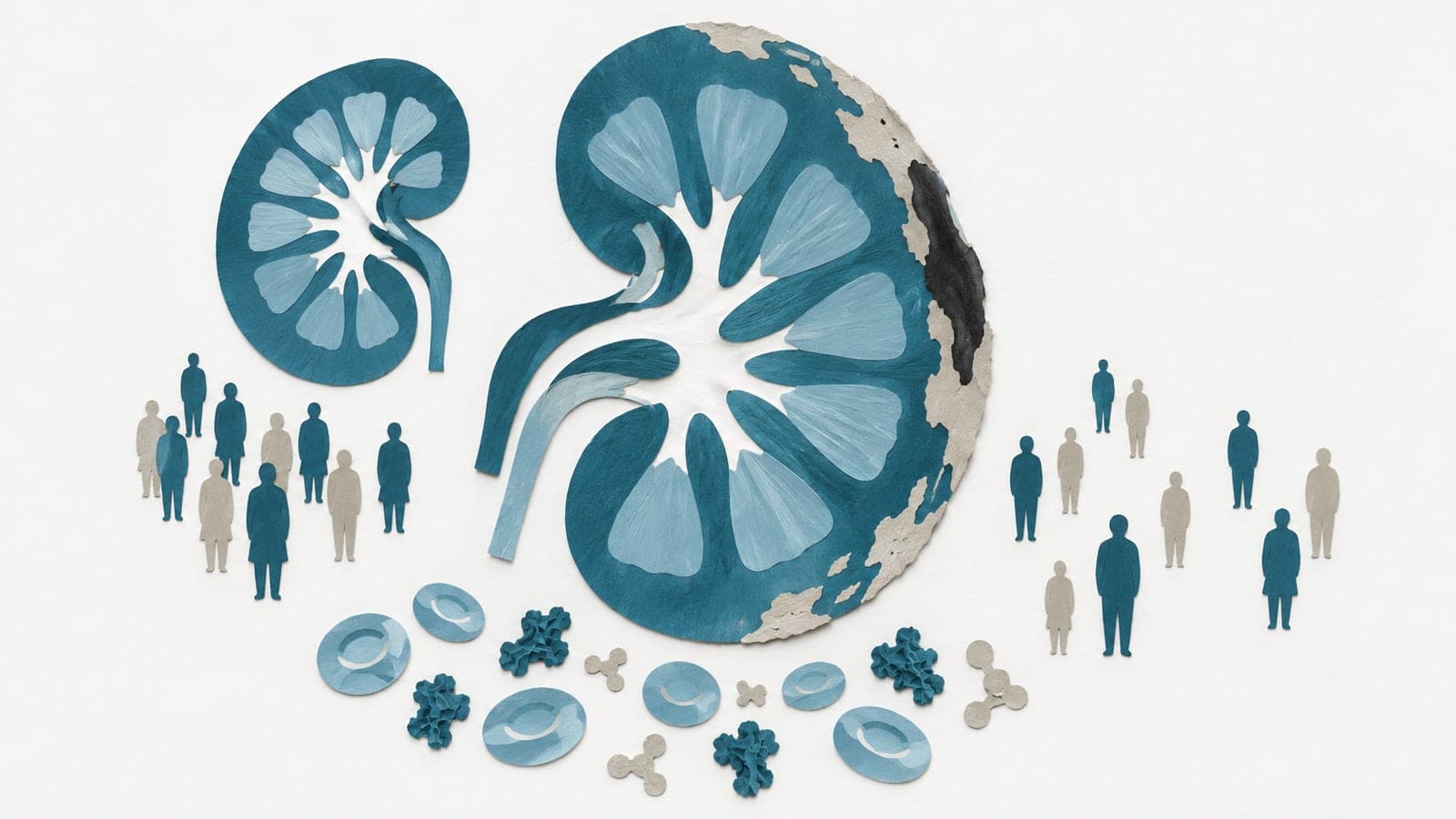
A drug-target Mendelian randomization analysis included 2,369,738 people of European, East Asian and African ancestry, including 186,388 with chronic kidney disease. Researchers used genetic variants as stand-ins for changes in protein activity, rather than testing drugs.
Genetic proxies for inhibiting angiopoietin-like proteins 3 and 4, which regulate blood fats, were associated with lower kidney disease odds and higher estimated kidney filtration rates. Per one-standard-deviation decrease in triglycerides, a blood fat, the odds ratios were 0.76 and 0.78, respectively. An odds ratio below 1 indicates lower odds; a standard deviation describes variation in a measure. Genetically proxied enhancement of lipoprotein lipase, a fat-processing enzyme, was also associated with lower disease odds, with an odds ratio of 0.86 on the same scale, and higher estimated filtration rates.
Why it matters
Chronic kidney disease is relevant to healthy aging. The authors identified these proteins and their target enzymes as potentially promising targets for preventing and treating the disease.
Caveats
Mendelian randomization depends on strict genetic assumptions and does not test a drug’s effects. The genetic proxies were not kidney-specific, and chronic kidney disease could have been misclassified.
The paper
University of Pennsylvania
American Journal of Kidney Diseases, Sep 22, 2026, Open access

Comments
Be the first to comment.