Fat buildup linked to declining leg power in older adults
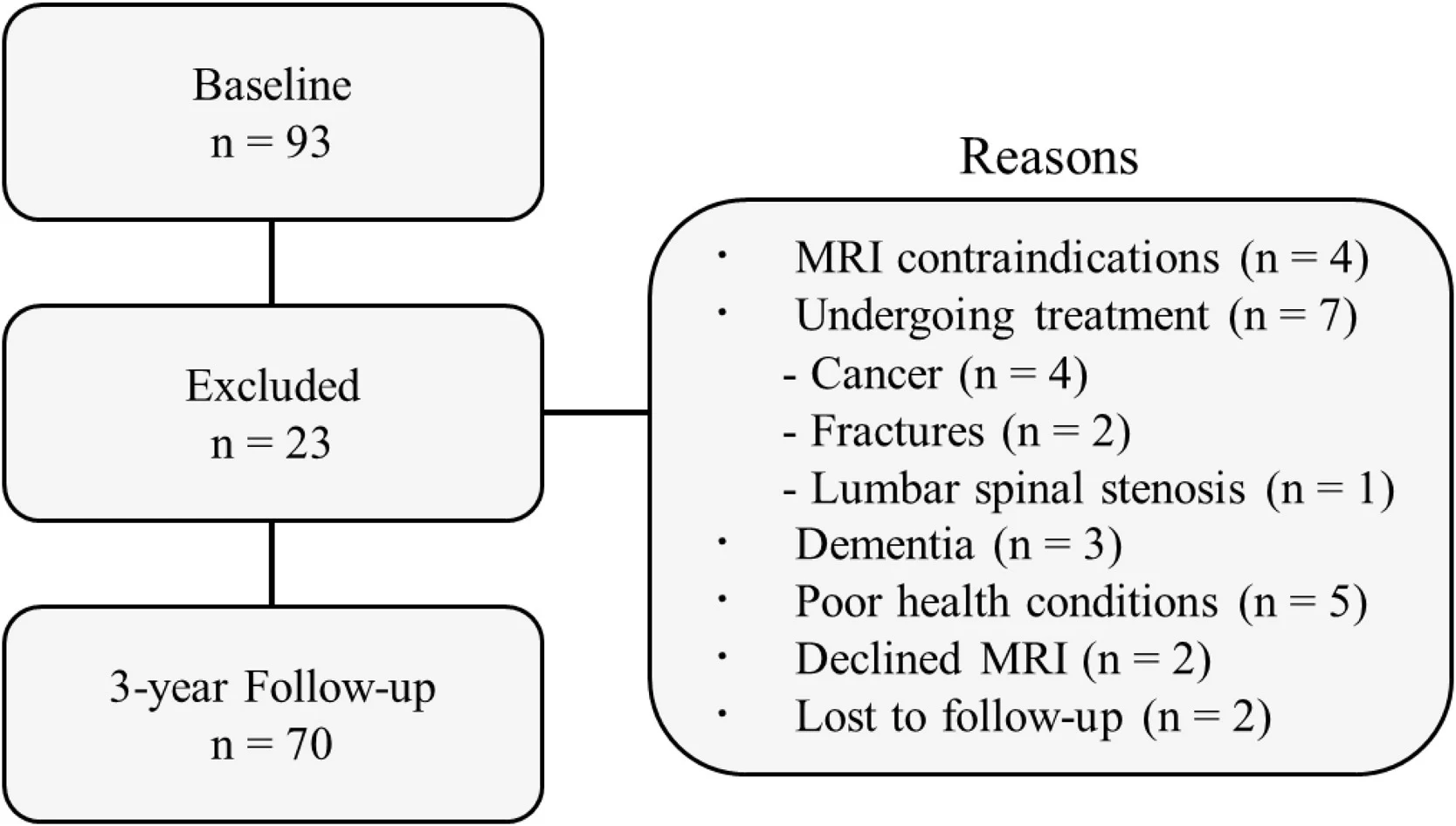
MRI scans of 70 older adults over three years linked coordinated fat buildup across muscles, rather than muscle shrinkage alone, to declining leg power.
3 years
Limit: The link between fat buildup and declining leg power rests on only 70 older adults
Edited by Boris Djordjevic · AgingResearch.News
This observational study followed 70 community-dwelling older adults whose average age was 75 years; 57.1% were women. Researchers used MRI scans at the start and three years later to measure muscle volume and fat content in 19 hip and thigh muscles. They also measured changes in vertical jump and performance on a 30-second sit-to-stand test.
Muscle volume decreased and the proportion of fat increased, but changes varied across muscles and people. Muscle shrinkage and fat buildup were only partly linked. An analysis identified separate patterns of coordinated fat increases and muscle shrinkage across muscles. The fat-increase pattern was independently associated with greater declines in leg power. The muscle-shrinkage pattern was not.
Why it matters
Age-related muscle degeneration involves changes in both size and composition. Tracking both may help characterize how aging muscles relate to changes in physical performance.
Caveats
This observational study could not establish whether fat buildup caused declining leg power. Its findings came from 70 community-dwelling older adults and do not establish the same relationships in younger people.
The paper
Kyoto University; Kansai Medical University
Archives of Gerontology and Geriatrics, Sep 9, 2026


Comments
Be the first to comment.