Heart failure drugs linked to lower signaling protein in blood
A nonrandomized study of 74 patients after heart attacks also linked the drugs to fewer signs of right-heart failure.
Our read
Interventions- Studied:
- Non-randomized trial in 74 patients with ischemic heart failure
- What changed:
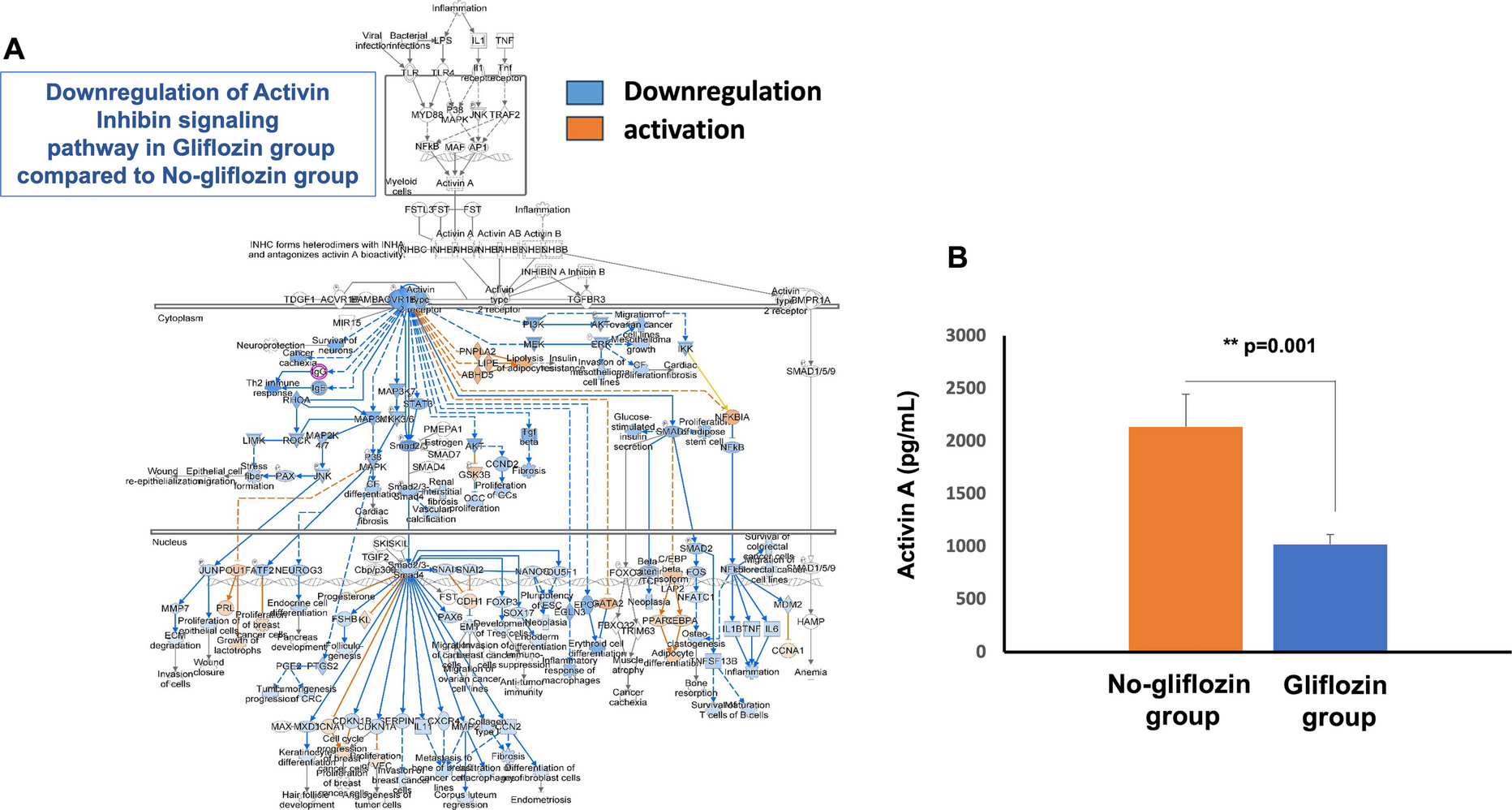
- Patients taking SGLT2 inhibitors had lower blood activin A than those receiving standard heart failure medicines alone
- The catch:
- Differences in patients’ health or care could explain the lower protein levels
- In the record:
- One of 476 papers on empagliflozin on record: 165 with results in people, 84 in animals.
Editor of record: Boris Djordjevic · AgingResearch.News
Seventy-four patients with heart failure from reduced blood supply entered a single-center, nonrandomized study after a heart attack. All had weakened heart pumping and a high ultrasound-based probability of pulmonary hypertension, or high blood pressure in the lungs. Forty-two received dapagliflozin or empagliflozin at 10 milligrams daily alongside standard heart failure medicines. The other 32 received standard medicines alone.
Drug use was associated with lower blood levels of activin A, a signaling protein. It was also linked to fewer signs of right-heart failure, a lower ultrasound-based probability of pulmonary hypertension and better coordination between the heart’s right pumping chamber and the lung circulation.
Why it matters
Heart failure is an age-related disease with limited treatment options when complicated by high lung blood pressure. The authors suggest that changes in protein signaling may contribute to the effects associated with these drugs.
Caveats
Treatment was not randomly assigned, so differences in patients’ health or care could have contributed to the associations. The findings concern patients after heart attacks with ultrasound findings suggesting pulmonary hypertension, not people with other forms of heart failure.
Empagliflozin is part of Bryan Johnson's Blueprint



Comments
Be the first to comment.