Aging lemurs show changes in brain fluid-producing tissue
Old gray mouse lemurs had 1,519 genes with higher activity and 1,682 with lower activity in brain fluid-producing tissue than young animals.
Limit: Only 4 mouse lemurs per age group were analyzed for transcriptomic changes
Edited by Boris Djordjevic · AgingResearch.News
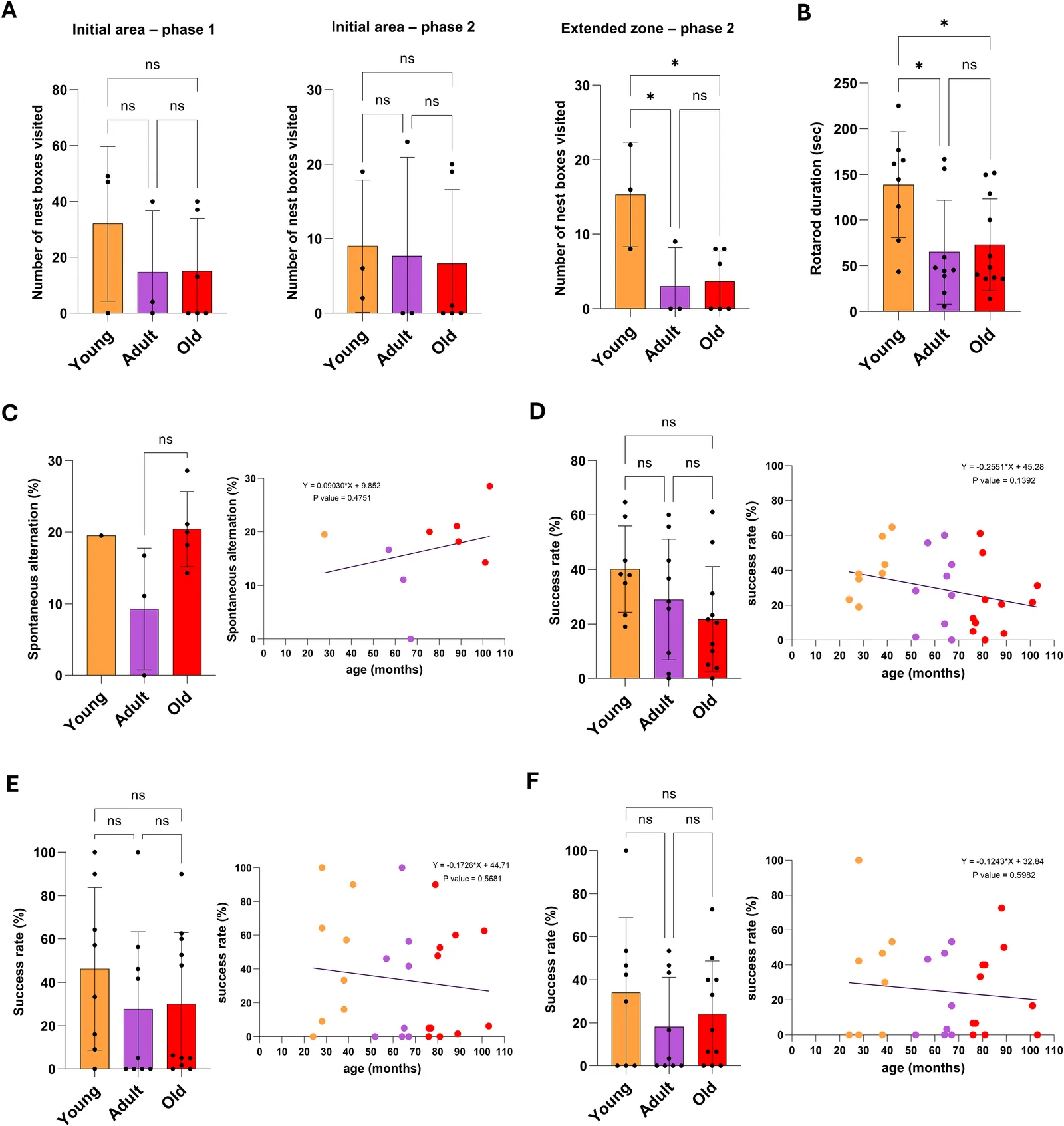
In a cross-sectional animal study, gray mouse lemurs aged 2–4, 5–6 and at least 7 years underwent behavioral tests. Researchers then examined the choroid plexus, tissue that produces the fluid surrounding the brain. They measured gene activity in four animals per age group and examined tissue structure and proteins.
Motor coordination and exploration declined with age, while working memory and visual discrimination remained preserved. Age-related gene activity changes included increases in immune and transport pathways and decreases in signaling and communication between cells. Tissue structure showed no significant age-related changes. Levels of AQP1, a protein that channels water across cell membranes, fell with age. Lower levels correlated with poorer motor performance. The authors interpreted the findings as selective functional reorganization rather than generalized deterioration.
Why it matters
The authors suggest that problems in this fluid-producing tissue may contribute to age-related movement difficulties and disruption of the brain’s internal balance.
Caveats
The age-group comparison and correlations cannot show that tissue changes caused motor decline. The gene-activity analysis included four lemurs per age group, and the findings do not establish what happens in people.
From the paper
- Limitation
Sample sizes were modest, particularly for transcriptomic analyses, which constrained statistical power and limited the ability to examine sex-specific differences.
Quoted word for word from the full text on PubMed Central.
The paper
Age-related molecular and functional remodeling of the choroid plexus in the gray mouse lemur
Centre National de la Recherche Scientifique
PLOS One, Aug 31, 2026, Open access


Comments
Be the first to comment.