Heart artery procedures not clearly linked to higher dementia risk
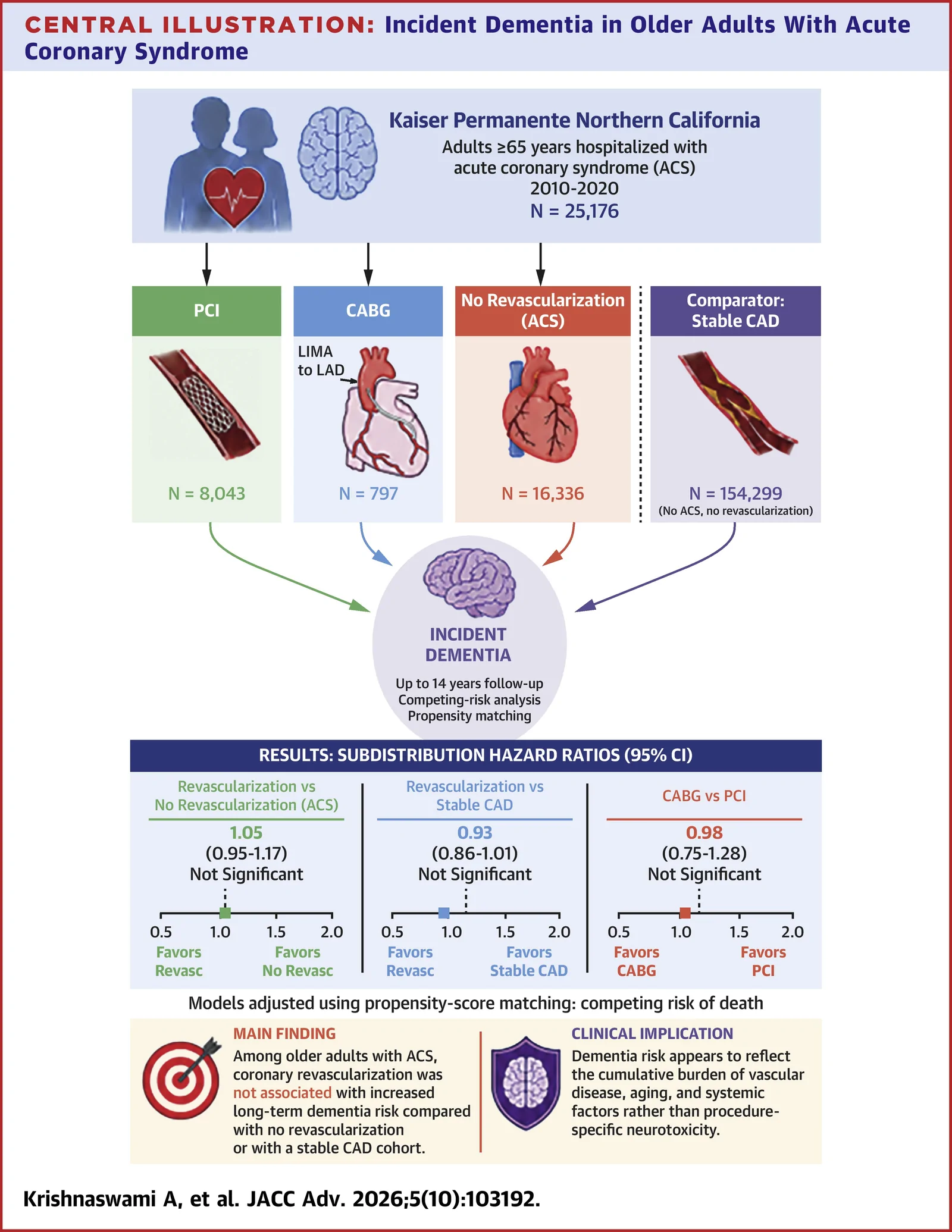
Dementia developed in 9.3% of older adults after heart artery procedures versus 8.9% without them over a median 4.8 years, before adjustment.
Our read
Populations- Studied:
- Cohort study of 25,176 older adults hospitalized with acute coronary syndrome, median 4.8 years
- What changed:
- Dementia risk was similar with versus without heart artery procedures (sub-hazard ratio: 1.05; 95% CI: 0.95-1.17)
- The catch:
- Unmeasured baseline cognitive reserve and frailty could confound the dementia comparison
- Stake:
- An author holds shares in Altimmune. An author holds shares in Corcept Therapeutics. Authors also declare ties to 14 more companies.
- In the record:
- The 14th paper on coronary artery bypass grafting with results in people; 53 on record in all.
- Why it’s aging research:
- It measures an outcome that worsens with age.
Editor of record: Boris Djordjevic · AgingResearch.News
An observational cohort study examined records of 25,176 adults aged 65 or older hospitalized with acute coronary syndrome, a sudden reduction in heart blood flow, between 2010 and 2020. Researchers compared stent procedures to open heart arteries, bypass surgery, and care without either procedure. Those receiving procedures were more often male: 66.2% versus 54.0%. A comparison group included 154,299 people with stable heart artery disease who had neither procedure.
After matching patients on measured characteristics and accounting for deaths, researchers found no statistically clear increase in dementia risk after artery procedures. The relative hazard, a comparison of risk over time, was 1.05 versus no procedure; the range of likely values included no difference. Dementia risk was also similar between stents and bypass surgery and compared with stable heart artery disease.
Why it matters
For dementia in older adults, the authors suggest that cumulative blood vessel and whole-body health factors may matter more than procedure-specific toxic effects on the brain.
Caveats
This observational study could not rule out unmeasured differences between groups or establish that the procedures had no effect on dementia. The findings do not cover adults under 65 or people with dementia diagnosed before or within a year of hospitalization.
From the paper
- Follow-up
The median duration of follow-up was 4.8 years (IQR: 2.7-8.1 years).
- Result
The unadjusted sub-hazard ratio, accounting for competing risk, was 0.88 (95% CI: 0.80-0.95, P = 0.002) when compared with the ACS group without revascularization and 0.71 (95% CI: 0.70 to 0.73, P < 0.0001) when compared with stable CAD.
- Limitation
First, dementia diagnoses were based on ICD codes rather than standardized neuropsychological testing, which might have led to a potential under ascertainment of milder cognitive impairment.
Quoted word for word from the full text on PubMed Central.
- Coronary artery bypass grafting
- Coronary revascularization
- Percutaneous coronary intervention
- Dementia
- Acute coronary syndrome
- Humans
The paper
Kaiser Permanente San Jose Medical Center; Kaiser Permanente
JACC Advances, Aug 28, 2026, Open access


Comments
Be the first to comment.