Mental illness and deprivation linked to cardiovascular risk
Among 34,392 Dutch patients, combined mental and socioeconomic vulnerability was linked to the highest adjusted cardiovascular risk, with a hazard ratio of 1.52.
Our read
Populations- Studied:
- Cohort study of 34,392 patients receiving cardiovascular risk management, five years
- What changed:
- Major cardiovascular event risk was highest in patients with mental and socioeconomic vulnerability (hazard ratio 1.52)
- The catch:
- The abstract omits the hazard ratio’s comparison group, making the risk contrast ambiguous
- Why it’s aging research:
- It bears on staying healthy in midlife and later life.
Editor of record: Boris Djordjevic · AgingResearch.News
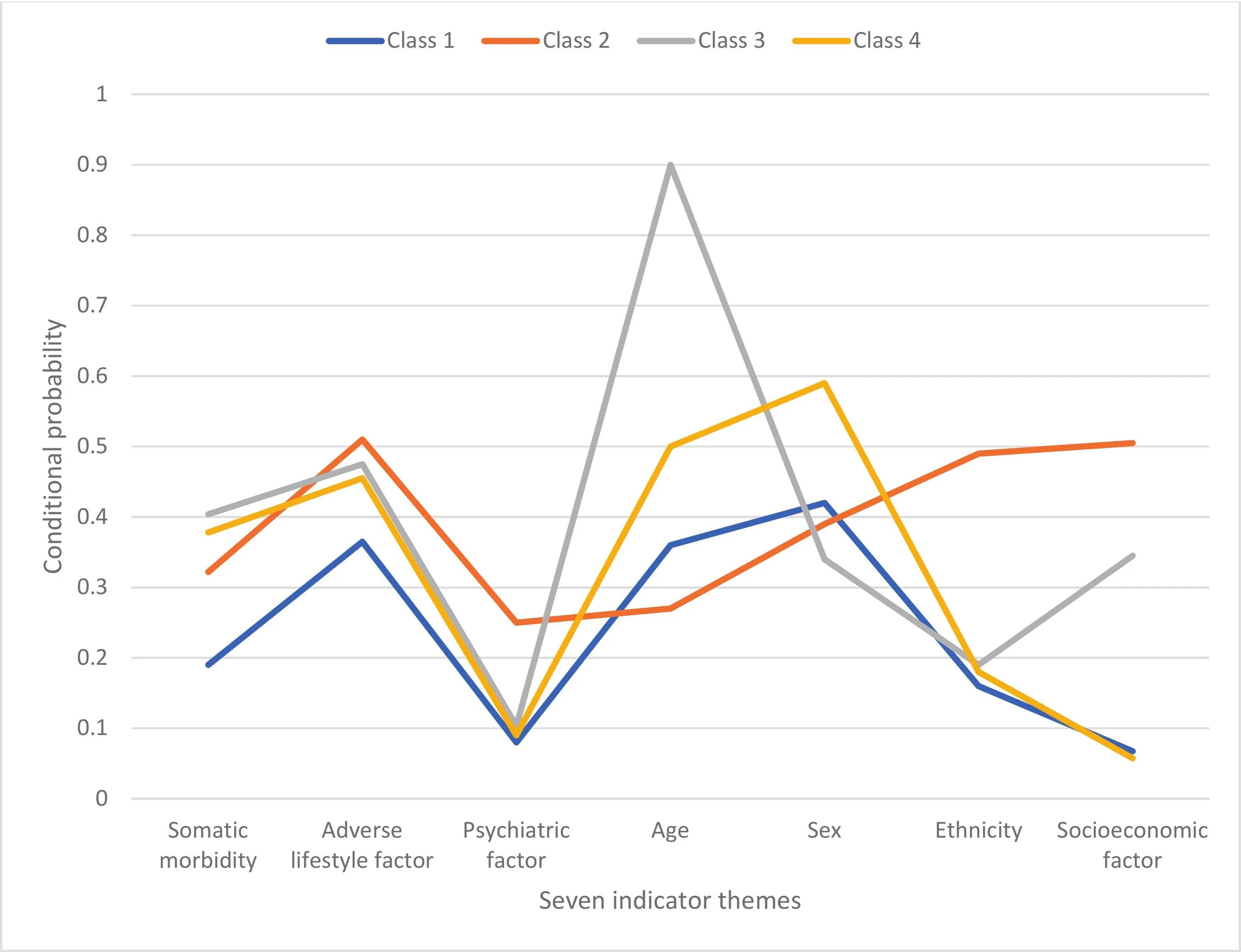
This observational study included 34,392 patients aged 40–70 in the Netherlands who had entered cardiovascular risk management in general practice before 2018. Researchers used 17 indicators covering physical illness, lifestyle, mental health, demographics and socioeconomic circumstances to identify four groups. They compared major heart and blood vessel events over five years and annual medical spending from 2018 through 2022.
The group with mental and socioeconomic vulnerability included 6,329 patients. It had the highest risk of major cardiovascular events after statistical adjustments. Its hazard ratio—a relative measure of event risk over time—was 1.52. This group also had the highest mean annual total medical spending after accounting for age, at €5,273.
Why it matters
For middle-aged and older adults receiving cardiovascular risk management, the authors called for more integrated, person-centered care that addresses coexisting illnesses, social circumstances and behavioral risks.
Caveats
This observational grouping analysis cannot establish cause and effect, and the abstract did not identify the hazard ratio’s comparison group. The findings concern patients aged 40–70 already registered for cardiovascular risk management, not the general population.
The paper
Leiden University
Preventive Medicine, Aug 27, 2026



Comments
Be the first to comment.