Chronic disease patterns linked to death risk in US adults
The most severe disease cluster was linked to higher relative mortality risk, with a hazard ratio of 3.71 versus the group with little chronic illness.
Limit: Disease patterns relied on participants' self-reported diagnoses
Edited by Boris Djordjevic · AgingResearch.News
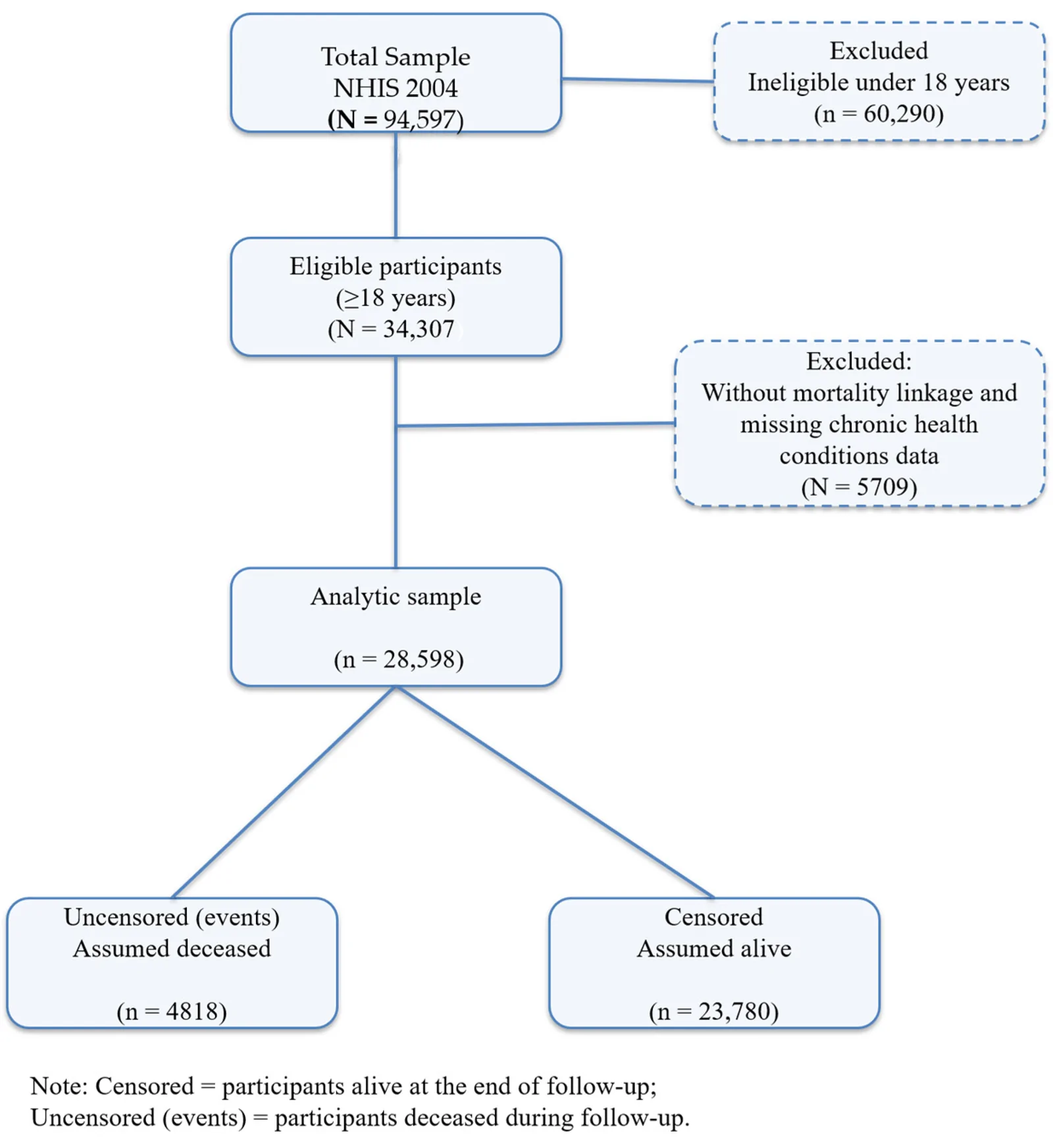
In an observational cohort study, researchers analyzed records for 28,598 US men and women aged 18 or older. They linked a 2004 national health survey to death records through December 2019. Statistical grouping identified six patterns of chronic conditions that participants reported having been diagnosed with.
All five groups with more chronic illness were associated with higher mortality than the group with little chronic illness. After adjustment for demographic and lifestyle factors, the most severe cluster—spanning heart, lung and metabolic diseases such as diabetes—had the highest hazard ratio at 3.71. This measures relative death risk over follow-up. The advanced heart and blood vessel disease group followed at 2.81. Subgroup analyses suggested stronger relative associations among younger adults and women in the most severe groups.
Why it matters
For care in later life, the authors suggested that recognizing patterns of chronic disease may improve risk assessment and support more targeted, patient-centered care.
Caveats
This observational analysis cannot establish cause and effect, and participants reported their own diagnoses. The findings do not cover children or adults living in institutions.
The paper
Georgia Southern University
Diseases, Jul 24, 2026, Open access


Comments
Be the first to comment.