Sound-sensing cells change before measurable hearing loss in mice
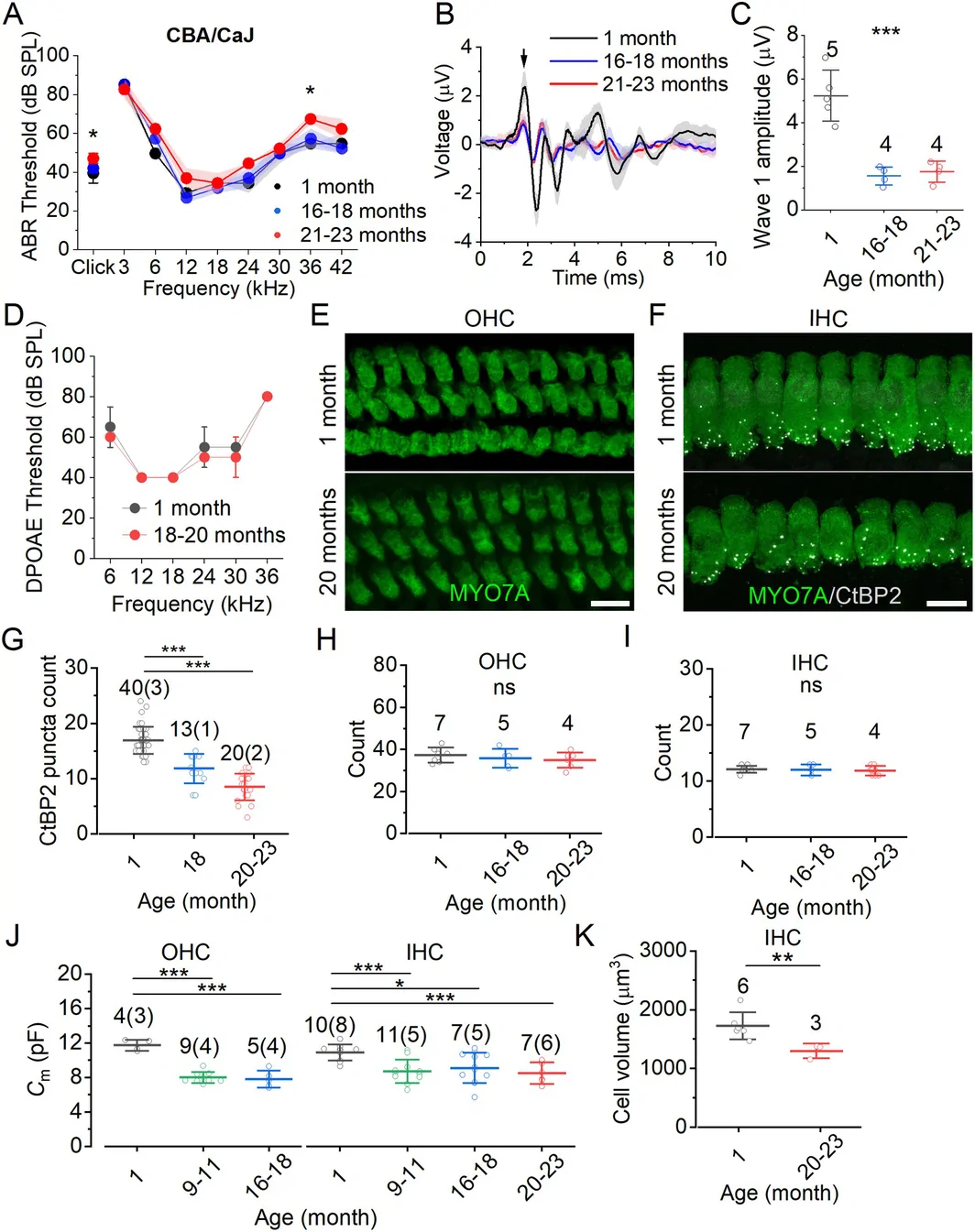
In CBA/CaJ mice, sound-sensing cells began shrinking at 10 months, before tests detected a rise in the sound levels needed to trigger hearing responses.
Limit: Hearing thresholds missed age-related declines in auditory nerve responses
Edited by Boris Djordjevic · AgingResearch.News
Researchers studied CBA/CaJ mice, a strain with slowly progressing age-related hearing loss, in an animal experiment. They tested hearing in male and female mice and recorded electrical currents in sound-sensing hair cells from removed inner-ear tissue. The cells came from the tip of the cochlea, the coiled hearing organ.
Hair cells began shrinking from 10 months of age, before tests detected a rise in the sound levels needed to trigger brainstem responses. In inner hair cells, shrinkage was associated with smaller electrical currents, especially a fast current carried through proteins that let potassium cross cell membranes. But the current that converts movement into electrical signals remained unaffected through at least 22 months.
Why it matters
Age-related hearing loss involves the progressive loss of sound-sensing cells and their connections to nerves. The authors suggest that changes in cell function might define a distinct route to hearing loss in this mouse strain.
Caveats
The cell recordings came from removed tissue and focused on the cochlea’s tip; they did not establish that these changes caused later hearing loss. The main findings concern CBA/CaJ mice, not people.
- Plasma membrane
- Presbycusis
- Auditory brainstem response hearing threshold
- Basolateral membrane current
- BK channel current
- Mice
The paper
Aging Alters Hair Cell Physiological Properties in Mice With Late-Onset Age-Related Hearing Loss
University of Sheffield
Aging Cell, Aug 21, 2026, Open access