Non-invasive brain stimulation to prevent aging-related diseases: What does photobiomodulation offer compared with other methods
Abstract
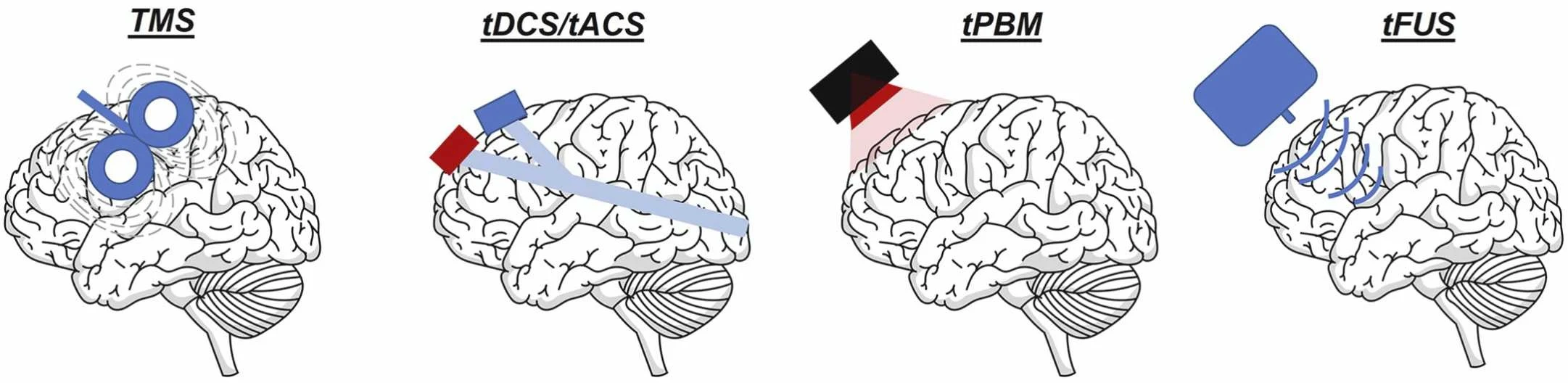
The issue of the maintenance of cognitive and brain health across ageing is a striking concern in our ageing societies. Non-invasive brain stimulation methods have been proposed as tools to fight against various neurological pathologies and to this aim, could also be used against age-related brain changes. In this chapter, we examine the potential of transcranial photobiomodulation (tPBM), in comparison with other neurostimulation methods, to improve brain function and protect neurons. In particular, it is hypothesised that the double action of tPBM - both on neuronal function and at a more systemic level, particularly on neuroinflammation, is a particular strength of tPBM relatively to the other techniques. The main challenge faced by the tPBM research community include the question of quantifying more precisely the energy quantity reaching the targeted regions; to this aim, computational modelling of light propagation can help defining more precisely the dosing parameters. Another challenge is related to the standardisation of the stimulation protocols, and is shared by all the neurostimulation methods examined in this review.
The paper
Fonds de Dotation Clinatec
International Review of Neurobiology, 20 Mar 2026