Heart valve disease death rates rose after 2018 in older US adults
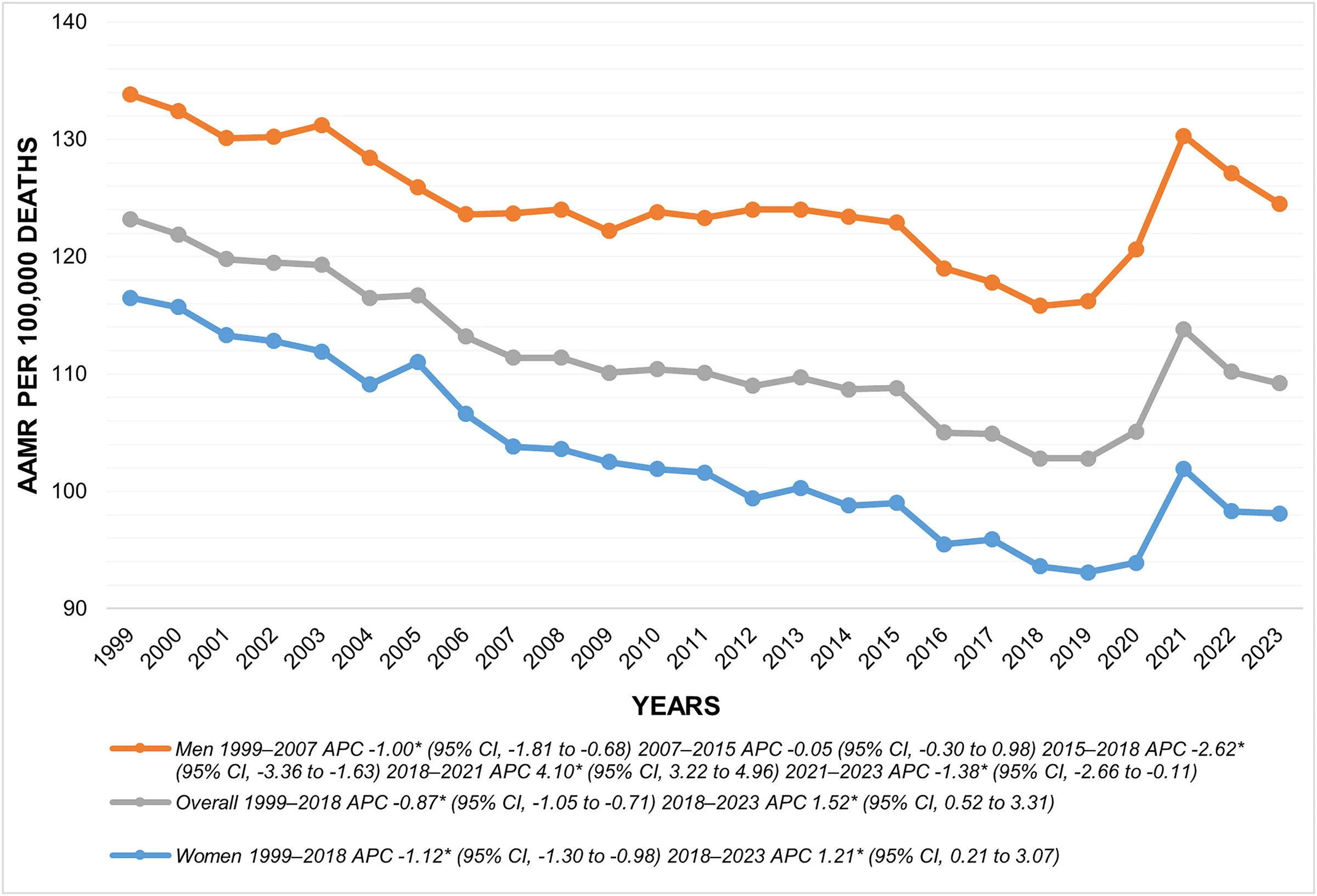
Age-adjusted death rates rose 1.52 percent annually from 2018 to 2023, after falling 0.87 percent annually from 1999 to 2018.
Our read
Populations- Studied:
- Cross-sectional study of 1,204,490 US adults aged 65 and older
- What changed:
- In older US adults, heart valve disease age-adjusted death rates rose 1.52 percent annually from 2018 to 2023
- The catch:
- The analysis covered only US adults aged 65 and older
Editor of record: Boris Djordjevic · AgingResearch.News
Among US adults aged 65 and older, an observational study of national mortality records identified 1,204,490 deaths from heart valve disease between 1999 and 2023. Researchers compared death rates adjusted for age differences and used statistical models to project rates through 2040.
Rates declined until 2018, then rose through 2023. Mortality was highest among non-Hispanic White people, men, residents of nonmetropolitan areas and people in the West. Across generations, adults aged 85 and older faced progressively higher mortality risks. The models projected that the recent rise would level off, with mortality stabilizing at 109.2 deaths per 100,000 people through 2040.
Why it matters
Heart valve disease contributes to cardiovascular deaths among older adults. The authors called for targeted strategies to address widening disparities affecting the oldest adults and rural populations.
Caveats
This observational analysis described mortality trends but did not establish their causes. The forecasts are model projections, not observed outcomes, and the analysis covered US adults aged 65 and older.
- Aortic valve disease
- Mitral valve disease
- Rheumatic heart disease
- Tricuspid valve disease
- Valvular heart disease
- Humans
The paper
Allama Iqbal Medical College; Baystate Medical Center
The American Journal of Cardiology, Aug 15, 2026


Comments
Be the first to comment.