Omitting primary care data misses cases of multiple chronic illnesses
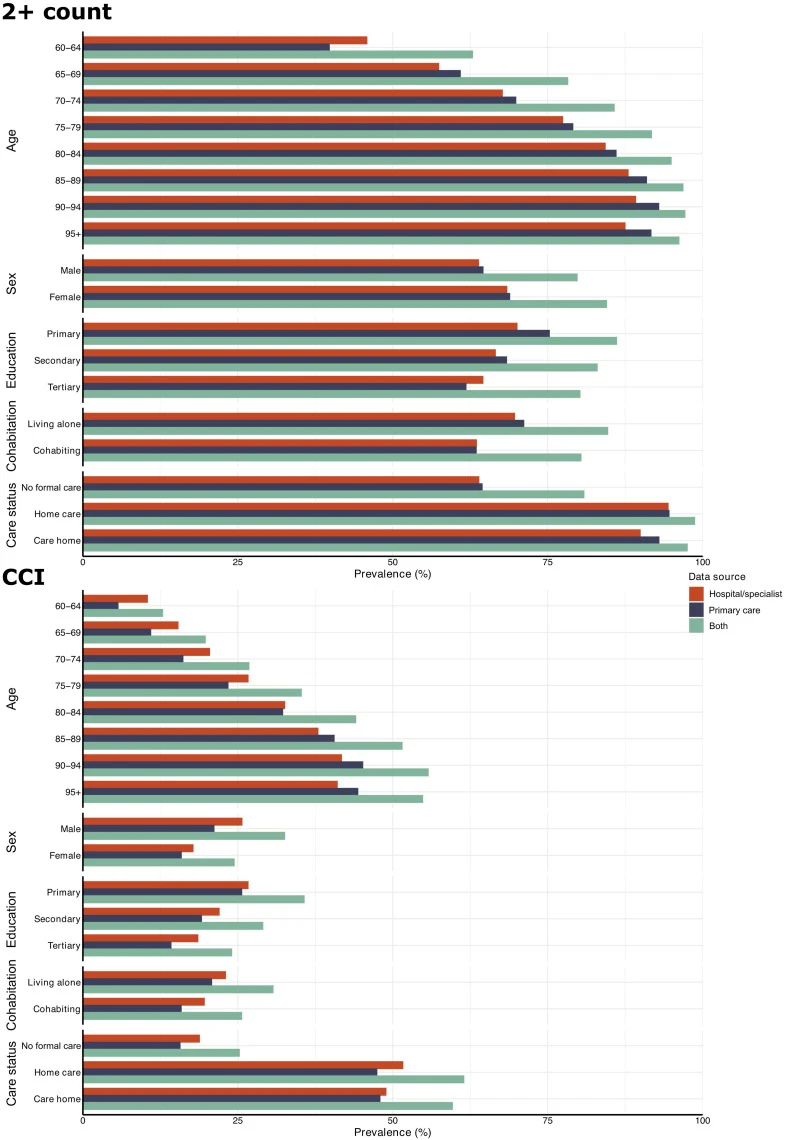
Hospital and specialist records alone missed 19.4% of cases defined by multiple chronic diseases and 23.9% using a weighted disease score.
Our read
Populations- Studied:
- Cross-sectional study of 497,736 adults aged 60 years and older
- What changed:
- Omitting primary care records missed 19.4% of people with multiple chronic diseases
- The catch:
- Both estimates relied on recorded diagnoses, leaving unrecorded illnesses uncounted
Editor of record: Boris Djordjevic · AgingResearch.News
In a register-based observational study, researchers analyzed records for 497,736 Stockholm residents aged 60 or older at the end of 2022. All had lived there since January 2017 or earlier; 53.6% were women. Researchers compared hospital and specialist diagnoses recorded during 2017–2022 with records that also included primary care.
They defined multimorbidity, having multiple chronic diseases, as either two or more conditions from a list of 60 or a score of at least two on the Charlson Comorbidity Index, which weights 18 disease categories. Adding primary care data raised the share meeting the disease-count definition from 66.4% to 82.4%. Undercounting was greatest among community residents without formal care. It was greater at younger ages for the disease count, but at older ages and among women for the weighted score.
Why it matters
Estimates of multiple chronic diseases help describe health in later life. The authors urged caution when comparing these estimates across ages, care needs or social factors without primary care records.
Caveats
The estimates depended on recorded diagnoses and the definition of multiple chronic diseases used. The study covered Stockholm residents aged 60 or older, not younger people or other health systems.
The paper
The role of primary care data in multimorbidity estimates using administrative health data
Karolinska Institutet
Journal of Multimorbidity and Comorbidity, Aug 11, 2026, Open access

Comments
Be the first to comment.