Rising diagnosis counts linked to death risk in older adults
Among older acute-care patients, observed deaths over 12 months ranged from 1.9% with low diagnosis counts and accumulation to 24.6% with high levels of both.
Our read
Biomarkers- Studied:
- Preprint: study in people
Editor of record: Boris Djordjevic · AgingResearch.News
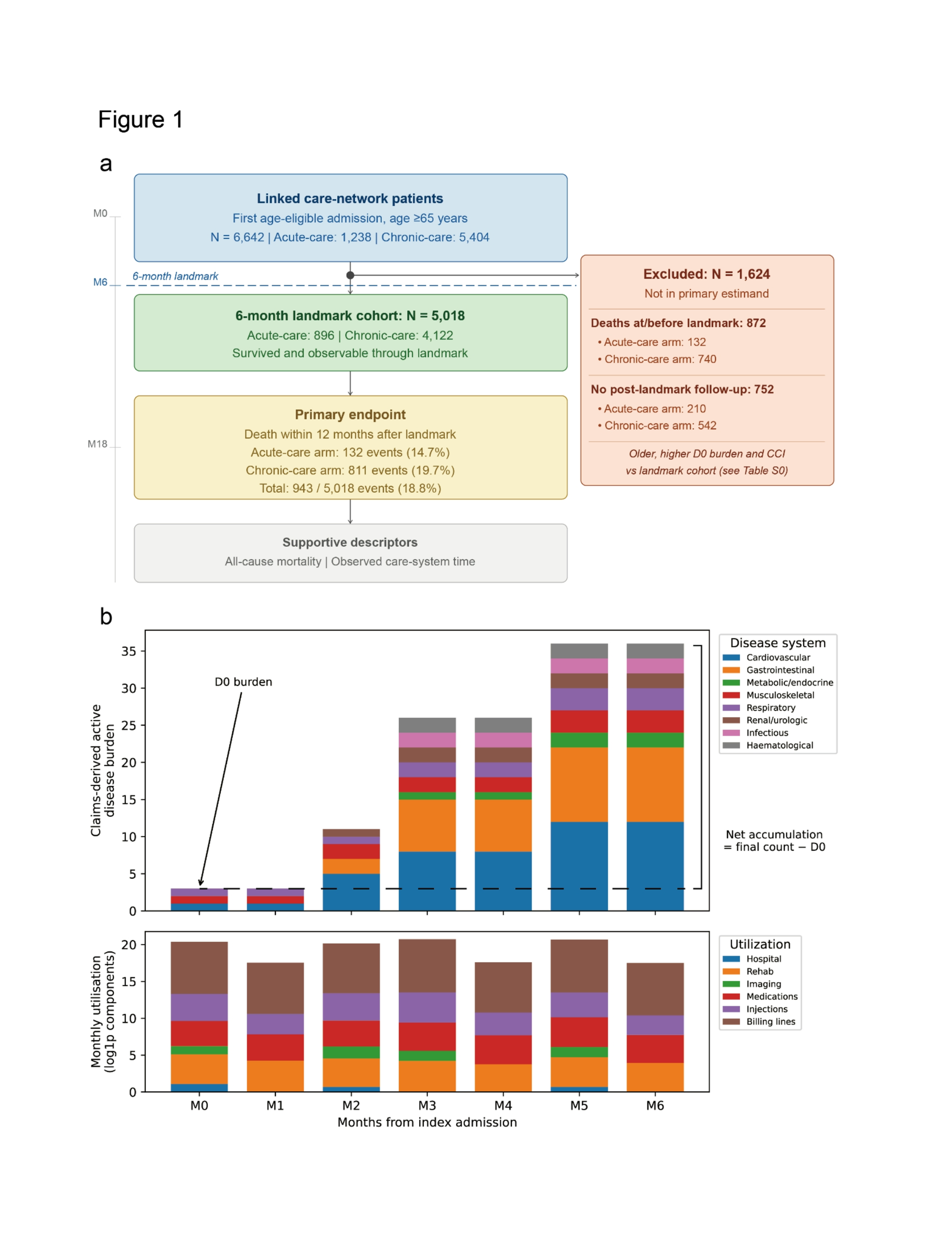
Adults aged 65 or older at five hospitals in Osaka, Japan, made up a retrospective observational cohort of 6,642 people. Researchers compared diagnosis counts at admission with changes over six months. The six-month analysis group included 5,018 patients who remained observable and had follow-up afterward.
In acute care, observed deaths within the next 12 months ranged from 1.9% among patients with low starting counts and low accumulation to 24.6% among those high on both. In chronic care, the corresponding figures were 7.0% and 26.4%. Adding changes in diagnosis counts improved models that already used starting counts and a standard score of coexisting illnesses. Models using diagnosis counts over time also preserved the ordering of death risk in hospitals left out of model development.
Why it matters
Accumulating health problems can mark late-life vulnerability. The authors suggest that routine diagnosis records may help aging researchers track this when repeated assessments of frailty or everyday functioning are unavailable.
Caveats
Patients with rising diagnosis counts may have had more severe underlying illness, which could also account for their higher death risk. Counts included suspected or provisional diagnoses; net-change models included only patients who reached six months with complete counts, and the preprint has not been peer-reviewed.
The paper
The University of Osaka; Hanwa Memorial Hospital
Research Square, Nov 5, 2026, Open access, Preprint, not yet peer-reviewed


Comments
Be the first to comment.