A signaling molecule helped sustain memory in aging mice
Experiments in male and female mice linked the absence of hemokinin-1 to poorer long-term memory for locations, attention and reward-based learning.
Limit: Mice lacked hemokinin-1; giving the molecule to treat cognitive decline was not measured
Stake: An author founded PharmInVivo.
Edited by Boris Djordjevic · AgingResearch.News
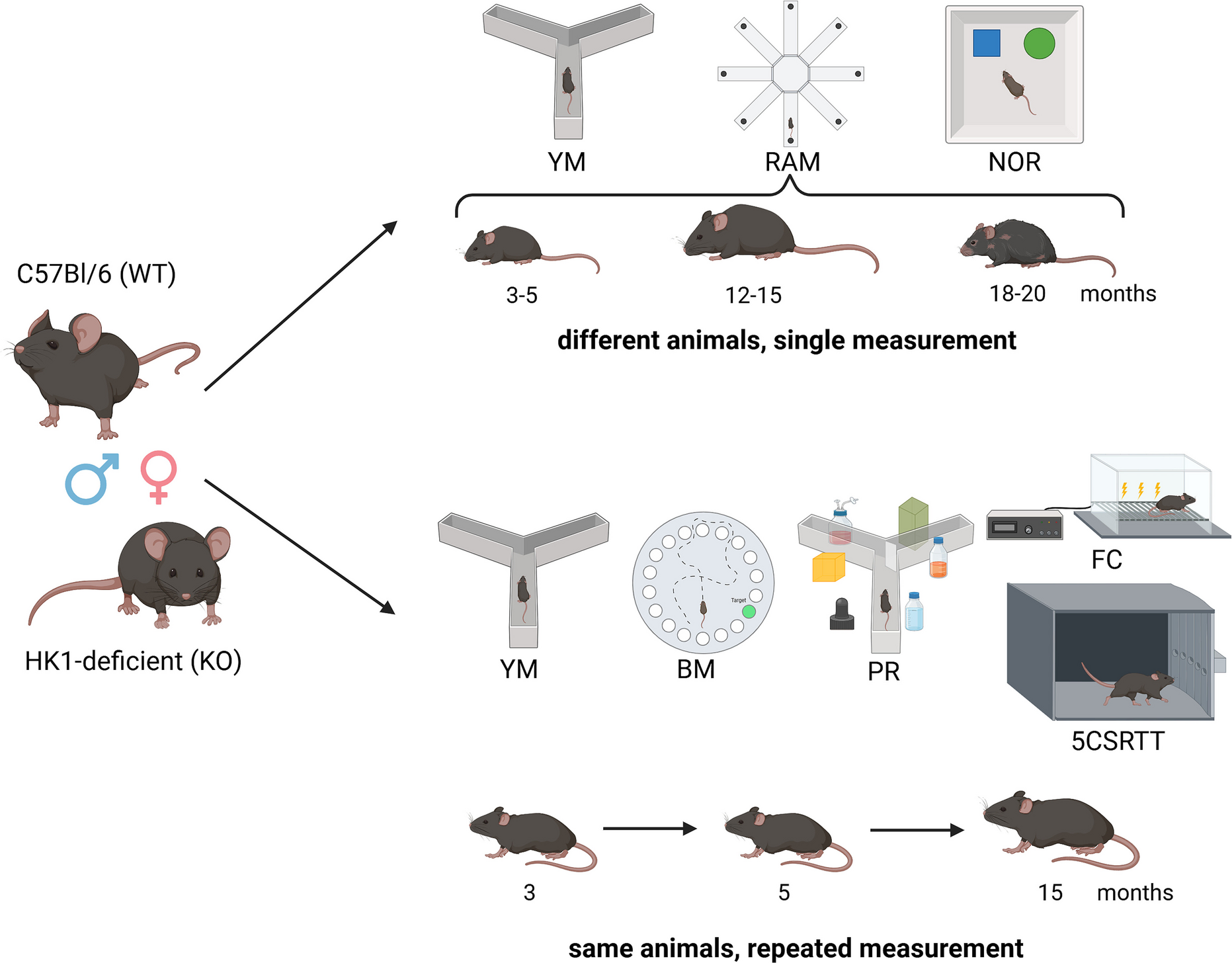
Male and female C57BL/6J mice with or without hemokinin-1, a signaling molecule, underwent learning, memory and attention tests. The animal experiments followed mice over time and compared separate age groups: 3–5, 12–15 and 18–20 months old.
Young mice generally learned spatial tasks, but deficits linked to the molecule’s absence emerged with age and task complexity. Mice lacking hemokinin-1 had poorer long-term memory for locations in a maze test. They also performed worse on a task testing attention and learning through rewards. In another maze, middle-aged females and old males lacking the molecule made more memory errors and retrieved fewer rewards. However, tests of object recognition and spontaneous switching between maze arms found no robust impairments linked to the molecule’s absence.
Why it matters
Age-related cognitive decline remains poorly understood. This work addressed which naturally occurring molecules help sustain cognitive abilities as animals grow older.
Caveats
These experiments tested mice lacking hemokinin-1, not whether giving it could prevent or treat cognitive decline. The findings do not establish effects in people.
The paper
Protective role of hemokinin-1 against age-dependent spatial memory and attention decline in mice
Semmelweis University; University of Pecs
GeroScience, Aug 12, 2026, Open access


