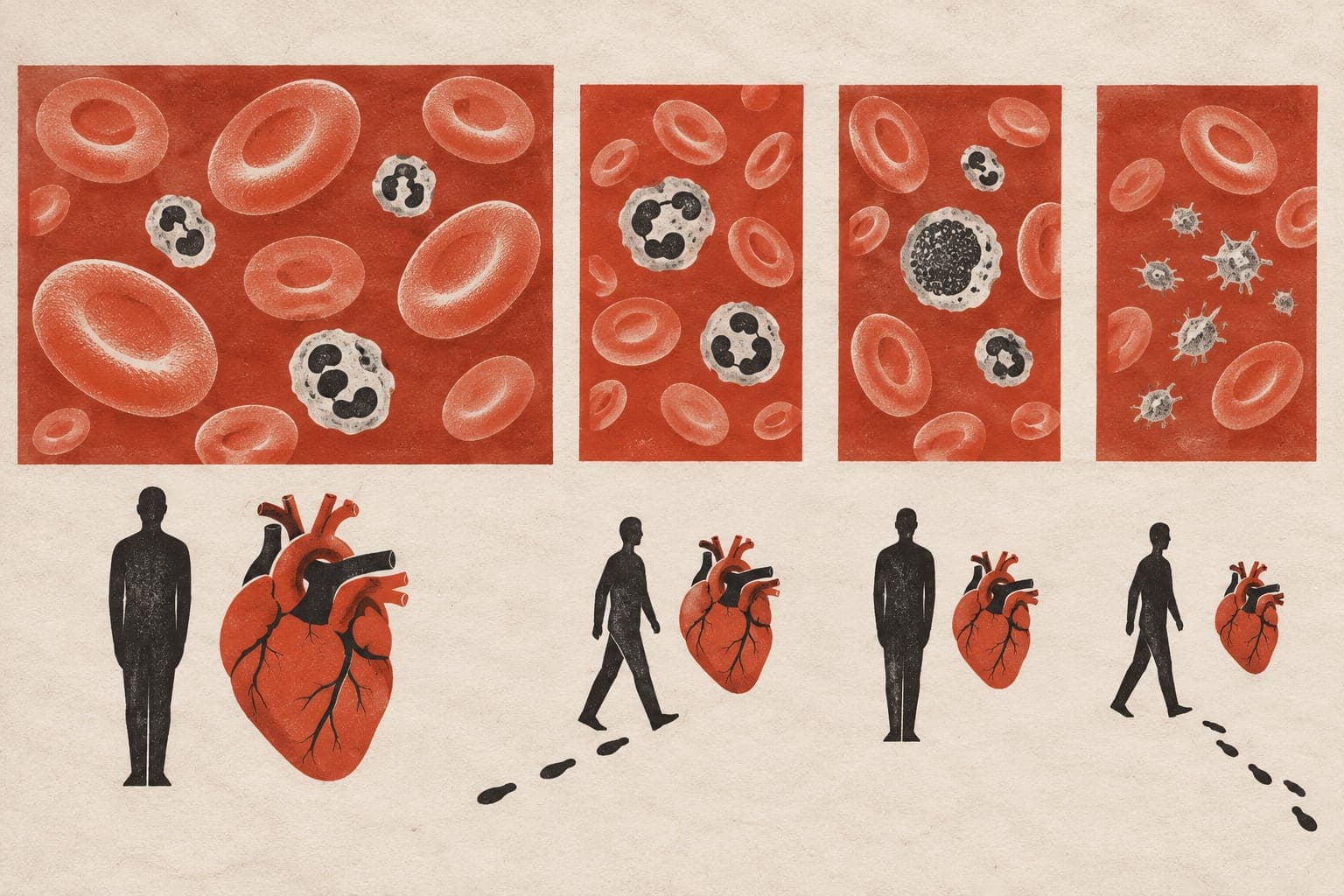
CD31⁺ T-cells express greater VEGF-A than CD31⁻ counterparts with expression exacerbated with advancing age in male adults
Abstract
CD31⁺ T-cells possess angiogenic properties and have been termed angiogenic T-cells (TANG) and are altered in number with advancing age. We examined circulating TANG subsets and VEGF-A content in young (n = 16, 18-30 years) and older (n = 16, 50-65 years) males by flow cytometry. Cardiorespiratory fitness ( V ̇ O₂max) was quantified. Circulating IL-6 and cytomegalovirus (CMV) serostatus were determined by immunoassays. TANG contained more VEGF-A than CD31⁻ T-cells (CD31⁺: 9374 ± 8587 AU vs. CD31⁻: 8722 ± 8149 AU, p = 0.021), also evident in CD4⁺ and CD8⁺ subsets. Older adults possessed fewer CD4⁺ TANG cells as a proportion of total CD4⁺ T-cells than younger adults (young: 35% ± 11%; older: 24% ± 9%, p = 0.004), and all TANG subsets from older adults exhibited higher VEGF-A content than younger adults (CD3⁺: young: 6081 ± 4001 AU; older: 13426 ± 10,945 AU, p = 0.019; CD31⁺: young: 6373 ± 3972 AU; older: 15660 ± 12,829 AU, p = 0.011; CD8⁺: young: 6335 ± 4029 AU; older: 11216 ± 8056 AU, p = 0.043). TANG cells and VEGF-A expression were not independently associated with CMV serostatus, IL-6 or V ̇ O₂max. Advancing age is associated with a pathological TANG phenotype which may contribute to age-related inflammation.
The paper
Edinburgh Napier University
Physiological Reports, 1 Aug 2026