Ameliorative role of whey supplementation in age-associated testicular dysfunction: Morphometric, immunohistochemical, ultrastructural, and biochemical evidence with emphasis on aquaporin-1 and transition protein-2
Abstract
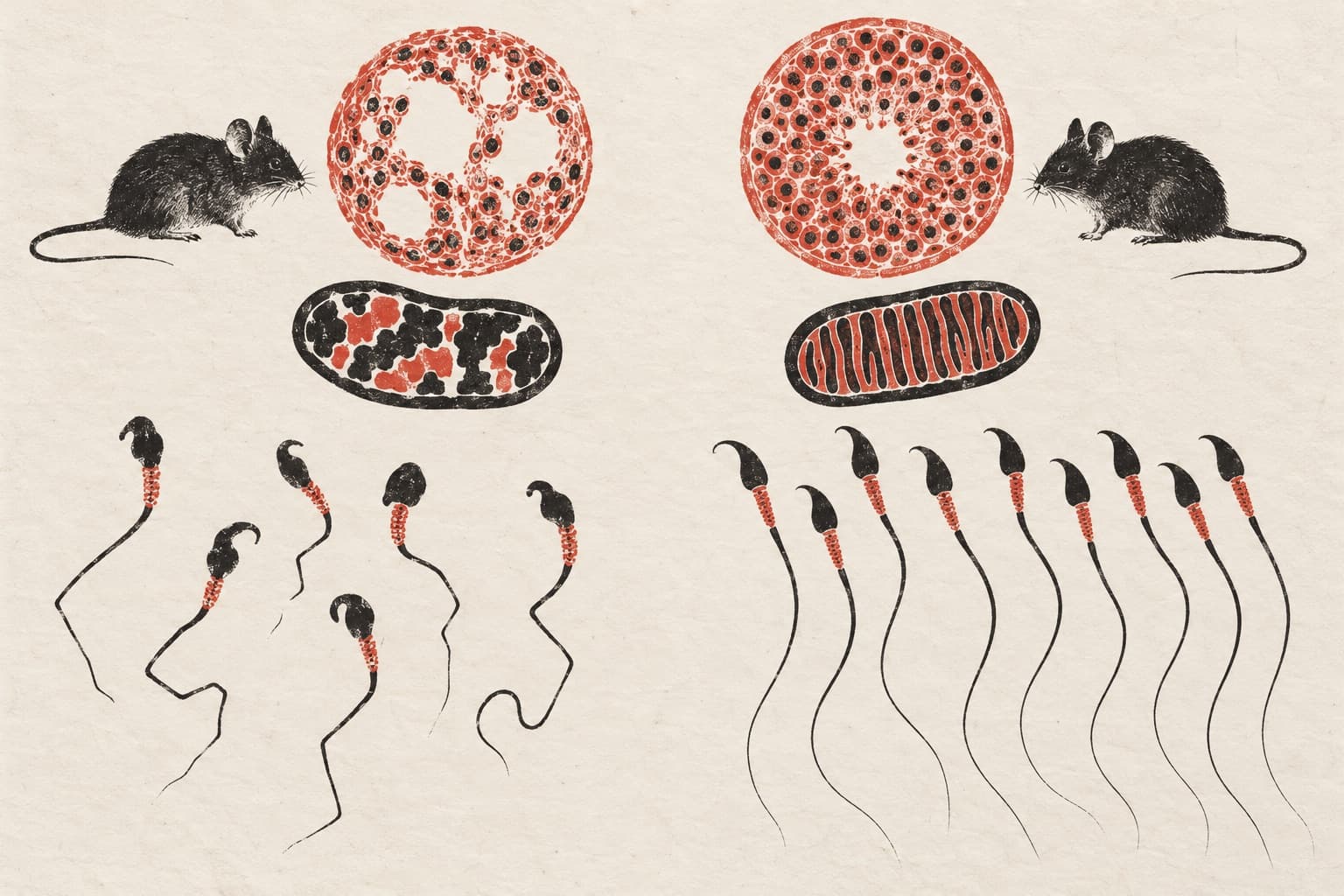
BACKGROUND: Age-associated testicular degeneration involves impaired spermatogenesis, oxidative stress, mitochondrial dysfunction, and apoptosis, culminating in reduced male fertility. Although whey protein is rich in antioxidants and essential amino acids, its structural, ultrastructural, and molecular impact on the aging testis remains incompletely characterized. METHODS: Adult (8 months) and aged (30 months) male rats were assigned to adult control, adult whey-treated, aged control, and aged whey-treated groups. Whey protein was administered orally for 8 weeks. A comprehensive multi-level assessment was performed, including quantitative morphometric analysis of seminiferous tubular diameter and Sertoli cell height, histological (H&E) and transmission electron microscopic evaluation of germinal epithelium and mitochondrial architecture, immunohistochemical detection of PCNA and caspase-3, biochemical quantification of AQP-1, TP-2, IL-6, caspase-3, MDA, and SOD, and flow cytometric analysis of annexin-V and mitochondrial membrane potential. RESULTS: Aged rats demonstrated significant testicular atrophy, germ cell depletion, disorganization of the seminiferous epithelium, mitochondrial disruption, increased apoptotic activity, and oxidative and inflammatory imbalance compared with adult controls. Whey supplementation significantly ameliorated seminiferous tubular degeneration, improved germ cell density and mitochondrial integrity, enhanced antioxidant defenses, and attenuated apoptosis and inflammatory signaling. Integrated structural and biochemical findings consistently indicated attenuation of age-related testicular degeneration. CONCLUSION: By integrating morphologic, ultrastructural, biochemical, and cytometric analyses, this study demonstrates that whey protein mitigates testicular aging through coordinated antioxidant, anti-inflammatory, and anti-apoptotic mechanisms, highlighting its potential as a dietary intervention for preserving male reproductive health.
The paper
Mansoura University; Horus University – Egypt
Tissue & Cell, 6 May 2026