Two blood conditions linked to higher blood cancer risk
Ten-year blood cancer incidence reached 18.5% with mutations, low blood counts and elevated monocytes—immune cells—versus 5.3% with mutations and low counts without elevated monocytes.
Our read
Biomarkers- Studied:
- Cohort study of 431,531 UK Biobank participants, against people with CCUS without monocytosis (Independent replication)
- What changed:
- 10-year blood cancer risk was higher with CMUS-ABS (9.1%) and CCMUS (18.5%) than with CCUS without monocytosis (5.3%)
- The catch:
- Without bone marrow biopsies, some CMUS/CCMUS cases may have been undiagnosed leukemia
- Stake:
- An author works for AstraZeneca and holds shares in it.
Editor of record: Boris Djordjevic · AgingResearch.News
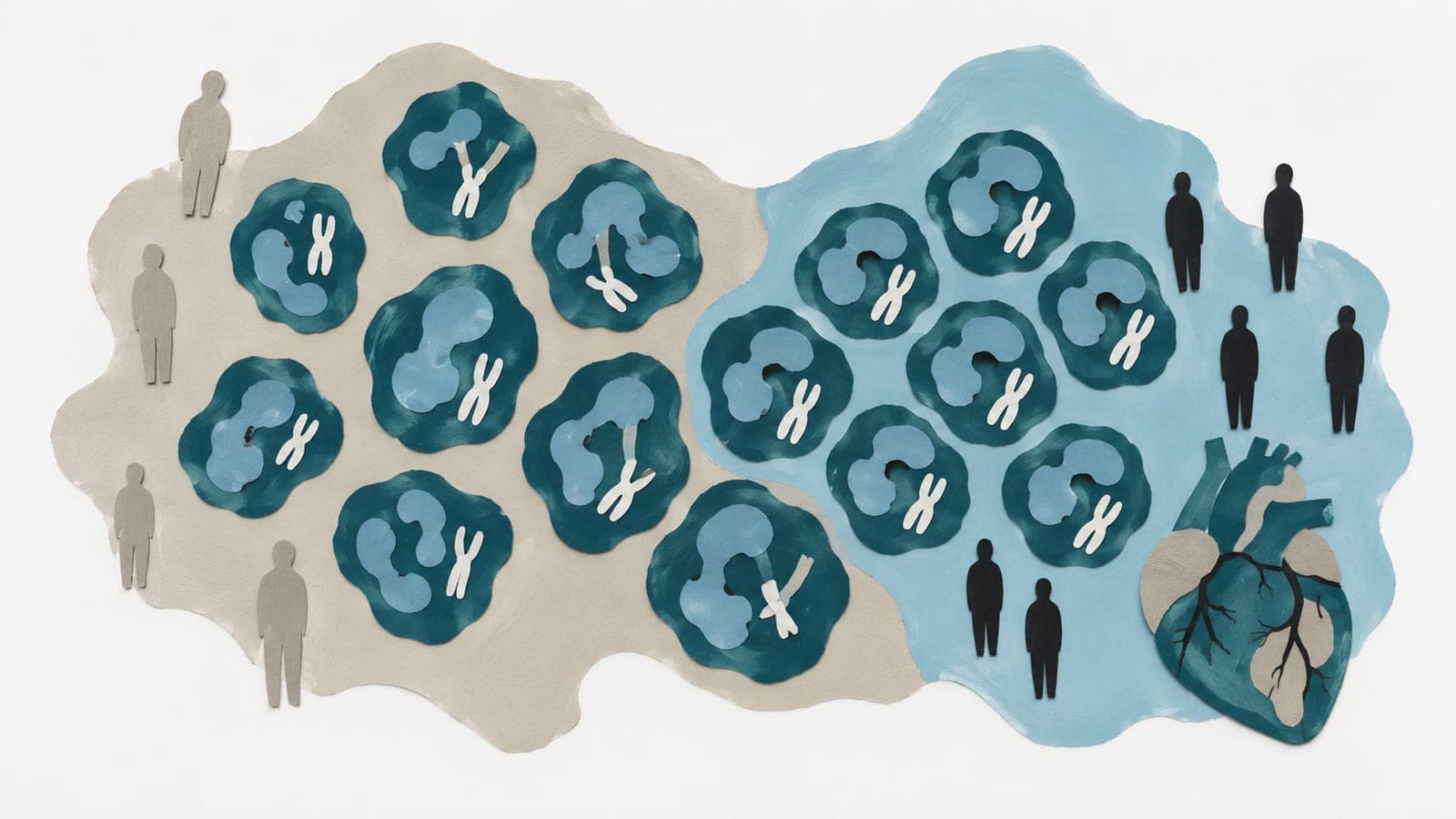
Among 431,531 UK Biobank participants aged 37 to 70 at recruitment, an observational analysis linked two blood conditions to later blood cancers, cardiovascular disease and kidney disease. Both involved blood cells carrying acquired mutations and elevated counts of monocytes, a type of immune cell. Participants with blood cancers diagnosed before or within 30 days of enrollment were excluded.
Blood cancer incidence over 10 years was 9.1% in people with particularly high monocyte counts and 18.5% in those with elevated monocytes plus low counts of one or more blood cell types. It was 5.3% with mutations and low blood cell counts but no elevated monocytes. The authors proposed refining diagnostic definitions to better distinguish these higher-risk states from other blood cell changes.
Why it matters
Monocyte counts rose with age. The findings bear on how to distinguish potentially precancerous blood changes from other blood abnormalities as people grow older.
Caveats
Classification relied on one blood sample, without checking whether elevated monocytes persisted or assessing bone marrow abnormalities. Some elevated counts may have reflected reactions to smoking or inflammation.
From the paper
- Participants
Finally, to give insights into the relevance of persistent vs nonpersistent monocytosis, we analyzed data from 19 561 CopLab participants and found that the former was associated with a ∼3.5-fold higher risk of MN.
Results, Inferring the presence of SRSF2 mutations among individuals with monocytosis
- Result
… whereas DNMT3A mutations were associated with a reduced risk of progression to MN relative to other driver mutations (hazard ratio [HR], 0.25; 95% confidence interval [CI], 0.12-0.53; P = 2.52 × 10⁻⁴; B; ).
Results, CMUS/CCMUS are strongly associated with MN, cardiovascular disease, and renal disease
- Limitation
Although small clones are less likely to be associated with monocytosis, it would still be helpful to investigate the relevance of our findings in cohorts studied with more sensitive DNA-sequencing approaches.
Quoted word for word from the full text on PubMed Central.
The paper
The prevalence and clinical significance of clonal monocytosis
Wellcome/MRC Cambridge Stem Cell Institute
Blood, Mar 9, 2026, Open access


Comments
Be the first to comment.