Cardiorespiratory Fitness, Multimorbidity Risk, and 15-Year Trajectories in Chronic Disease Accumulation: A Prospective Longitudinal Study
Abstract
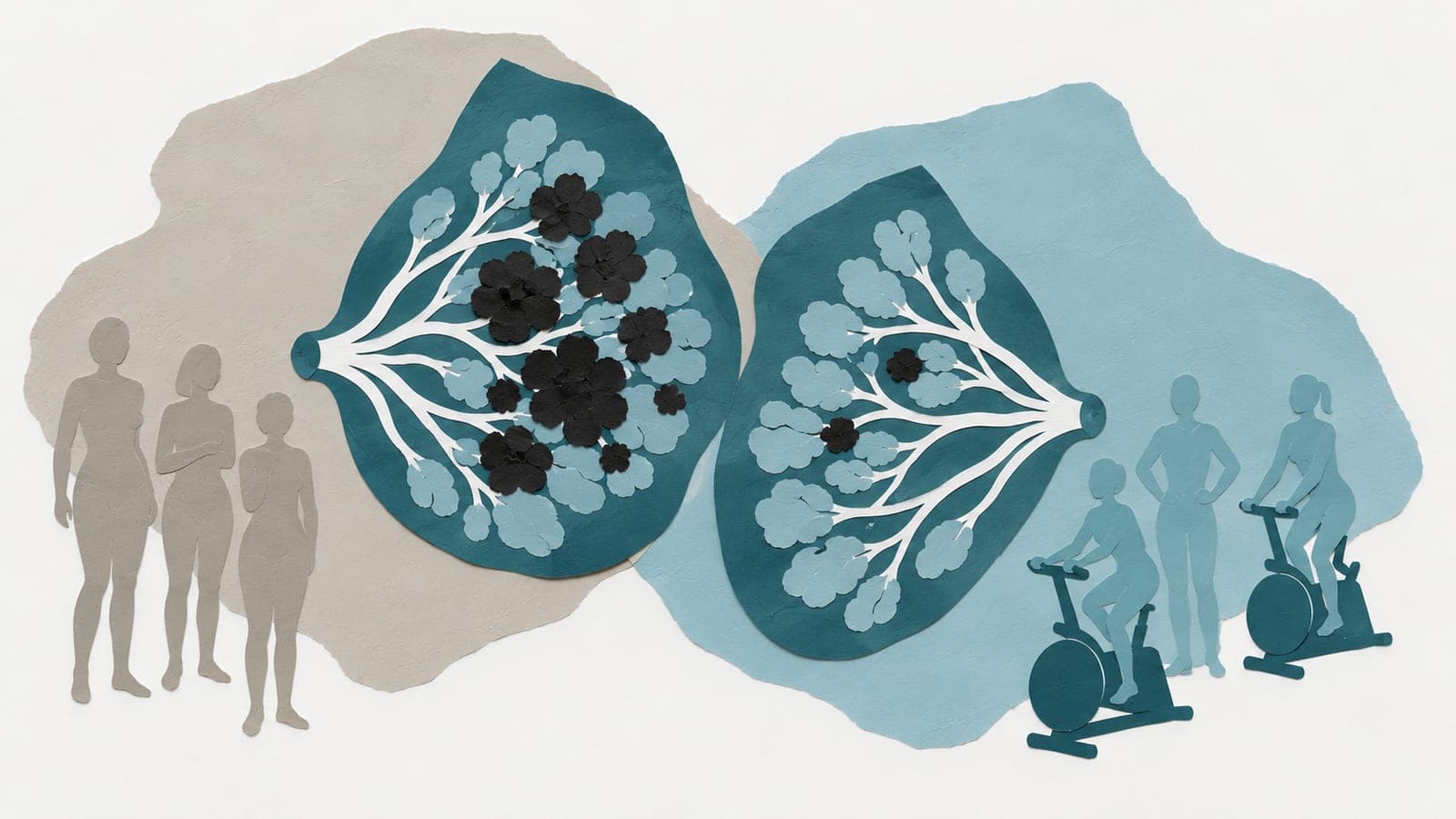
BACKGROUND: Cardiorespiratory fitness (CRF) has been linked to lower risk of individual chronic diseases, but little is known about the CRF in relation to multimorbidity. OBJECTIVES: The authors investigated the association between CRF and multimorbidity risk and explored differences in the trajectories of chronic disease accumulation at varying levels of CRF. METHODS: The study included 38,348 adults from the UK Biobank (mean age 55.21 ± 8.15 years; 51.95% female) who were followed for up to 15 years to detect the incidence of 59 common chronic diseases. CRF was estimated using a 6-minute submaximal exercise test and tertiled as low, moderate, and high (after standardization by age and sex). Multimorbidity was defined as the presence of 2 or more chronic diseases. Data were analyzed using Cox regression, Laplace regression, and linear mixed-effects models. RESULTS: During the follow-up (median [IQR]: 11.57 [7.39-11.76] years), 15,368 (40.08%) participants developed multimorbidity. The risk of multimorbidity was 21% lower in participants with high compared to low CRF (HR: 0.79 [95% CI: 0.76-0.83]). The median time to multimorbidity onset was 1.27 (95% CI: 1.01-1.54) years later for those with high compared to low CRF. Moreover, participants with high CRF experienced a significantly slower annual rate of chronic disease accumulation (β = -0.043 [-0.050 to -0.036]). CONCLUSIONS: High CRF is associated with lower multimorbidity risk, delayed onset of multimorbidity, and significantly slower accumulation of chronic diseases. The findings highlight the importance of CRF for healthy longevity.
The paper
Tianjin Medical University; Karolinska Institutet
JACC Advances, 8 Oct 2025