Poorer self-rated health linked to stomach cancer in China
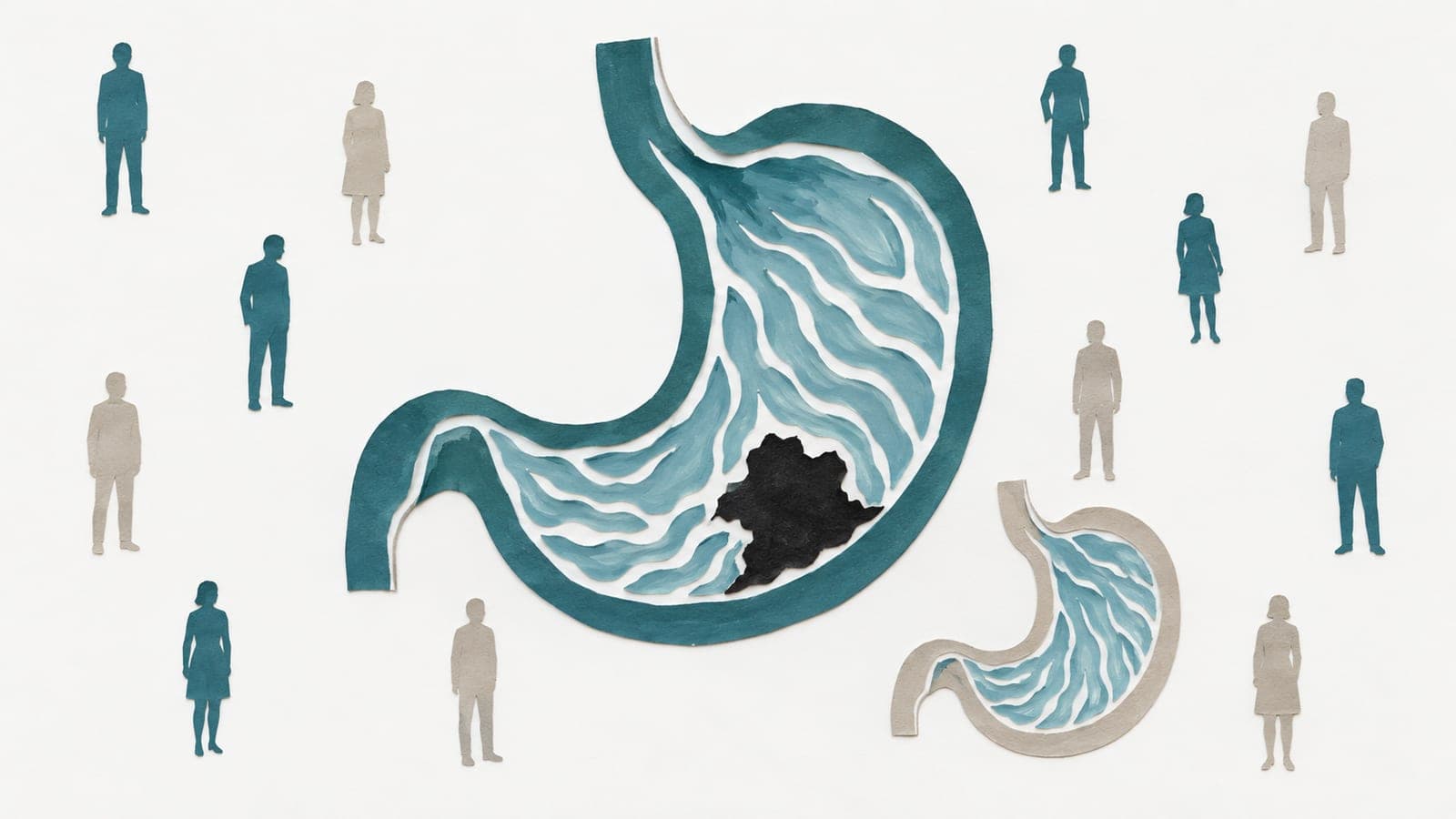
Among 30,242 Chinese adults, poorer self-rated health was linked to higher stomach cancer odds after adjustment, with an odds ratio of 1.42.
Paper by Weiying Zhang, Xing Li, Xiujuan Tian et al.
Our read
Populations- Studied:
- Accepted, not yet published: cohort study of 30,242 middle-aged and older Chinese adults
- What changed:
- Poorer self-rated health was linked to higher stomach cancer odds after adjustment (odds ratio 1.42)
- The catch:
- Cancer could worsen perceived health; assessment timing relative to diagnosis was not reported
Editor of record: Boris Djordjevic · AgingResearch.News
An observational study analyzed 30,242 middle-aged and older Chinese adults in the China Health and Retirement Longitudinal Study from 2011 to 2020. Poorer self-rated health was associated with higher odds of stomach cancer after adjustment for other factors.
A separate hospital-based comparison included 164 patients with stomach cancer and 164 matched controls. Each 10-point increase on a 48-item questionnaire, indicating better perceived health, was associated with lower cancer odds, with an odds ratio of 0.74. Scores also varied with tumor characteristics. A Mendelian randomization analysis used genetic variants to assess health satisfaction, a related measure. Higher genetically predicted health satisfaction was associated with lower stomach cancer susceptibility in South and East Asian populations. Results were less consistent in European and African ancestry groups.
Why it matters
Following middle-aged and older adults before diagnosis could clarify whether perceived health offers information about future stomach cancer risk.
Caveats
Observational associations cannot establish cause and effect, and the abstract does not report whether perceived health was assessed before cancer diagnosis. The population-based findings concern middle-aged and older Chinese adults, while the genetic analyses assessed a related measure rather than the same health questionnaires.
The paper
Weiying Zhang, Xing Li, Xiujuan Tian et al.
Frontiers in Oncology, Oct 30, 2026, CC BY, Accepted, not yet published

Comments
Be the first to comment.