Supplement linked to better thinking test scores after menopause
Among 63 women who completed a six-week trial, the supplement was associated with a 5.89-point higher overall cognitive score than placebo.
Double-blind, placebo-controlled, registered NCT06748989
Limit: The efficacy analysis included only women who completed the trial
Edited by Boris Djordjevic · AgingResearch.News
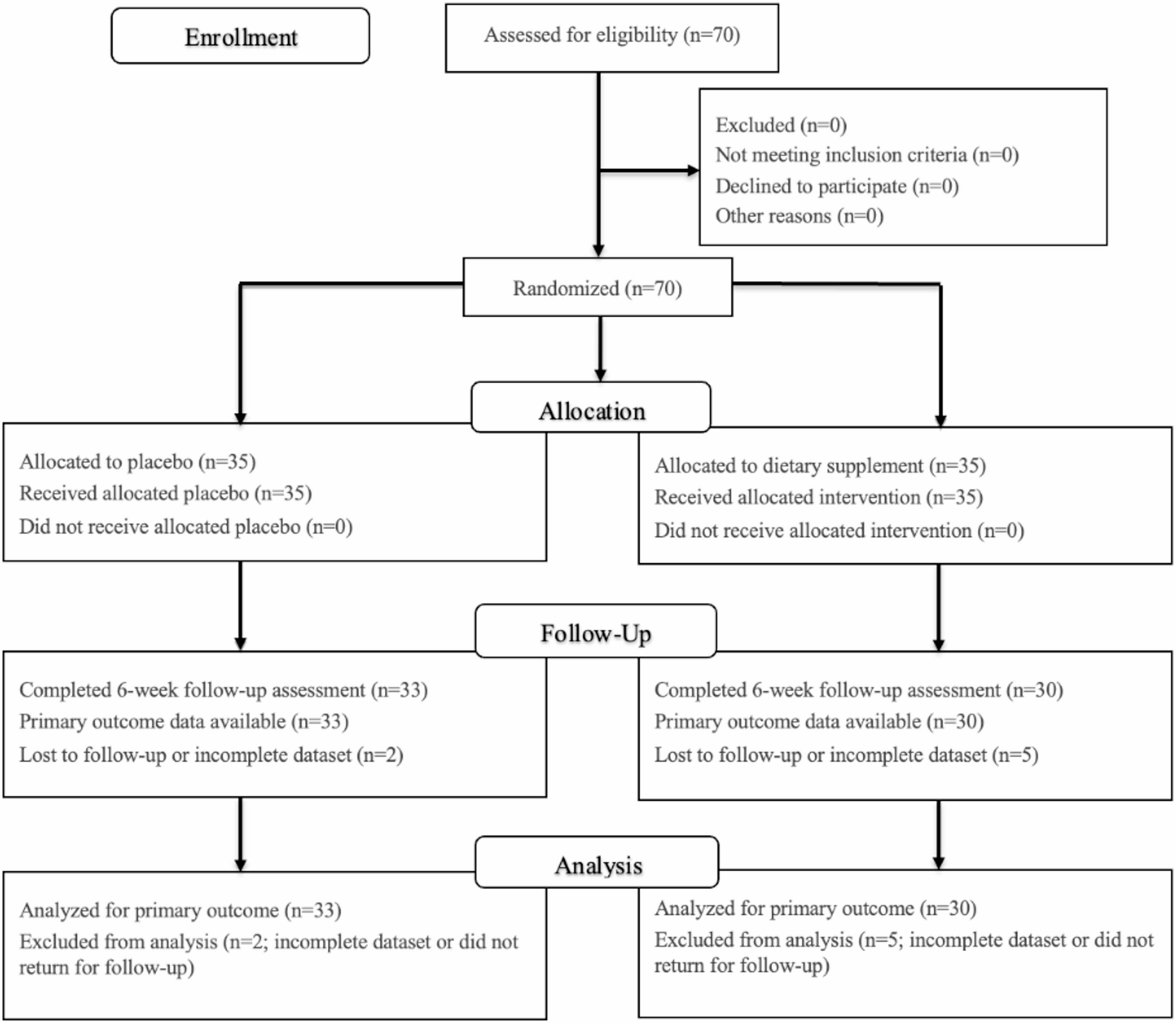
Healthy postmenopausal women received a multi-ingredient supplement or matching placebo for six weeks in a randomized, double-blind trial. Researchers analyzed results from the 63 women who completed it: 30 took the supplement and 33 took placebo. The supplement contained caffeine, B vitamins, minerals and other ingredients.
Participants completed computerized cognitive tests before and after the trial. The primary outcome was an overall cognitive score called the Neurocognition Index. After accounting for starting scores, the supplement was associated with a 5.89-point higher score than placebo. Memory, visual memory and mental flexibility scores also favored the supplement. One attention measure differed in direction from the overall pattern.
Why it matters
Memory and concentration complaints often accompany menopause. The trial addressed whether nutritional supplementation might support cognitive health during this stage of life.
Caveats
The efficacy analysis included only participants who completed the trial; these six-week findings do not establish long-term benefits or benefits beyond healthy postmenopausal women. The abstract does not report ingredient doses or adverse events.
Caffeine is part of Andrew Huberman's Toolkit for Sleep
Comments
Be the first to comment.