Drinking patterns linked to distinct blood protein profiles
In 47,514 UK Biobank participants, an observational analysis linked blood protein profiles for different drinking patterns to varying digestive disease risks.
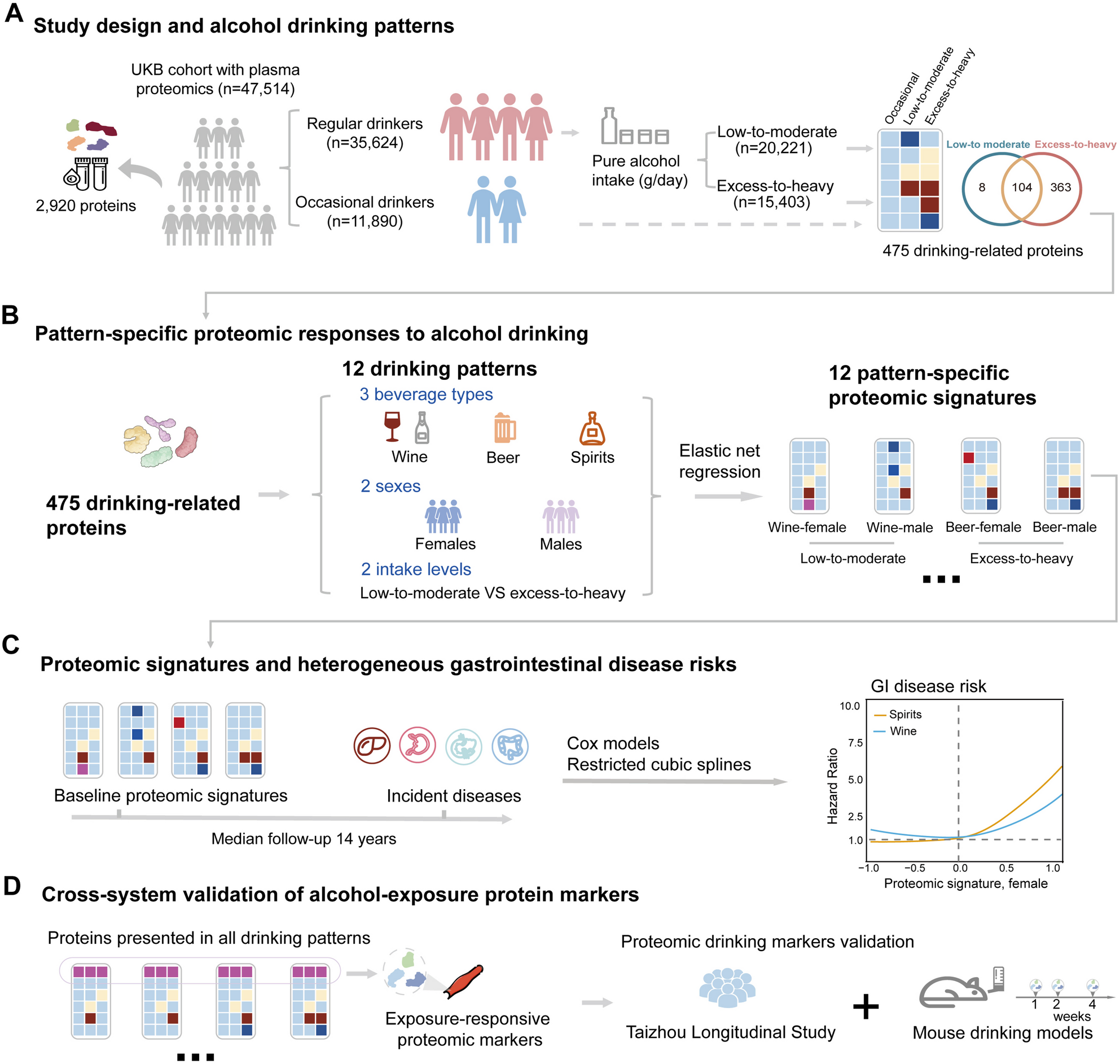
Cohort study, independent replication
Limit: Reported alcohol intake may not fully reflect biological responses to drinking
Edited by Boris Djordjevic · AgingResearch.News
In an observational study of 47,514 UK Biobank participants, researchers analyzed blood proteins alongside drinking patterns defined by alcohol intake, main beverage type and sex. They identified 12 protein profiles specific to these patterns. Overall, alcohol drinking was associated with 475 blood proteins.
The profiles had differing links to digestive disease risk. The relationships between profiles and risk did not always follow straight lines. Even among drinkers reporting similar alcohol intake, profiles specific to beverage type and sex showed different relationships with the risk of the same diseases. The authors suggested that these protein responses captured information beyond reported alcohol volume alone.
Why it matters
The alcohol-associated proteins included those related to inflammation, a process relevant to aging biology. Their links to digestive disease risk raise questions about how drinking-related biological responses might inform risk assessment as people age.
Caveats
The observational human analysis could not establish whether drinking caused the protein patterns or whether those patterns contributed to digestive disease.


Comments
Be the first to comment.