Medium, stable body water linked to lowest death risk
High starting body water mass was linked to an 8.7% higher death rate than medium levels over a median 13.7 years.
Our read
Biomarkers- Studied:
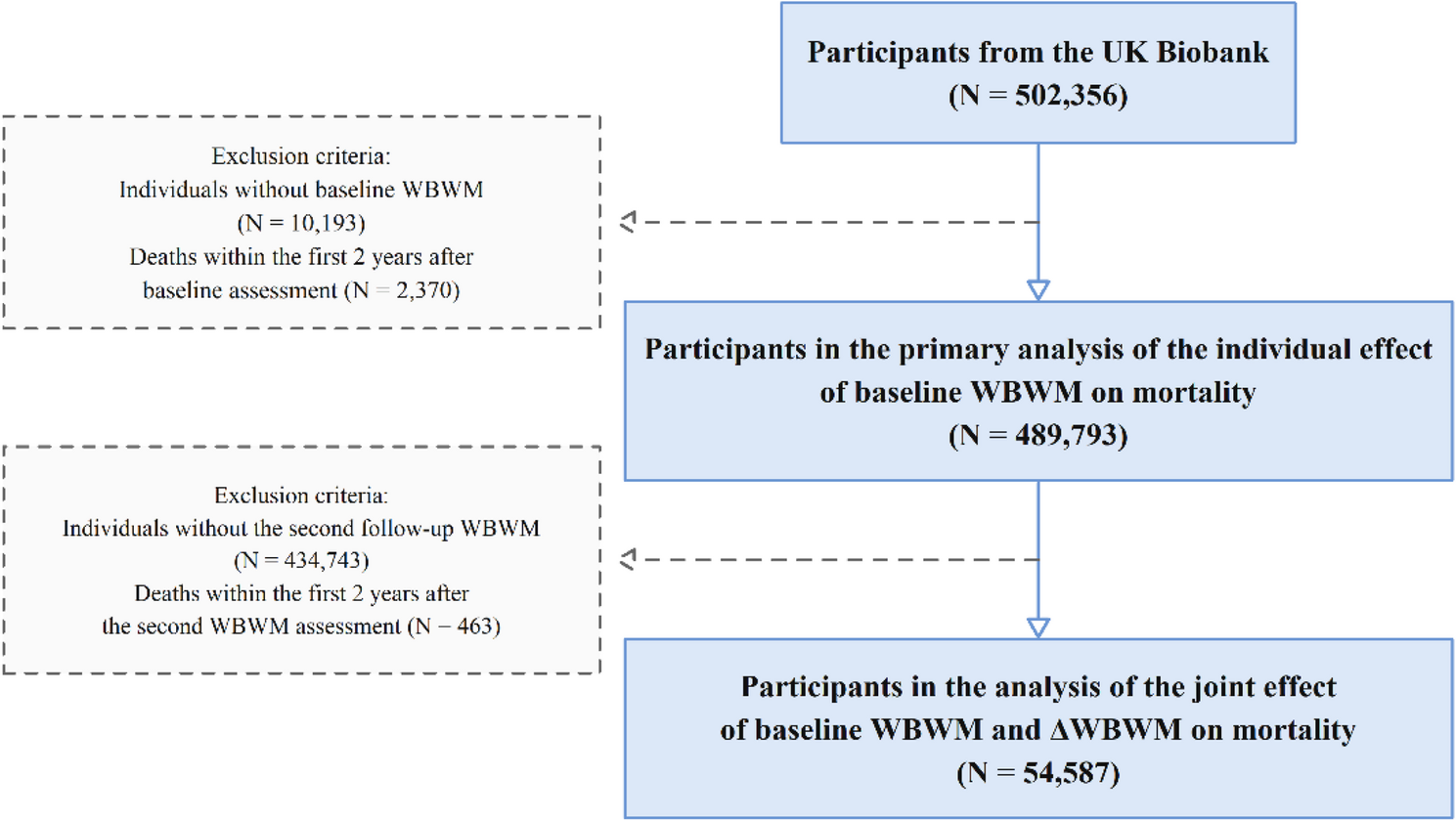
- Cohort study of 489,793 UK Biobank participants, median 13.7 years, against other body water groups
- What changed:
- Death risk was lowest among participants with medium starting body water and stable levels over time
- The catch:
- Underlying health differences could affect both body water levels and death risk
- Why it’s aging research:
- It measures an outcome that worsens with age.
Editor of record: Boris Djordjevic · AgingResearch.News
Among 489,793 UK Biobank participants with a median age of 58, an observational cohort study examined how whole-body water mass—the amount of water in the body—was linked to mortality. Researchers grouped starting levels as low, medium or high using separate cutoffs for men and women. They also examined annual changes in body water.
Over a median 13.7 years, 40,139 participants died. Death risk followed a V-shaped pattern: it was higher at both low and high starting levels than at medium levels. Deaths from heart and blood vessel disease followed the same pattern. Participants with medium starting levels and stable body water had the lowest death risk.
Why it matters
Body water mass may reflect both body composition and fluid status. The authors suggested it may serve as a health assessment marker, potentially helping identify risks to survival.
Caveats
Underlying health differences could have affected both body water levels and the likelihood of death in this observational comparison.

Comments
Be the first to comment.