How much the burden of diabetes and hypertension is attributable to social inequalities? an intersectional analysis in Brazil
Abstract
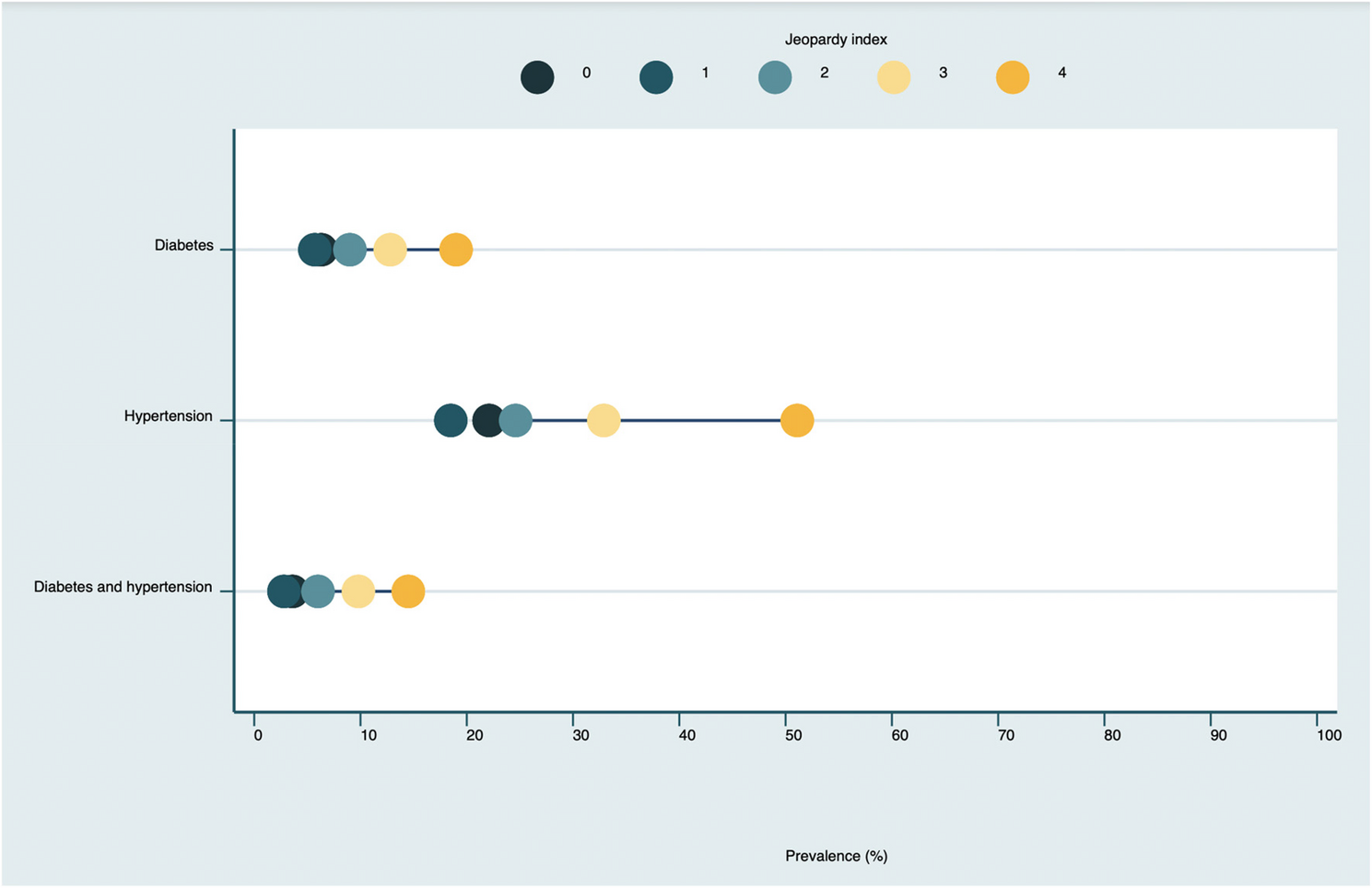
Objective: This study aimed to analyze the association between the intersectionality of sex, race/color, educational attainment, and the occurrence of diabetes, hypertension and both (diabetes and hypertension) among adults, using data from the 2023 Brazilian Vigitel National Survey. Methods: A cross-sectional study was conducted using data from Vigitel 2023, which included 21,690 individuals aged ≥ 18 years. The outcomes were self-reported diabetes mellitus, hypertension, and the co-occurrence of both conditions. The exposures of interest were sex, race/color, and educational attainment. Analyses were guided by the “multiple jeopardy” framework (Jeopardy Index) to assess the intersectionality of these social markers, using chi-square test and Poisson regression. Results: Black, Brown (mixed-race), Asian, and Indigenous women with low educational attainment had a four-fold higher probability of presenting with both conditions, a three-fold higher probability of diabetes, and a 2.3-fold higher probability of hypertension than that of white men with high educational attainment. Individuals with low educational attainment exhibited a higher prevalence of all assessed morbidities, regardless of sex or race/color. It was estimated that 34.6%, 21.6%, and 44.2% of cases of diabetes, hypertension, and co-occurring diabetes/hypertension, respectively, were attributable to low educational attainment. Conclusions: Social and racial markers of inequality are associated with the coexistence of diabetes and hypertension in Brazil. Low educational attainment emerged as a key social determinant of these conditions. Therefore, prevention and control strategies should incorporate actions aimed at addressing these structural vulnerabilities into public health policies.
The paper
BMC Public Health, 16 Oct 2026, CC BY