Activity’s link to heart disease risk differed by age
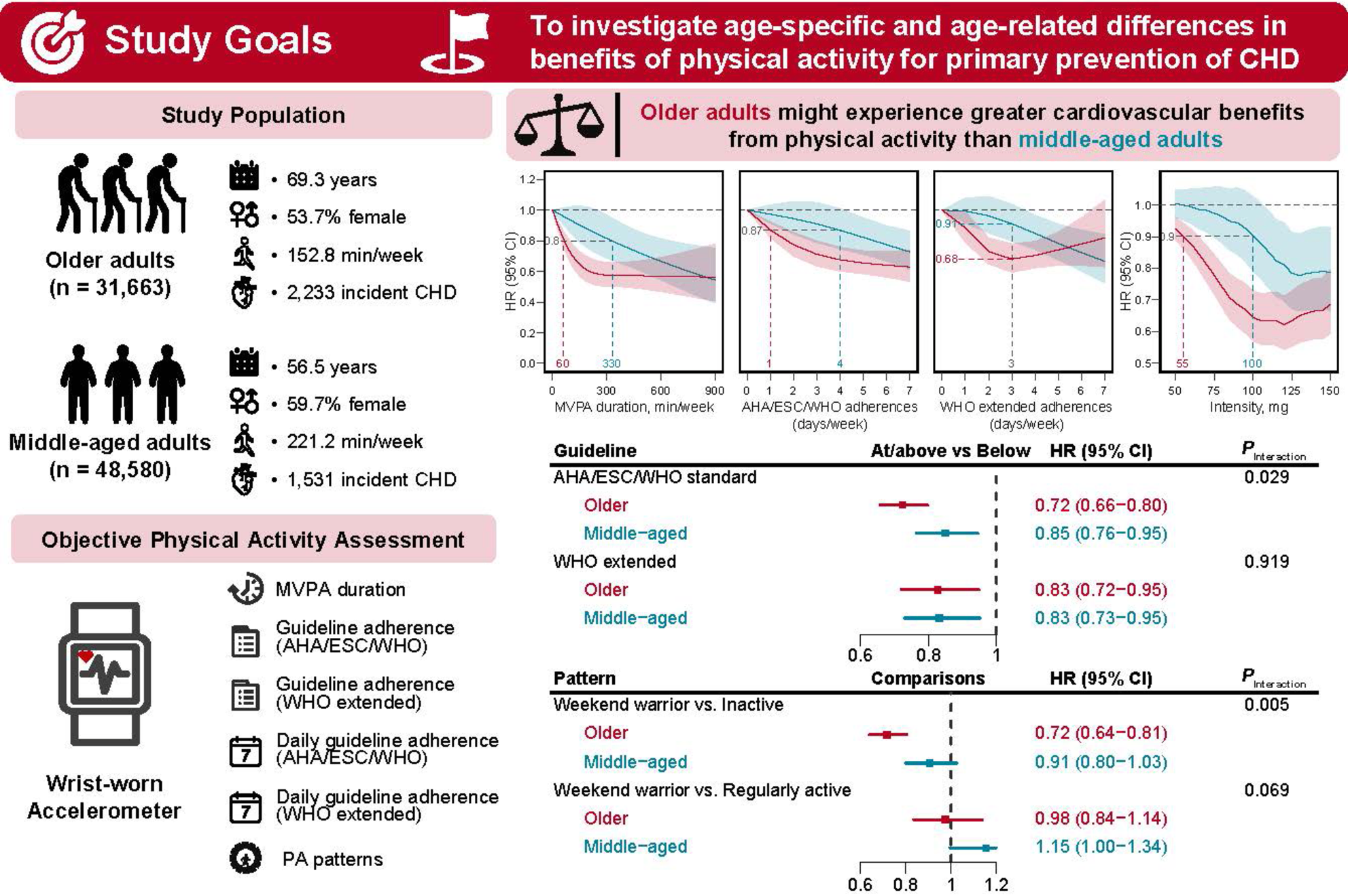
A 20% lower relative risk of coronary heart disease was linked to about 60 minutes of moderate-to-vigorous activity weekly in older adults versus 330 minutes in middle-aged adults.
Our read
Populations- Studied:
- Cohort study of 80,243 UK Biobank adults, median 7.88 years (Dose-response)
- What changed:
- Heart disease risk was 20% lower at about 60 moderate-to-vigorous minutes weekly in older adults versus 330 in middle-aged adults
- The catch:
- More-active participants may have had better underlying health, contributing to their lower heart disease risk
- In the record:
- The 3,331st paper on physical activity with results in people; 7,029 on record in all. Its result on coronary artery disease agrees with 7 of 9 other findings on record; 2 point the other way.
Editor of record: Boris Djordjevic · AgingResearch.News
Among 80,243 UK Biobank participants, 57.3% women and averaging 61.54 years old, an observational study examined activity recorded by wrist-worn movement sensors. It tracked coronary heart disease, which affects the arteries supplying the heart. Participants included 31,663 adults aged 65 or older and 48,580 under 65.
Over a median follow-up of 7.88 years, 3,764 coronary heart disease events occurred. A 20% lower relative risk was associated with about 60 minutes of moderate-to-vigorous activity weekly in older adults, versus 330 minutes in middle-aged adults. Meeting the guideline of at least 150 minutes weekly was linked to lower risk in both groups, with a stronger association in older adults.
Why it matters
Physical activity recommendations set the same weekly target across ages despite age-related differences in exercise capacity. The authors suggested that the findings may help encourage older adults to be active.
Caveats
More-active participants may also have had better underlying health, which could have contributed to their lower heart disease risk. The findings may not apply equally to populations younger than these UK Biobank adults.
- Physical activity
- Coronary artery disease
- Accelerometer-measured acceleration
- Moderate-to-vigorous physical activity duration
- Humans
The paper
Xiamen Cardiovascular Hospital of Xiamen University
Journal of the American Heart Association, Nov 12, 2026



Comments
Be the first to comment.