Sleep linked to brain health in diabetes, heart disease or stroke
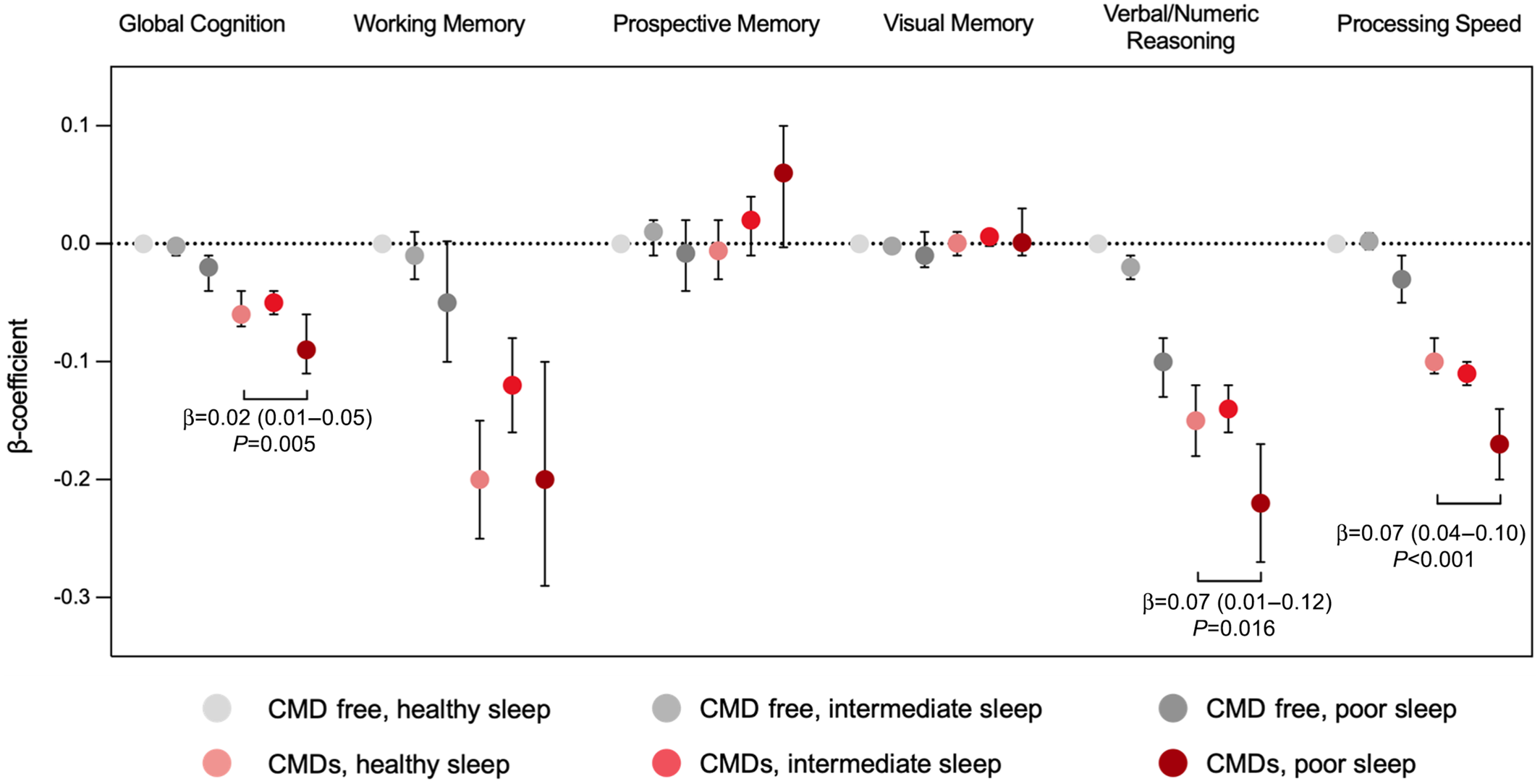
Adults with diabetes, heart disease or stroke and healthy rather than poor sleep had higher overall cognitive scores, with a model-estimated difference of 0.02.
Our read
Populations- Studied:
- Cross-sectional study of 408,977 UK Biobank adults, against adults with CMDs and poor sleep
- What changed:
- Adults with cardiometabolic diseases and healthy sleep had better thinking skills than those with poor sleep
- The catch:
- Better underlying health could explain both healthier sleep and better brain measures
- In the record:
- One of 4 papers on healthy sleep on record: 2 with results in people.
- Why it’s aging research:
- Biological age, frailty, function, multimorbidity or death.
Editor of record: Boris Djordjevic · AgingResearch.News
The 408,977 UK Biobank adults in this observational study were compared by sleep patterns and whether they had type 2 diabetes, heart disease or stroke. At baseline, 54,017 had at least one of these diseases. The sleep score combined sleep duration, preferred sleep timing, insomnia symptoms, snoring and daytime sleepiness.
Among adults with these diseases, those with healthy sleep scored higher on overall cognition, verbal and numerical reasoning, and processing speed than those with poor sleep. A subgroup of 34,913 adults underwent brain scans. Within this subgroup, participants with these diseases and healthy sleep had larger volumes of the whole brain and its two main tissue types, gray and white matter, than those with poor sleep.
Why it matters
Type 2 diabetes, heart disease and stroke are risk factors for dementia. The authors suggested that sleep may be a modifiable factor supporting cognitive and brain health in people with these conditions.
Caveats
The analysis compared existing sleep patterns rather than testing a sleep intervention; better underlying health could have contributed to both healthier sleep and better brain measures. The reported outcomes were cognitive scores and brain volumes, not dementia diagnoses.
The paper
Karolinska Institutet
Journal of the American Heart Association, Nov 4, 2026

Comments
Be the first to comment.