Nerve signals help regulate lifespan extension in worms
Genetic experiments linked nerve-signaling molecules to a stress response and longer life in worms with restricted methionine, an amino acid used to build proteins.
Our read
Mechanisms- Studied:
- Experiments in C. elegans worms with genetically restricted methionine
- What changed:
- Specific neuropeptides promoted longer life in worms with genetically restricted methionine
- The catch:
- Effects of dietary methionine restriction on these signals were not measured
- In the record:
- One of 187 papers on methionine restriction on record: 10 with results in people, 98 in animals.
Editor of record: Boris Djordjevic · AgingResearch.News
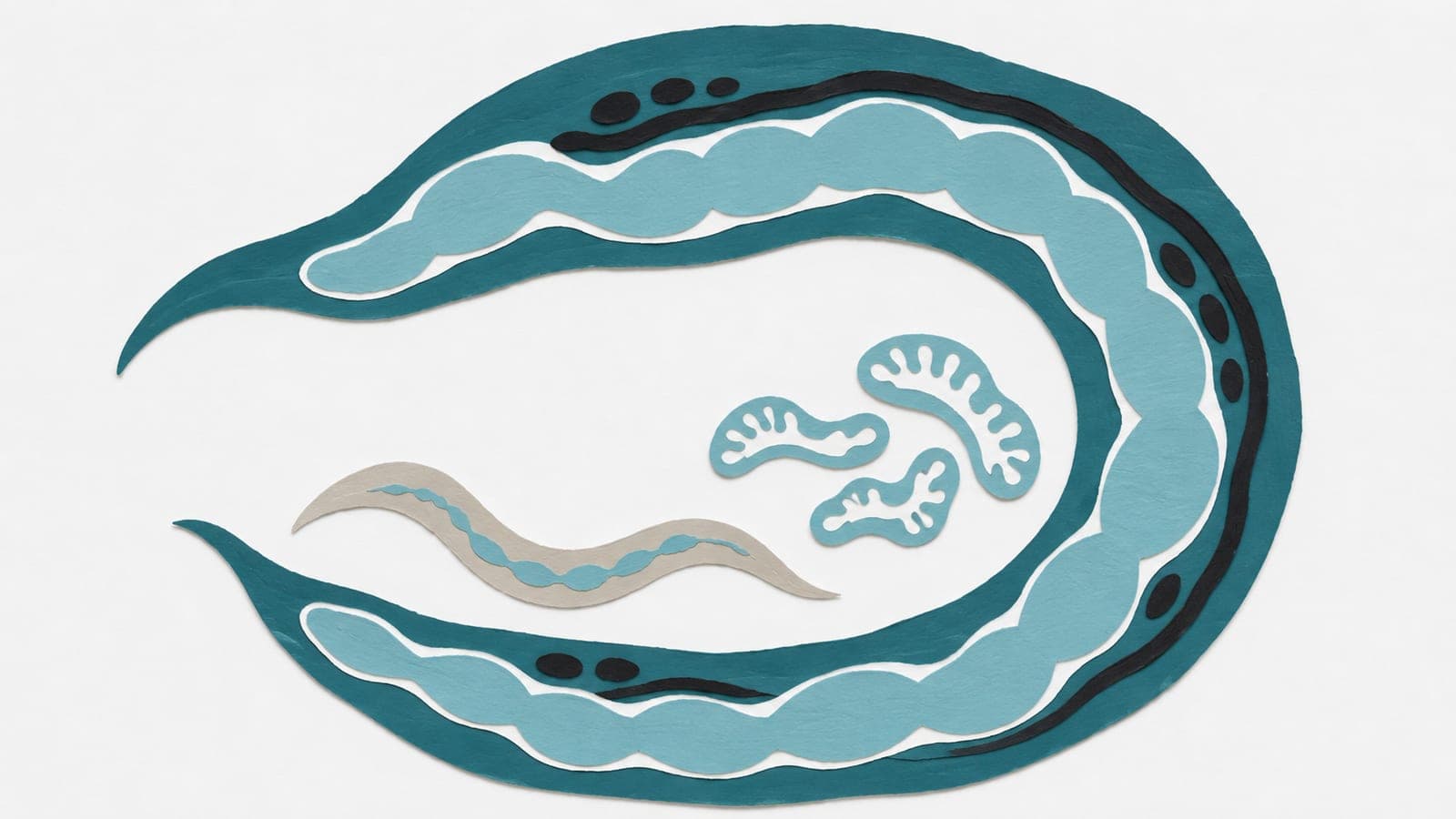
C. elegans worms with genetically restricted methionine, an amino acid used to build proteins, activated a mitochondrial stress response and showed delayed intestinal aging. In genetic experiments, researchers examined how nerve-signaling molecules called neuropeptides regulated this response in mitochondria, the cell’s energy-producing structures.
Releasing neuropeptides was required for the stress response triggered by methionine restriction. Specific neuropeptides also promoted the response and the associated lifespan extension. A protein called PKC-1 was required for the longer life and greater resistance to infection associated with methionine restriction. It was not required for the response triggered by several other mitochondrial disruptions. Neuropeptide signals regulated the response partly by changing how mitochondria formed networks.
Why it matters
Mitochondrial stress responses are associated with conditions that prolong lifespan. The findings suggest that the signals regulating these responses and longevity may depend on the kind of mitochondrial disruption involved.
Caveats
Methionine restriction came from a genetic change in worms, so these experiments do not show whether restricting dietary methionine would engage the same signals.
Where the evidence stands
Methionine restriction
- 52 independent labs in 17 countries
- 18 findings against
- Funders: National Institutes of Health and others
- 22 of 304 findings with company ties
metr-1
- 2 independent labs in 2 countries
- Funders: Anusandhan National Research Foundation and others
Comments
Be the first to comment.