DNA-based aging measures rose during the COVID-19 pandemic
An aging-pace measure showed an estimated rise of 0.13 on the study’s statistical scale from prepandemic levels across children, adolescents and adults.
Our read
Populations- Studied:
- Cohort study of 1,028 children, adolescents, and adults
- What changed:
- Estimated pace of aging rose across children, adolescents, and adults compared with prepandemic levels
- The catch:
- Salivary DNA clocks measured estimated aging, not aging-related disease
- In the record:
- The 220th paper on COVID-19 pandemic with results in people; 308 on record in all.
- Why it’s aging research:
- It measures an outcome that worsens with age.
Editor of record: Boris Djordjevic · AgingResearch.News
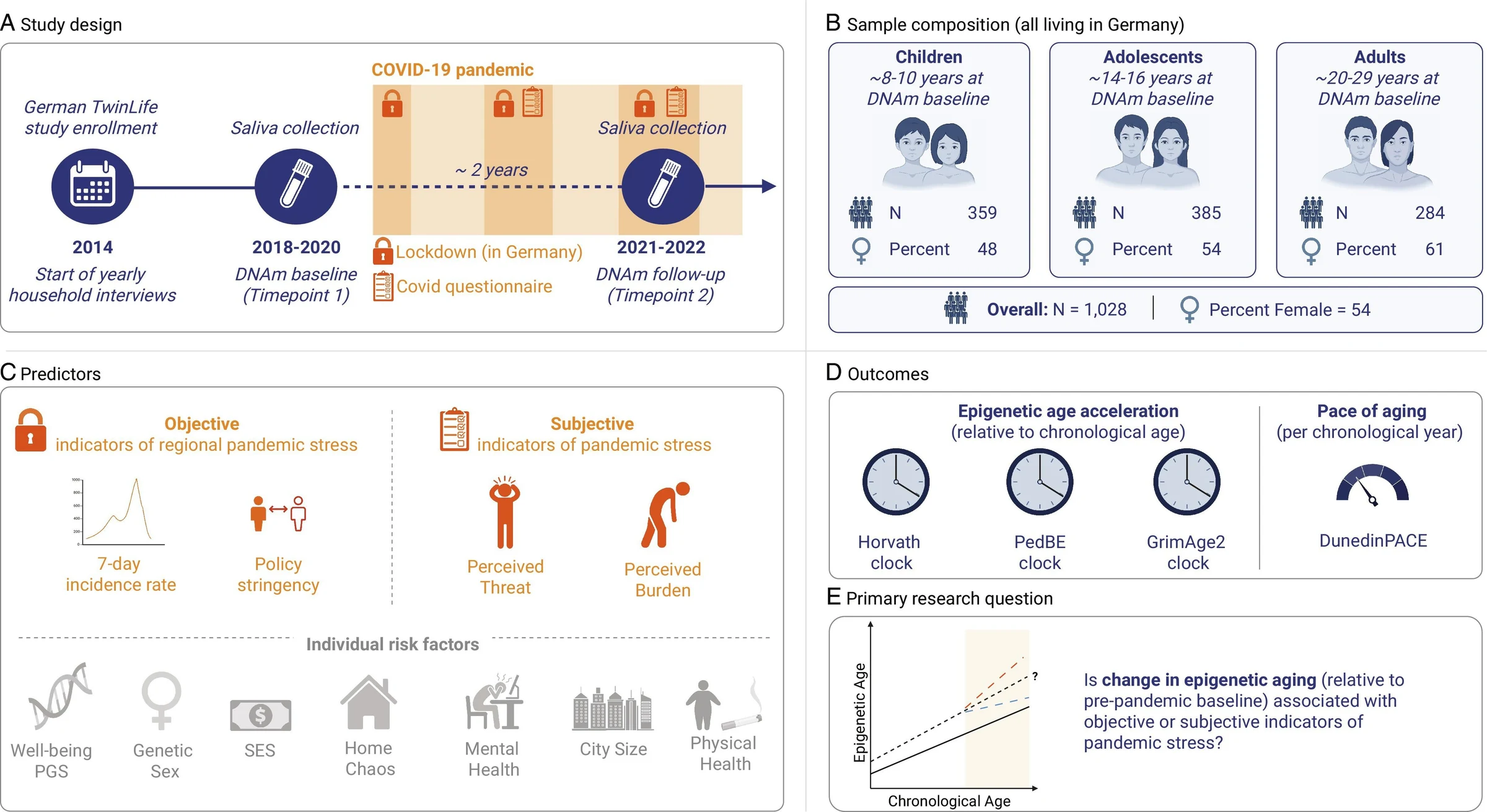
A prospective observational study followed 1,028 people: 359 children averaging 9.5 years old, 385 adolescents averaging 15.5, and 284 adults averaging 24.3. Researchers analyzed saliva collected before Germany’s first pandemic containment measures in March 2020 and after the second phase in 2021. They used four epigenetic clocks, tools that estimate aspects of biological aging from chemical marks on DNA.
Two clocks indicated increases in age acceleration—estimated age relative to chronological age—and another indicated a faster estimated pace of aging across all three age groups. Prepandemic physical health and parents’ socioeconomic status were associated with these changes; objective pandemic stressors were not. Among adolescents, greater perceived pandemic burden was linked to a larger increase in estimated aging pace.
Why it matters
Psychosocial stress is a risk factor for aging-related diseases. The findings suggest adolescence may be a sensitive period for the pandemic’s psychological and social burden.
Caveats
The observational design cannot establish that pandemic stress caused the changes. The outcomes were DNA-based aging estimates in saliva, not observed aging-related disease.
Where the evidence stands
COVID-19 pandemic
- 173 independent labs in 40 countries
- 19 findings against
- Funders: National Institutes of Health and others
- 20 of 366 findings with company ties
The paper
Max-Planck-Institute of Psychiatry
PNAS, Nov 3, 2026, CC BY
Comments
Be the first to comment.