Eye blood vessel traits had different disease links by sex
Association studies of 68,000 UK Biobank participants found that retinal blood vessel traits had different links to disease risk in females and males.
Our read
Biomarkers- Studied:
- Cohort study of 68,000 UK Biobank participants, against males
- What changed:
- Retinal blood vessel traits had different links to disease outcomes in females and males
- The catch:
- Underlying health differences or environmental exposures could account for the sex-specific disease links
Editor of record: Boris Djordjevic · AgingResearch.News
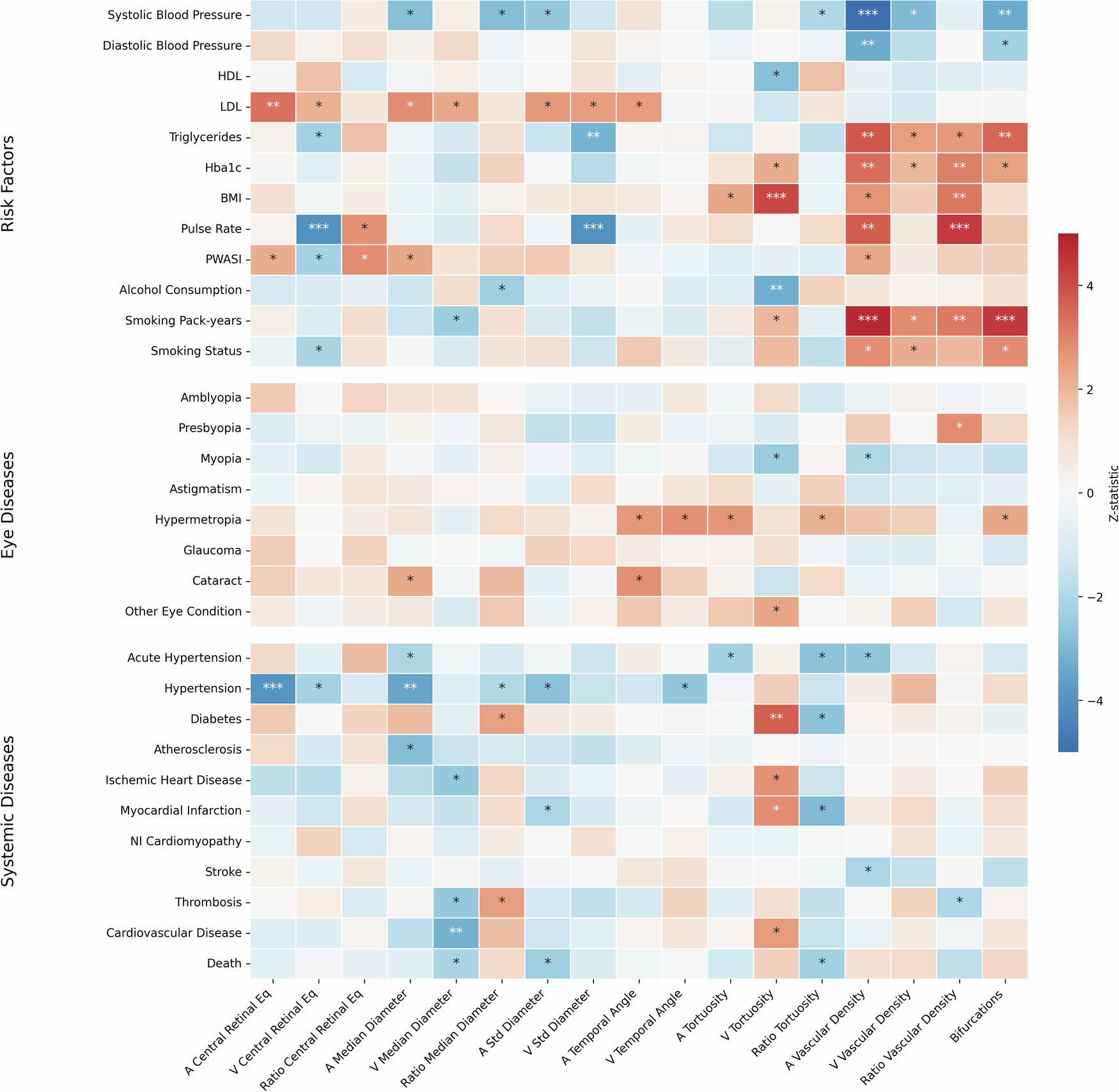
In 68,000 UK Biobank participants, association studies examined sex differences in blood vessel traits in the retina, the light-sensitive layer at the back of the eye. The researchers tested whether associations differed by sex and also analyzed females and males separately.
Retinal vessel traits had sex-specific links to disease outcomes and risk factors. Several traits were associated with death and heart and blood vessel outcomes in statistical models, predominantly in one sex. Genome-wide association studies, which look for links between DNA differences and traits, found modest differences between the sexes. Females had more associated DNA variants and gene-level signals. The authors suggested that genetic and environmental contributions to retinal vessel shape and structure may differ by sex.
Why it matters
Retinal vessel traits are emerging as noninvasive markers of cardiovascular and neurodegenerative diseases, both relevant to aging. The authors argue that accounting for sex could help tailor disease risk assessment.
Caveats
The associations leave open whether differences in underlying health or environmental exposures helped account for the sex-specific disease links in UK Biobank participants.
The paper
Communications Biology, Nov 10, 2026, CC BY

Comments
Be the first to comment.