Depression, functional disability, and cardiovascular disease in adults with cardiovascular-kidney-metabolic syndrome stages 0–3: a nationally representative cohort study
Abstract
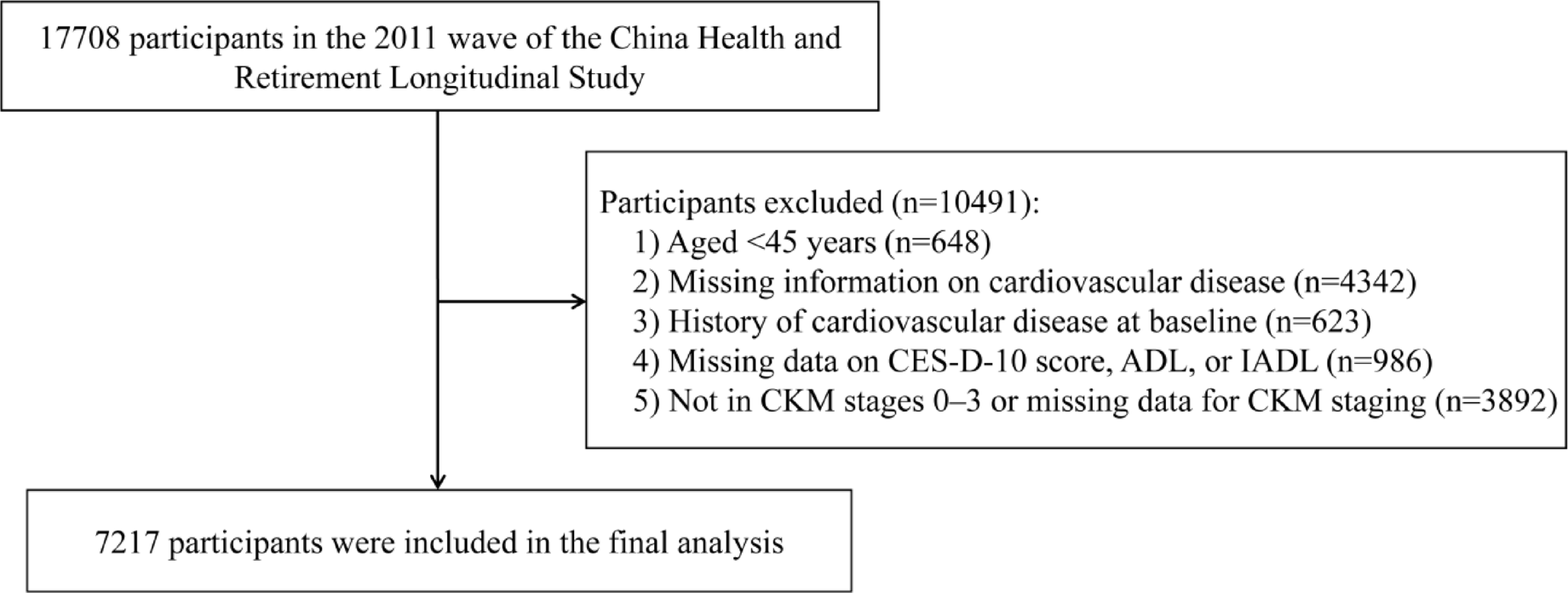
Cardiovascular-kidney-metabolic syndrome (CKM) has emerged as an integrated framework for identifying individuals at increased cardiovascular risk before clinical cardiovascular disease (CVD) develops. However, whether psychological and functional vulnerabilities further refine risk stratification in earlier CKM stages remains unclear. Using data from the China Health and Retirement Longitudinal Study, we examined the joint association of depression and functional disability with incident CVD among 7217 adults with CKM stages 0–3. Participants were categorized into four groups according to baseline depression and functional disability status. During follow-up, incident CVD, heart disease, and stroke were assessed. Compared with participants with neither depression nor functional disability, those with depression only, functional disability only, and both conditions had higher risks of incident CVD in fully adjusted Cox models, with the highest risk observed among participants with both conditions. Similar patterns were observed for heart disease and stroke. No statistically significant additive or multiplicative interactions were found between depression and functional disability. Adding depression and functional disability to conventional risk factors modestly improved CVD risk prediction. These findings suggest that depression and functional disability should be considered as important dimensions in CVD risk assessment for adults with CKM stages 0–3, supporting a more comprehensive approach to early cardiovascular risk stratification.
The paper
Guangzhou University of Chinese Medicine
Scientific Reports, 16 Oct 2026, Open access, CC BY-NC-ND


